Education innovation blog
Latest Articles
Designing for Belonging: Lessons from Districts Building What Technology Can’t Replace
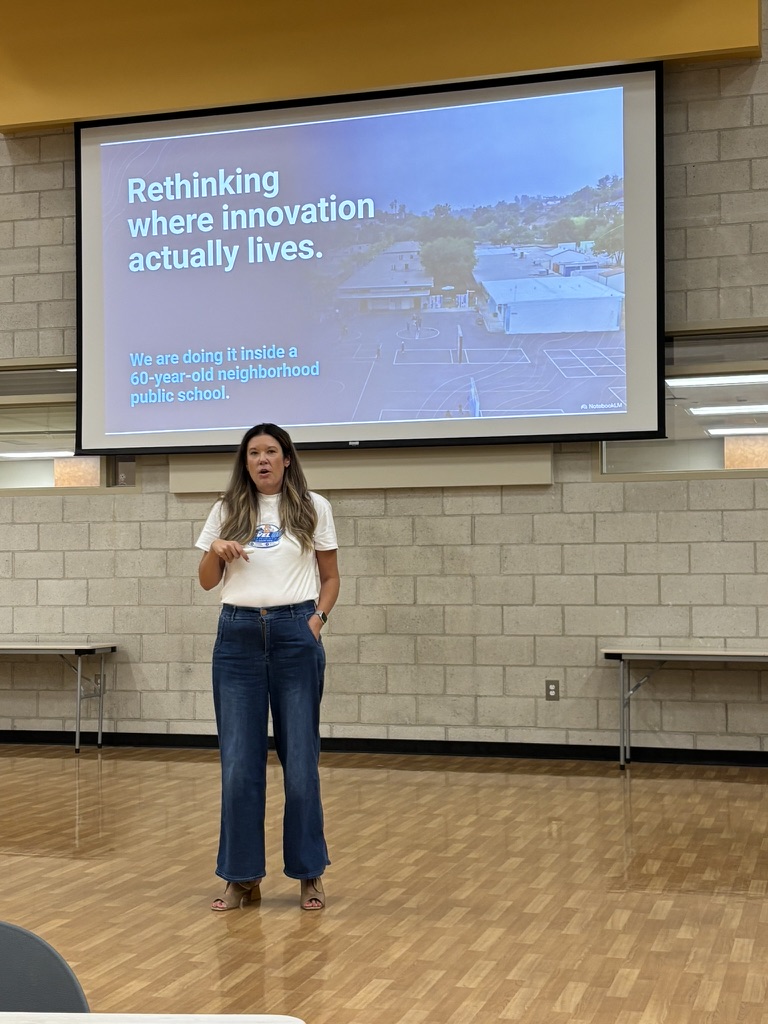
Last week, we joined the Digital Promise League of Innovative Schools for their latest convening right here in our backyard. The contrast was not lost on us as we were sitting just a few miles from the glass towers where engineers are busy building the software that is changing the way we work and learn.
But if you walked into that room of superintendents and district teams, you wouldn’t have heard much talk about the latest disruptive software. There was no rush to find the next shiny
0
0
Can’t. Will. Did.: How One Teacher-Mountaineer Is Bringing Social-Emotional Learning Outdoors
By: Zach Varnell
In August 2021, on the West Ridge of Mount Stuart in Washington State, Kimber Cross was running out of time, water, and altitude. Off-route in 97-degree heat, her heart rate had climbed to 180 beats per minute. Her climbing partner — a trained EMT and firefighter — pressed the SOS button on their GPS tracker. What followed was a 15-hour rescue involving two teams, 20 rappels, and an airlift. Kimber made a full recovery. And the experience never left her.
Not because it was
0
0
Making Work-Based Learning Work: Georgia’s Novel Approach to WBL Data
Editor’s Note: In all platform images, student and employer names have been altered to preserve privacy.
While far better than nothing, work-based learning (WBL) has a credibility problem. A student completes an internship, clocks their hours, gets a line on their resume — and then what? Without rigorous, verifiable evidence of what skills were actually demonstrated on the job, work-based learning risks becoming just another box to check rather than a genuine launchpad into a career. It becom
0
0
Educational fMRIs: Dynamic Pedagogy and Pedagogical Analysis in the Multimodal AI Era
My deepest convictions about educational assessment were shaped outside the classroom with my late wife of seven decades, Dr. Susan Gordon M.D., a pediatrician. I watched her treat a diagnosis of medical status as a starting point for understanding, never an endpoint of judgment or mere classification. Closing charts of medical status data, she wanted to know about a child’s wider functional ecology (sleep, home stressors, supports); the relations among data points and among these data points a
0
0
AI Literacy is Not Tool Mastery: How to Build Sustained Educator Capacity
Not long ago, artificial intelligence in education felt novel. It was something shiny, experimental, and, for many educators, possibly unsettling at times. When ChatGPT arrived in November 2022, the initial conversations and concerns were more focused on fear. I recall receiving emails, text messages, phone calls, and visits from educators who were concerned about cheating, plagiarism, lost skills, and what instantly felt like an overwhelming pace of change. It was something else to adjust to, n
0
0
From Compliance to Coherence: A Global Survey of National AI in Education Strategies
One of the best ways to understand how national governments are approaching AI implementation in schools appears in the opening paragraphs of a recent report issued in China.
According to the Chinese report (translated here), the world is in a transitional phase in which AI is no longer considered a tool but should instead be viewed as an environmental condition similar to air.
To understand that metaphor, we might recall the 2005 Kenyon College commencement speech by David Foster Wallace.
0
0
Measuring What Matters: From Blunt Sorting to Human Thriving Powered by Multimodal AI
For over a century, the American education system has compromised its promise by measuring what is easy to score. Trapped in an industrial-era paradigm of end-of-year stock taking, schools are overwhelmingly ‘data rich, information poor’, drowning in metrics while starved for actionable instructional insight.
But what if the most profound promise of multimodal artificial intelligence is fundamentally redesigning the architecture of what processes we focus upon when we measure human potential?
0
1
Leadership is A Human Act: Stewarding Transformation Through the Fog
By: Heidi Vissia and Bernard Brown
When we stand at the crossroads of innovation, we often see two distinct paths, both with a host of obstacles. One path heads back the way we came, and one leads into an opaque fog. The path pointing backwards is often riddled with grief. It is a reflection on your own personal and professional past. It is the processing of what was. The opaque path forward is often laced with fear. It is the anxiety of what might go wrong.
William Bridges’ Transition Mod
0
0
Lever 2 for Deeper PoG Implementation: Teaching the Skills Behind the Portrait
For many schools/districts who have built a Portrait of a Graduate (PoG), the language of the Portrait is likely up on the walls in PoG posters. For some, you might hear a teacher or a student referring to a PoG skill by name as it arises in the moment. And, as we discussed in the blog before this one about the power of reflection, some learning communities might be asking students and teachers to make connections between learning experiences and a PoG skill through reflective activities. And ye
0
0
Probable and Possible: Why the Era of Probabilistic Computing Requires Real World Learning with an Entrepreneurial Mindset
The 40 year Information Age took deterministic computing to scale in financial and engineering systems. The rules-based, if-then systems powered search engines and supply chains. ChatGPT brought generative AI to the consumer market in 2022 with an autocompleter, trained on the entire internet, that finished sentences based on probability.
Atlassian CEO Mike Cannon-Brookes described the Information Age as “turning filing cabinets into databases.” He argued that we have now entered a new era wh
0
0
Innovating What We Measure: Assessment in the Service of Human Potential in an Era of AI and Uncertainty
For decades, the American education system has compromised its own promise by measuring what is easy, rather than what matters most. Because assessments act as powerful signals, they shape what is taught and learned. Yet, by relying on “drop-in-from-the-sky” standardized tests that reward isolated fact fluency and procedural mimicry, we calcify our educational objectives in the past. This approach disconnects schooling from the preparation students desperately need to navigate a future defined b
0
0
Book Review: How We Thrive
A student asleep during third period.A teacher answering emails during lunch.A leader staring at a calendar with no white space left.
We call this normal. We call it busy. We call it commitment. Stephanie Malia Krauss calls it something else: a storm we were never meant to live inside.
In How We Thrive: Caring for Kids and Ourselves in a Changing World, Krauss extends the holistic framework she introduced in Whole Child, Whole Life to include not only the children in our care but t
0
0
Democracy in Miniature: Youth Agency and Junior Republics | A Conversation with Jennifer Light
Introduction: A Crossover Conversation
Peter Stiepelman: Today on An Imperfect Leader, we are trying something we’ve never done before. It’s a crossover episode with my friend Mason Pashia from the Getting Smart Podcast, a member of the PodcastAll network. And together, we get to speak with Dr. Jennifer Light, professor of History of Science and Technology and professor of Urban Studies and Planning at MIT.
She’s also the author of The State of Childhood, which exa
0
0
How AI Impacts the Use of Protocols in the K-12 Classroom
I made it through a two-year teacher preparation program and the first six years of my classroom career before I heard anyone say the word “protocol.”
By then, I had joined the staff of New Technology High School in Napa, which had adopted the Buck Institute for Education model of project-based learning. Our trainer, Dr. Thom Markham, author of the PBL Handbook, used a protocol called “Critical Friends” to shape peer feedback during a session in which we shared our project designs.
The str
0
0
Pathological Explanations for Learning Differences: Untangling the Signal from the Noise to Measure Ability in the Age of AI
Hand Isaac Newton a tablet for a physics exam today, and he would bomb it—his brilliance obscured by an inability to navigate a simulation. We educators commit this malpractice against neurodivergent students daily, diagnosing their minds as deficient instead of our broken tests.
Myth vs. Science
Pamela Cantor, M.D., notes that 20th-century education rests on an assessment architecture designed to sort students through a deficit lens, anchored by myths that genes dictate destiny, talent is
0
0
Can We Teach Civil Discourse in a Digital Age? | A Conversation with Vikki Katz
Hello, I’m Tom Vander Ark. Lately, I’ve been thinking a lot about how hard it has become to talk across differences in America, especially when the issues are complex, emotional, and constantly amplified by social media. We ask young people to navigate that environment every day, yet we rarely give them the time, tools and permission to practice the skills that make real dialogue possible: building an argument on shared evidence, listening with curiosity, and staying in relationship even w
0
0
Why the Best STEM Lessons Start with Struggle
Three simple shifts that help students think like engineers and stay engaged during STEM challenges.
By: Dr. Christopher Feiler
Last summer, while teaching a STEM challenge in a gifted summer program at Hofstra University, I watched a group of students celebrate when their design failed.
The challenge was simple: design a wind-powered vehicle using only a limited set of materials. Within minutes, students began sketching ideas, building prototypes, and testing their designs across the c
0
0
New Grants Could Double Access to Career Academies
Employers say recent graduates are unprepared for the workforce. About half of K-12 students lack engaging school experiences, and only 2% have completed a hands-on career learning experience in high school. High school career academies are a proven solution to low engagement and limited career preparation. The three or four-year courses of study are organized around a career cluster and include work-based learning such as internships, client projects, and entrepreneurial experiences. 
0
0
Useful by Design: Innovating For Whom We Measure in the Multimodal AI Era
Educational assessment has long privileged the needs of policymakers. The era of multimodal artificial intelligence (AI) forces an overdue reckoning: For whom do we measure?
If, through neglect or expediency, we inadvertently allow advancing algorithms to automate and amplify the multiple-choice paradigm, we will squander a generational opportunity. By grounding technological leaps in the sciences of learning, measurement, and improvement, we have the potential to leverage AI to rebalan
0
0
Designing for Belonging: Lessons from Districts Building What Technology Can’t Replace
0
0
Can’t. Will. Did.: How One Teacher-Mountaineer Is Bringing Social-Emotional Learning Outdoors
0
0
Making Work-Based Learning Work: Georgia’s Novel Approach to WBL Data
0
0
Educational fMRIs: Dynamic Pedagogy and Pedagogical Analysis in the Multimodal AI Era
0
0
AI Literacy is Not Tool Mastery: How to Build Sustained Educator Capacity
0
0
From Compliance to Coherence: A Global Survey of National AI in Education Strategies
0
0
Measuring What Matters: From Blunt Sorting to Human Thriving Powered by Multimodal AI
0
1
Leadership is A Human Act: Stewarding Transformation Through the Fog
0
0
Lever 2 for Deeper PoG Implementation: Teaching the Skills Behind the Portrait
0
0
Probable and Possible: Why the Era of Probabilistic Computing Requires Real World Learning with an Entrepreneurial Mindset
0
0
Innovating What We Measure: Assessment in the Service of Human Potential in an Era of AI and Uncertainty
0
0
Democracy in Miniature: Youth Agency and Junior Republics | A Conversation with Jennifer Light
0
0
How AI Impacts the Use of Protocols in the K-12 Classroom
0
0
Pathological Explanations for Learning Differences: Untangling the Signal from the Noise to Measure Ability in the Age of AI
0
0
Designing for Belonging: Lessons from Districts Building What Technology Can’t Replace
Last week, we joined the Digital Promise League of Innovative Schools for their latest convening right here in our backyard. The contrast was not lost on us as we were sitting just a few miles from the glass towers where engineers are busy building the software that is changing the way we work and learn.
But if you walked into that room of superintendents and district teams, you wouldn’t have heard much talk about the latest disruptive software. There was no rush to find the next shiny
0
0 👁
Can’t. Will. Did.: How One Teacher-Mountaineer Is Bringing Social-Emotional Learning Outdoors
By: Zach Varnell
In August 2021, on the West Ridge of Mount Stuart in Washington State, Kimber Cross was running out of time, water, and altitude. Off-route in 97-degree heat, her heart rate had climbed to 180 beats per minute. Her climbing partner — a trained EMT and firefighter — pressed the SOS button on their GPS tracker. What followed was a 15-hour rescue involving two teams, 20 rappels, and an airlift. Kimber made a full recovery. And the experience never left her.
Not because it was
0
0 👁
Making Work-Based Learning Work: Georgia’s Novel Approach to WBL Data
Editor’s Note: In all platform images, student and employer names have been altered to preserve privacy.
While far better than nothing, work-based learning (WBL) has a credibility problem. A student completes an internship, clocks their hours, gets a line on their resume — and then what? Without rigorous, verifiable evidence of what skills were actually demonstrated on the job, work-based learning risks becoming just another box to check rather than a genuine launchpad into a career. It becom
0
0 👁
Educational fMRIs: Dynamic Pedagogy and Pedagogical Analysis in the Multimodal AI Era
My deepest convictions about educational assessment were shaped outside the classroom with my late wife of seven decades, Dr. Susan Gordon M.D., a pediatrician. I watched her treat a diagnosis of medical status as a starting point for understanding, never an endpoint of judgment or mere classification. Closing charts of medical status data, she wanted to know about a child’s wider functional ecology (sleep, home stressors, supports); the relations among data points and among these data points a
0
0 👁
AI Literacy is Not Tool Mastery: How to Build Sustained Educator Capacity
Not long ago, artificial intelligence in education felt novel. It was something shiny, experimental, and, for many educators, possibly unsettling at times. When ChatGPT arrived in November 2022, the initial conversations and concerns were more focused on fear. I recall receiving emails, text messages, phone calls, and visits from educators who were concerned about cheating, plagiarism, lost skills, and what instantly felt like an overwhelming pace of change. It was something else to adjust to, n
0
0 👁
From Compliance to Coherence: A Global Survey of National AI in Education Strategies
One of the best ways to understand how national governments are approaching AI implementation in schools appears in the opening paragraphs of a recent report issued in China.
According to the Chinese report (translated here), the world is in a transitional phase in which AI is no longer considered a tool but should instead be viewed as an environmental condition similar to air.
To understand that metaphor, we might recall the 2005 Kenyon College commencement speech by David Foster Wallace.
0
0 👁
Measuring What Matters: From Blunt Sorting to Human Thriving Powered by Multimodal AI
For over a century, the American education system has compromised its promise by measuring what is easy to score. Trapped in an industrial-era paradigm of end-of-year stock taking, schools are overwhelmingly ‘data rich, information poor’, drowning in metrics while starved for actionable instructional insight.
But what if the most profound promise of multimodal artificial intelligence is fundamentally redesigning the architecture of what processes we focus upon when we measure human potential?
0
1 👁
Leadership is A Human Act: Stewarding Transformation Through the Fog
By: Heidi Vissia and Bernard Brown
When we stand at the crossroads of innovation, we often see two distinct paths, both with a host of obstacles. One path heads back the way we came, and one leads into an opaque fog. The path pointing backwards is often riddled with grief. It is a reflection on your own personal and professional past. It is the processing of what was. The opaque path forward is often laced with fear. It is the anxiety of what might go wrong.
William Bridges’ Transition Mod
0
0 👁
Lever 2 for Deeper PoG Implementation: Teaching the Skills Behind the Portrait
For many schools/districts who have built a Portrait of a Graduate (PoG), the language of the Portrait is likely up on the walls in PoG posters. For some, you might hear a teacher or a student referring to a PoG skill by name as it arises in the moment. And, as we discussed in the blog before this one about the power of reflection, some learning communities might be asking students and teachers to make connections between learning experiences and a PoG skill through reflective activities. And ye
0
0 👁
Probable and Possible: Why the Era of Probabilistic Computing Requires Real World Learning with an Entrepreneurial Mindset
The 40 year Information Age took deterministic computing to scale in financial and engineering systems. The rules-based, if-then systems powered search engines and supply chains. ChatGPT brought generative AI to the consumer market in 2022 with an autocompleter, trained on the entire internet, that finished sentences based on probability.
Atlassian CEO Mike Cannon-Brookes described the Information Age as “turning filing cabinets into databases.” He argued that we have now entered a new era wh
0
0 👁
Innovating What We Measure: Assessment in the Service of Human Potential in an Era of AI and Uncertainty
For decades, the American education system has compromised its own promise by measuring what is easy, rather than what matters most. Because assessments act as powerful signals, they shape what is taught and learned. Yet, by relying on “drop-in-from-the-sky” standardized tests that reward isolated fact fluency and procedural mimicry, we calcify our educational objectives in the past. This approach disconnects schooling from the preparation students desperately need to navigate a future defined b
0
0 👁
Book Review: How We Thrive
A student asleep during third period.A teacher answering emails during lunch.A leader staring at a calendar with no white space left.
We call this normal. We call it busy. We call it commitment. Stephanie Malia Krauss calls it something else: a storm we were never meant to live inside.
In How We Thrive: Caring for Kids and Ourselves in a Changing World, Krauss extends the holistic framework she introduced in Whole Child, Whole Life to include not only the children in our care but t
0
0 👁
Democracy in Miniature: Youth Agency and Junior Republics | A Conversation with Jennifer Light
Introduction: A Crossover Conversation
Peter Stiepelman: Today on An Imperfect Leader, we are trying something we’ve never done before. It’s a crossover episode with my friend Mason Pashia from the Getting Smart Podcast, a member of the PodcastAll network. And together, we get to speak with Dr. Jennifer Light, professor of History of Science and Technology and professor of Urban Studies and Planning at MIT.
She’s also the author of The State of Childhood, which exa
0
0 👁
How AI Impacts the Use of Protocols in the K-12 Classroom
I made it through a two-year teacher preparation program and the first six years of my classroom career before I heard anyone say the word “protocol.”
By then, I had joined the staff of New Technology High School in Napa, which had adopted the Buck Institute for Education model of project-based learning. Our trainer, Dr. Thom Markham, author of the PBL Handbook, used a protocol called “Critical Friends” to shape peer feedback during a session in which we shared our project designs.
The str
0
0 👁
Pathological Explanations for Learning Differences: Untangling the Signal from the Noise to Measure Ability in the Age of AI
Hand Isaac Newton a tablet for a physics exam today, and he would bomb it—his brilliance obscured by an inability to navigate a simulation. We educators commit this malpractice against neurodivergent students daily, diagnosing their minds as deficient instead of our broken tests.
Myth vs. Science
Pamela Cantor, M.D., notes that 20th-century education rests on an assessment architecture designed to sort students through a deficit lens, anchored by myths that genes dictate destiny, talent is
0
0 👁
Can We Teach Civil Discourse in a Digital Age? | A Conversation with Vikki Katz
Hello, I’m Tom Vander Ark. Lately, I’ve been thinking a lot about how hard it has become to talk across differences in America, especially when the issues are complex, emotional, and constantly amplified by social media. We ask young people to navigate that environment every day, yet we rarely give them the time, tools and permission to practice the skills that make real dialogue possible: building an argument on shared evidence, listening with curiosity, and staying in relationship even w
0
0 👁
Why the Best STEM Lessons Start with Struggle
Three simple shifts that help students think like engineers and stay engaged during STEM challenges.
By: Dr. Christopher Feiler
Last summer, while teaching a STEM challenge in a gifted summer program at Hofstra University, I watched a group of students celebrate when their design failed.
The challenge was simple: design a wind-powered vehicle using only a limited set of materials. Within minutes, students began sketching ideas, building prototypes, and testing their designs across the c
0
0 👁
New Grants Could Double Access to Career Academies
Employers say recent graduates are unprepared for the workforce. About half of K-12 students lack engaging school experiences, and only 2% have completed a hands-on career learning experience in high school. High school career academies are a proven solution to low engagement and limited career preparation. The three or four-year courses of study are organized around a career cluster and include work-based learning such as internships, client projects, and entrepreneurial experiences. 
0
0 👁
Useful by Design: Innovating For Whom We Measure in the Multimodal AI Era
Educational assessment has long privileged the needs of policymakers. The era of multimodal artificial intelligence (AI) forces an overdue reckoning: For whom do we measure?
If, through neglect or expediency, we inadvertently allow advancing algorithms to automate and amplify the multiple-choice paradigm, we will squander a generational opportunity. By grounding technological leaps in the sciences of learning, measurement, and improvement, we have the potential to leverage AI to rebalan
0
0 👁
Designing for Belonging: Lessons from Districts Building What Technology Can’t Replace
Last week, we joined the Digital Promise League of Innovative Schools for their latest convening right here in our backyard. The c…
💬 0
👁 0
Can’t. Will. Did.: How One Teacher-Mountaineer Is Bringing Social-Emotional Learning Outdoors
Getting Smart · 18h ago
💬 0
👁 0
Making Work-Based Learning Work: Georgia’s Novel Approach to WBL Data
Getting Smart · 4d ago
💬 0
👁 0
Educational fMRIs: Dynamic Pedagogy and Pedagogical Analysis in the Multimodal AI Era
Getting Smart · 5d ago
💬 0
👁 0
AI Literacy is Not Tool Mastery: How to Build Sustained Educator Capacity
Getting Smart · Mar 27, 2026

From Compliance to Coherence: A Global Survey of National AI in Education Strategies
Getting Smart · Mar 26, 2026

Measuring What Matters: From Blunt Sorting to Human Thriving Powered by Multimodal AI
Getting Smart · Mar 25, 2026
Leadership is A Human Act: Stewarding Transformation Through the Fog
Getting Smart · Mar 24, 2026
Lever 2 for Deeper PoG Implementation: Teaching the Skills Behind the Portrait
For many schools/districts who have built a Portrait of a Graduate (PoG), the language of the Portrait is likely up on the walls i…
💬 0
👁 0
Probable and Possible: Why the Era of Probabilistic Computing Requires Real World Learning with an Entrepreneurial Mindset
Getting Smart · Mar 19, 2026
💬 0
👁 0
Innovating What We Measure: Assessment in the Service of Human Potential in an Era of AI and Uncertainty
Getting Smart · Mar 18, 2026
💬 0
👁 0
Book Review: How We Thrive
Getting Smart · Mar 17, 2026
💬 0
👁 0
Democracy in Miniature: Youth Agency and Junior Republics | A Conversation with Jennifer Light
Getting Smart · Mar 16, 2026
How AI Impacts the Use of Protocols in the K-12 Classroom
Getting Smart · Mar 12, 2026

Pathological Explanations for Learning Differences: Untangling the Signal from the Noise to Measure Ability in the Age of AI
Getting Smart · Mar 11, 2026
Can We Teach Civil Discourse in a Digital Age? | A Conversation with Vikki Katz
Getting Smart · Mar 10, 2026
Why the Best STEM Lessons Start with Struggle
Three simple shifts that help students think like engineers and stay engaged during STEM challenges.
By: Dr. Christopher Feiler…
💬 0
👁 0
— online
Messaging
Group Chat
Everyone online
Online Now
Loading…