Education policy journal
Latest Articles
Hot Takes on AI and Education
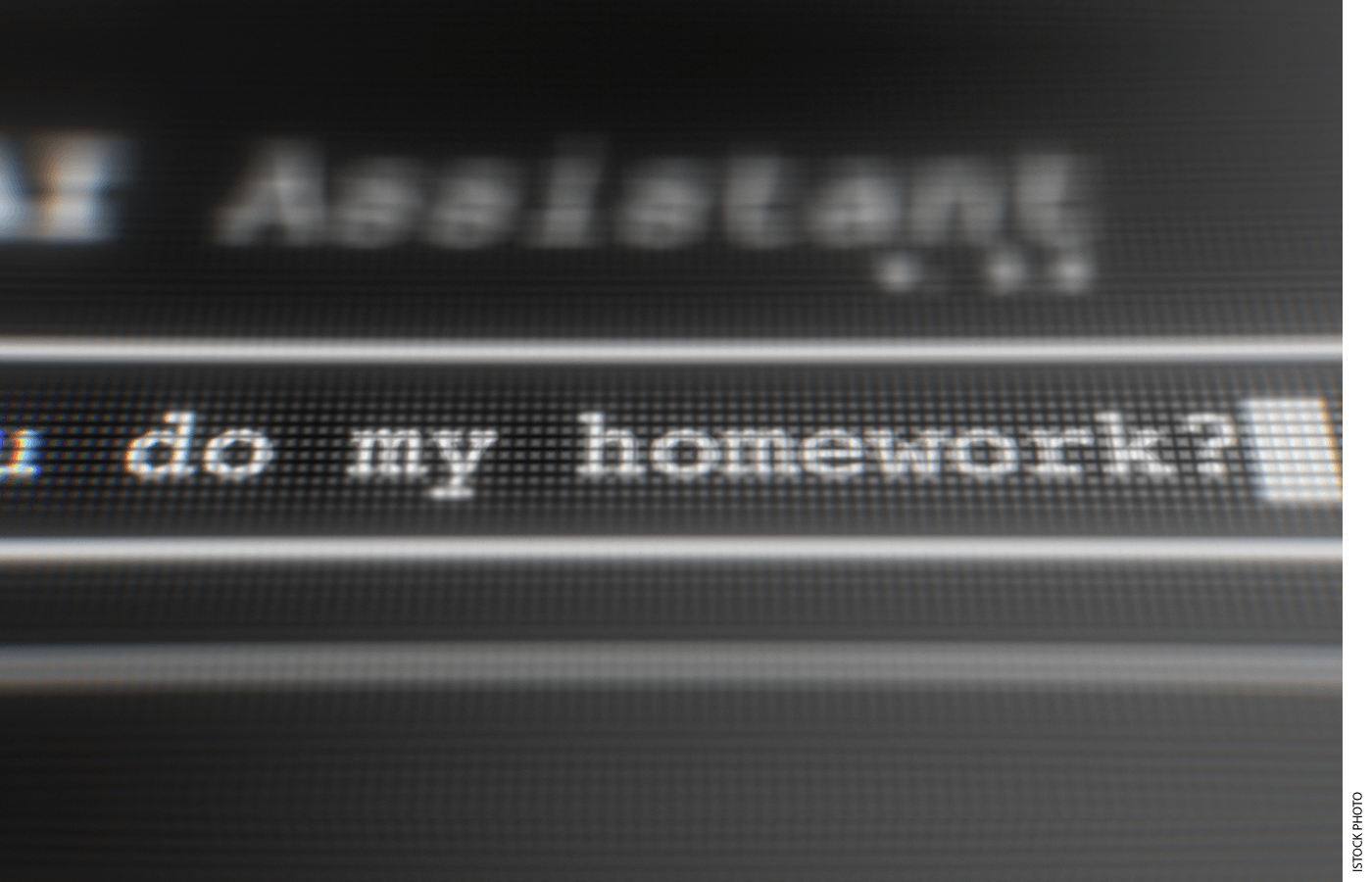
Each week during the football season, ESPN’s Dan Graziano pens a column that reacts to the most popular hot takes of the moment, judging whether they’re overreactions or on-point. It’s a useful device I’ve occasionally borrowed. Well, as readers know, the emergence of AI has produced a bonfire of hot takes about what it all means for education. Three and a half years on from the November 2022 unveiling of ChatGPT, let’s try to sort through a handful of them.
Employers want graduates who are comf
0
3
The Education Exchange: Most Progressive College Professors Exclude Alternatives Views
The Education Exchange · Ep. 436 – March 30, 2026 – Most Progressive College Professors Exclude Alternatives Views
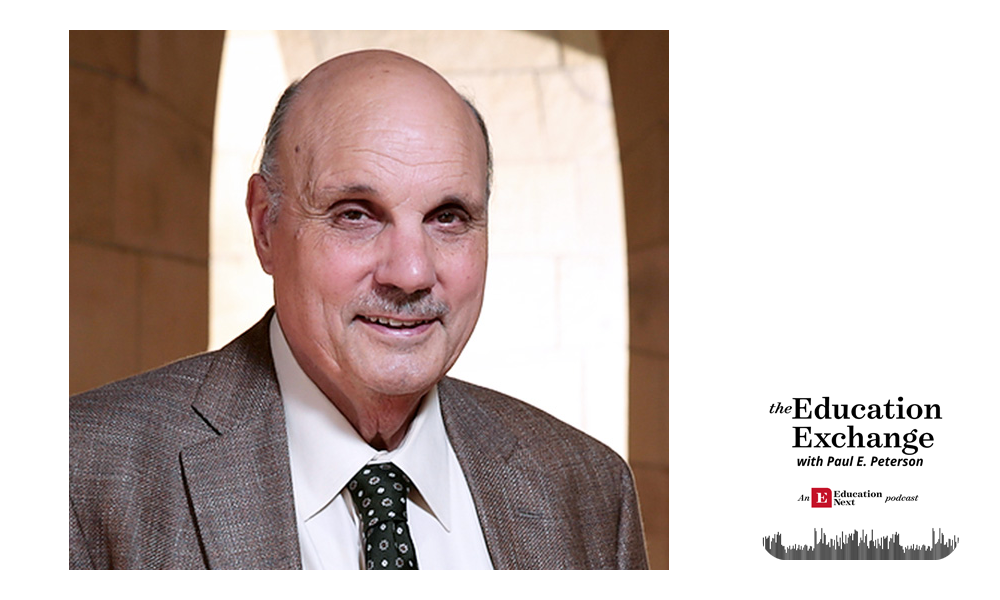
Jon Shields, a professor of American politics in the government department at Claremont McKenna College, joins Paul E. Peterson to discuss Shields’ latest research, which uses the Open Syllabus database to see how contentious issues are being taught on college campuses.
“Closed Classrooms,” co-written with Stephanie Muravchik, is availabl
0
1
The Classical Learning Test Takes Aim at the SAT–ACT Duopoly
The Classical Learning Test is unique among summative assessments in that it focuses entirely on classical texts.
The floodwaters raged. Infuriated by the ceaseless clamor from the crowded city of Shurrupak on the banks of the Euphrates River, the gods had resolved to purge the masses from it. Only a few mortals, tipped off ahead of time, managed to escape in a boat and bear witness.
The ancient Mesopotamian Epic of Gilgamesh is believed to be the first of the many flood myths in
0
0
How Democrats Lost the Plot on Schools—and How to Get It Back
The good news is that Democrats are finally admitting what parents, advocates, and researchers have known for years: The party doesn’t have a credible, student-centered education agenda. The bad news is how long it took to get here and the absence of a clear plan for turning the situation around.
Former Chicago mayor—and possible 2028 presidential contender—Rahm Emanuel has been saying this out loud longer and louder than almost anyone. He’s been joined by center-left voices like Jonathan Chait,
0
2
Rediscovering Knowledge as the Key to Reading
American educators have returned to the notion that shared background knowledge is essential to reading instruction, ending a decades-long lost cause that insisted reading skills and levels were the paths to literacy.
For decades, reading instruction in the United States has focused on helping children acquire generic, transferable skills such as finding the main idea of a passage or drawing inferences. At the same time, educators have minimized the contribution that knowledge mak
0
1
The Consequences of Shattered Trust
Education has experienced a series of discombobulating swings in recent years. Even savvy observers have struggled to make sense of them all. Why has school choice enjoyed such explosive growth? Why did the culture wars erupt with such a vengeance? How did colleges wind up in the crosshairs? Given dismal student performance, why isn’t there more appetite for K–12 accountability?
There are specific answers in each case. But there’s also a cheat code that helps explain the broader trend and offers
0
0
The Education Exchange: Students Lean Liberal Upon Arrival to College, Shift Further Left by Graduation
The Education Exchange · Ep. 435 – March 23, 2026 – Students Lean Liberal Upon Arrival to College, Shift Further Left by Graduation
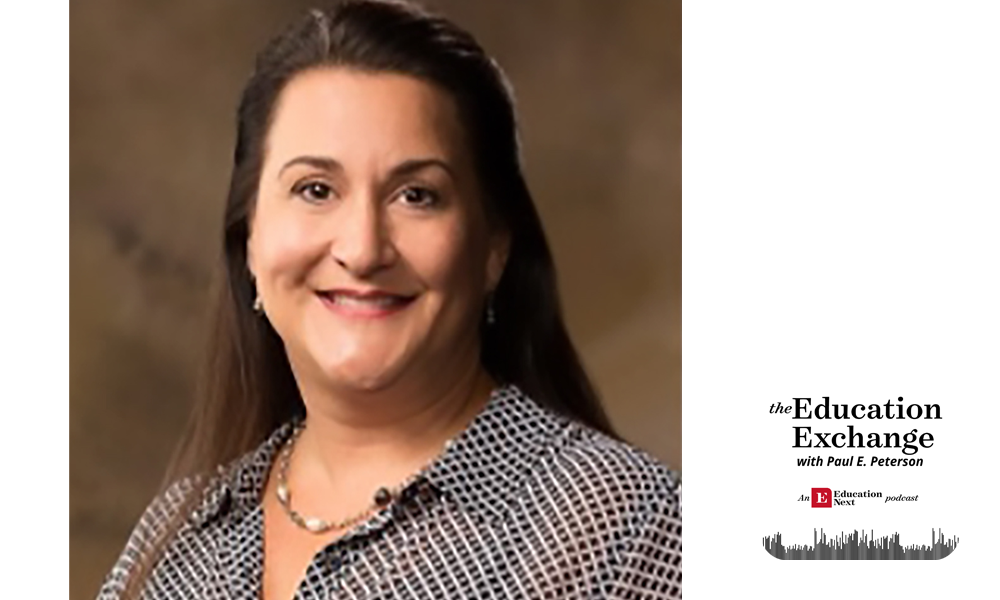
Paola Sapienza, the J-P Conte Family Senior Fellow at the Hoover Institution, joins Paul E. Peterson to discuss how political opinions are represented on college campuses, with more students closer to the center than not.
Follow The Education Exchange on Soundcloud, Apple Podcasts, Spotify, or here on Education Next.
— Educa
0
0
The Dumbing Down of Advanced Placement Tests
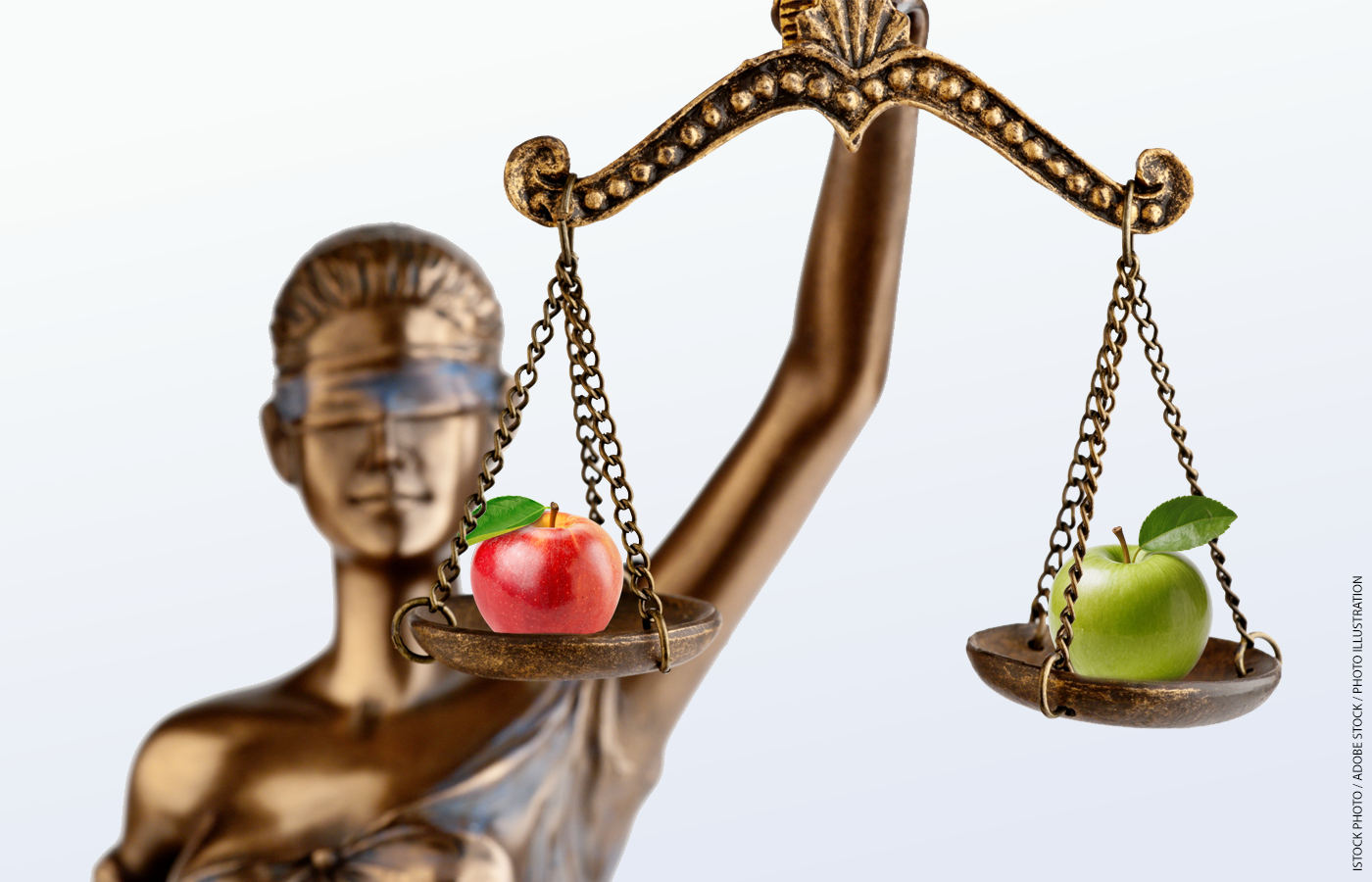
“We are so proud that our students are yet again leading the nation in AP scores and breaking all-time records. . . . Apples to apples, student to student, across the country, Massachusetts students are at the top, as I want them to be.” —Maura Healey, Massachusetts Governor
“This refinement strengthens the accuracy of our scoring. . . . In fact, AP standards for qualifying scores remain more stringent than grading standards in many college classrooms.” —Sara Sympson, College Board spokesperson
0
0
The Social Wealth Gap
In today’s economy, what you know still matters, but who you know—and who knows you—matters just as much.
Young people from affluent, well-connected families often inherit a quiet advantage that includes access to mentors, family friends, alumni networks, and managers who can offer advice, open doors, and vouch for them. Their peers from low-income or first-generation immigrant families are more likely to graduate socially impoverished. They earn their diploma but lack the relationships that tur
0
0
No Homework? No Problem.
A few weeks back, Education Week reported on a new survey of what teachers had to say about homework. The results were illuminating. Forty percent of teachers said they had assigned less homework over the last two years, while just 3 percent said they’d assigned more. Twenty-four percent of teachers assigned no homework at all. Those assigning less homework typically offered one of three reasons: students refused to do it (47 percent), the reliance of students on AI or tech (29 percent), and equ
0
0
The Education Exchange: Top Academic Journal Sees America Through a Glass Darkly
The Education Exchange · Ep. 433 – March 9, 2026 – Top Academic Journal Sees America Through a Glass Darkly
Richard D. Kahlenberg, Director of the American Identity Project at the Progressive Policy Institute, joins Paul E. Peterson to discuss Kahlenberg’s new report, which investigates how American Quarterly has covered American studies and history in the wake of President Donald Trump’s one-sided treatment.
“The Distortion of American Studies: How t
0
0
Restorative Justice Didn’t Deliver. Why?
Many schools began adopting restorative justice as a more equitable way of enforcing discipline in the mid-2010s. Here, teachers use RJ to mediate a conflict between two students at a San Antonio middle school in 2015.
More than a decade ago, the nation’s schools began to turn away from punishment-based approaches to student discipline and toward restorative justice (RJ), a practice based on mending harm, taking responsibility for one’s actions, and strengthening community. While
0
0
Don’t Just Fight Teen Screen Time—Fund the Alternatives
Jonathan Haidt has made the case for reducing screen time, focused mostly on mental health impacts. Martin West argues that getting kids off their devices could boost their learning, as well: “Coupled with greater accountability around student achievement, it may be the single most important thing we can do to help our kids learn.”
But how? Haidt favors bans. Bell-to-bell bans on phones in school might well reduce screen time from 8 a.m. to 3 p.m. It’s unproven, but we think Haidt is right there
0
0
Logged In, Tuned Out
“All the things.” “All the crazy things.” “Too much leeway and free-for-all.”
That’s how educators in Idaho, Maryland, and New Jersey describe technology use in their schools—and that’s just regarding the digital tools educators are expected to wield, let alone how kids are (mis)using learning tech.
Today, as many as 99 percent of teachers work at schools that provide laptops or tablets to K–12 students, who then spend a daily average of 98 minutes on screens at school, navigating a jaw-dropping
0
0
Will the Science of Reading Deliver This Time?
The science of reading is having a moment. Pundits are trumpeting the Southern Surge and celebrating academic outcomes in (gasp!) Mississippi and Louisiana. Outlets like the New York Times and Washington Post are rife with stories advising blue-state officials in New York and California to look south for educational inspiration. Congressional Republicans are holding hearings on what Washington should do to support the science of reading.
Here’s a rule of thumb: You know school reforms have made
0
0
The Education Exchange: Today’s Better Grades Could Mean Tomorrow’s Smaller Paychecks
The Education Exchange · Ep. 433 – March 9, 2026 – Today’s Better Grades Could Mean Tomorrow’s Smaller Paychecks
Jeff Denning, an associate professor at the University of Texas at Austin LBJ School of Public Affairs and Department of Educational Leadership and Policy, joins Paul E. Peterson to discuss Denning’s latest research, “Easy A’s, Less Pay: The Long-Term Effects of Grade Inflation,” co-written with Rachel Nesbit, Nolan Pope, and Merrill Warnic
0
0
Don’t Call Them the Underdogs
The Washington Urban Debate League, comprised of competitive middle and high school debaters, is the subject of the new documentary Immutable, which will be available to stream at PBS on March 6. WUDL member Saadiq is shown preparing for a debate with his teammates in a moment from the film.
You may have seen a movie in which teenagers experience grave injustice and then enter a prestigious competition where they prove to the world that they are smart. The competition might be the
0
0
The Education Exchange: Most Progressive College Professors Exclude Alternatives Views
0
1
The Classical Learning Test Takes Aim at the SAT–ACT Duopoly
0
0
How Democrats Lost the Plot on Schools—and How to Get It Back
0
2
The Education Exchange: Students Lean Liberal Upon Arrival to College, Shift Further Left by Graduation
0
0
The Education Exchange: Top Academic Journal Sees America Through a Glass Darkly
0
0
Hot Takes on AI and Education
Each week during the football season, ESPN’s Dan Graziano pens a column that reacts to the most popular hot takes of the moment, judging whether they’re overreactions or on-point. It’s a useful device I’ve occasionally borrowed. Well, as readers know, the emergence of AI has produced a bonfire of hot takes about what it all means for education. Three and a half years on from the November 2022 unveiling of ChatGPT, let’s try to sort through a handful of them.
Employers want graduates who are comf
0
3 👁
The Education Exchange: Most Progressive College Professors Exclude Alternatives Views
The Education Exchange · Ep. 436 – March 30, 2026 – Most Progressive College Professors Exclude Alternatives Views
Jon Shields, a professor of American politics in the government department at Claremont McKenna College, joins Paul E. Peterson to discuss Shields’ latest research, which uses the Open Syllabus database to see how contentious issues are being taught on college campuses.
“Closed Classrooms,” co-written with Stephanie Muravchik, is availabl
0
1 👁
The Classical Learning Test Takes Aim at the SAT–ACT Duopoly
The Classical Learning Test is unique among summative assessments in that it focuses entirely on classical texts.
The floodwaters raged. Infuriated by the ceaseless clamor from the crowded city of Shurrupak on the banks of the Euphrates River, the gods had resolved to purge the masses from it. Only a few mortals, tipped off ahead of time, managed to escape in a boat and bear witness.
The ancient Mesopotamian Epic of Gilgamesh is believed to be the first of the many flood myths in
0
0 👁
How Democrats Lost the Plot on Schools—and How to Get It Back
The good news is that Democrats are finally admitting what parents, advocates, and researchers have known for years: The party doesn’t have a credible, student-centered education agenda. The bad news is how long it took to get here and the absence of a clear plan for turning the situation around.
Former Chicago mayor—and possible 2028 presidential contender—Rahm Emanuel has been saying this out loud longer and louder than almost anyone. He’s been joined by center-left voices like Jonathan Chait,
0
2 👁
Rediscovering Knowledge as the Key to Reading
American educators have returned to the notion that shared background knowledge is essential to reading instruction, ending a decades-long lost cause that insisted reading skills and levels were the paths to literacy.
For decades, reading instruction in the United States has focused on helping children acquire generic, transferable skills such as finding the main idea of a passage or drawing inferences. At the same time, educators have minimized the contribution that knowledge mak
0
1 👁
The Consequences of Shattered Trust
Education has experienced a series of discombobulating swings in recent years. Even savvy observers have struggled to make sense of them all. Why has school choice enjoyed such explosive growth? Why did the culture wars erupt with such a vengeance? How did colleges wind up in the crosshairs? Given dismal student performance, why isn’t there more appetite for K–12 accountability?
There are specific answers in each case. But there’s also a cheat code that helps explain the broader trend and offers
0
0 👁
The Education Exchange: Students Lean Liberal Upon Arrival to College, Shift Further Left by Graduation
The Education Exchange · Ep. 435 – March 23, 2026 – Students Lean Liberal Upon Arrival to College, Shift Further Left by Graduation
Paola Sapienza, the J-P Conte Family Senior Fellow at the Hoover Institution, joins Paul E. Peterson to discuss how political opinions are represented on college campuses, with more students closer to the center than not.
Follow The Education Exchange on Soundcloud, Apple Podcasts, Spotify, or here on Education Next.
— Educa
0
0 👁
The Dumbing Down of Advanced Placement Tests
“We are so proud that our students are yet again leading the nation in AP scores and breaking all-time records. . . . Apples to apples, student to student, across the country, Massachusetts students are at the top, as I want them to be.” —Maura Healey, Massachusetts Governor
“This refinement strengthens the accuracy of our scoring. . . . In fact, AP standards for qualifying scores remain more stringent than grading standards in many college classrooms.” —Sara Sympson, College Board spokesperson
0
0 👁
The Social Wealth Gap
In today’s economy, what you know still matters, but who you know—and who knows you—matters just as much.
Young people from affluent, well-connected families often inherit a quiet advantage that includes access to mentors, family friends, alumni networks, and managers who can offer advice, open doors, and vouch for them. Their peers from low-income or first-generation immigrant families are more likely to graduate socially impoverished. They earn their diploma but lack the relationships that tur
0
0 👁
No Homework? No Problem.
A few weeks back, Education Week reported on a new survey of what teachers had to say about homework. The results were illuminating. Forty percent of teachers said they had assigned less homework over the last two years, while just 3 percent said they’d assigned more. Twenty-four percent of teachers assigned no homework at all. Those assigning less homework typically offered one of three reasons: students refused to do it (47 percent), the reliance of students on AI or tech (29 percent), and equ
0
0 👁
The Education Exchange: Top Academic Journal Sees America Through a Glass Darkly
The Education Exchange · Ep. 433 – March 9, 2026 – Top Academic Journal Sees America Through a Glass Darkly
Richard D. Kahlenberg, Director of the American Identity Project at the Progressive Policy Institute, joins Paul E. Peterson to discuss Kahlenberg’s new report, which investigates how American Quarterly has covered American studies and history in the wake of President Donald Trump’s one-sided treatment.
“The Distortion of American Studies: How t
0
0 👁
Restorative Justice Didn’t Deliver. Why?
Many schools began adopting restorative justice as a more equitable way of enforcing discipline in the mid-2010s. Here, teachers use RJ to mediate a conflict between two students at a San Antonio middle school in 2015.
More than a decade ago, the nation’s schools began to turn away from punishment-based approaches to student discipline and toward restorative justice (RJ), a practice based on mending harm, taking responsibility for one’s actions, and strengthening community. While
0
0 👁
Don’t Just Fight Teen Screen Time—Fund the Alternatives
Jonathan Haidt has made the case for reducing screen time, focused mostly on mental health impacts. Martin West argues that getting kids off their devices could boost their learning, as well: “Coupled with greater accountability around student achievement, it may be the single most important thing we can do to help our kids learn.”
But how? Haidt favors bans. Bell-to-bell bans on phones in school might well reduce screen time from 8 a.m. to 3 p.m. It’s unproven, but we think Haidt is right there
0
0 👁
Logged In, Tuned Out
“All the things.” “All the crazy things.” “Too much leeway and free-for-all.”
That’s how educators in Idaho, Maryland, and New Jersey describe technology use in their schools—and that’s just regarding the digital tools educators are expected to wield, let alone how kids are (mis)using learning tech.
Today, as many as 99 percent of teachers work at schools that provide laptops or tablets to K–12 students, who then spend a daily average of 98 minutes on screens at school, navigating a jaw-dropping
0
0 👁
Will the Science of Reading Deliver This Time?
The science of reading is having a moment. Pundits are trumpeting the Southern Surge and celebrating academic outcomes in (gasp!) Mississippi and Louisiana. Outlets like the New York Times and Washington Post are rife with stories advising blue-state officials in New York and California to look south for educational inspiration. Congressional Republicans are holding hearings on what Washington should do to support the science of reading.
Here’s a rule of thumb: You know school reforms have made
0
0 👁
The Education Exchange: Today’s Better Grades Could Mean Tomorrow’s Smaller Paychecks
The Education Exchange · Ep. 433 – March 9, 2026 – Today’s Better Grades Could Mean Tomorrow’s Smaller Paychecks
Jeff Denning, an associate professor at the University of Texas at Austin LBJ School of Public Affairs and Department of Educational Leadership and Policy, joins Paul E. Peterson to discuss Denning’s latest research, “Easy A’s, Less Pay: The Long-Term Effects of Grade Inflation,” co-written with Rachel Nesbit, Nolan Pope, and Merrill Warnic
0
0 👁
Don’t Call Them the Underdogs
The Washington Urban Debate League, comprised of competitive middle and high school debaters, is the subject of the new documentary Immutable, which will be available to stream at PBS on March 6. WUDL member Saadiq is shown preparing for a debate with his teammates in a moment from the film.
You may have seen a movie in which teenagers experience grave injustice and then enter a prestigious competition where they prove to the world that they are smart. The competition might be the
0
0 👁
Hot Takes on AI and Education
Each week during the football season, ESPN’s Dan Graziano pens a column that reacts to the most popular hot takes of the moment, j…
💬 0
👁 3
The Education Exchange: Most Progressive College Professors Exclude Alternatives Views
Education Next · Mar 30, 2026
💬 0
👁 1
The Classical Learning Test Takes Aim at the SAT–ACT Duopoly
Education Next · Mar 26, 2026
💬 0
👁 0
How Democrats Lost the Plot on Schools—and How to Get It Back
Education Next · Mar 25, 2026
💬 0
👁 2

Rediscovering Knowledge as the Key to Reading
Education Next · Mar 24, 2026

The Consequences of Shattered Trust
Education Next · Mar 23, 2026

The Education Exchange: Students Lean Liberal Upon Arrival to College, Shift Further Left by Graduation
Education Next · Mar 23, 2026

The Dumbing Down of Advanced Placement Tests
Education Next · Mar 18, 2026
The Social Wealth Gap
In today’s economy, what you know still matters, but who you know—and who knows you—matters just as much.
Young people from afflue…
💬 0
👁 0
No Homework? No Problem.
Education Next · Mar 16, 2026
💬 0
👁 0
The Education Exchange: Top Academic Journal Sees America Through a Glass Darkly
Education Next · Mar 16, 2026
💬 0
👁 0
Restorative Justice Didn’t Deliver. Why?
Education Next · Mar 12, 2026
💬 0
👁 0

Don’t Just Fight Teen Screen Time—Fund the Alternatives
Education Next · Mar 11, 2026

Logged In, Tuned Out
Education Next · Mar 10, 2026

Will the Science of Reading Deliver This Time?
Education Next · Mar 9, 2026

The Education Exchange: Today’s Better Grades Could Mean Tomorrow’s Smaller Paychecks
Education Next · Mar 9, 2026
Don’t Call Them the Underdogs
The Washington Urban Debate League, comprised of competitive middle and high school debaters, is the subject of the new documentar…
💬 0
👁 0