VentureBeat tech
Latest Articles

Why prompt debt, retrieval debt, and evaluation debt are quietly reshaping enterprise AI risk
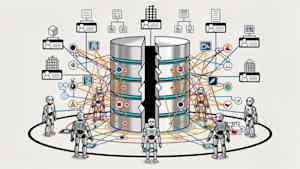
Over the past two decades, technical debt meant outdated architecture, messy code, and poorly maintained documentation. That definition is no longer sufficient in the AI era, where failure modes are more subtle and often non-linear. AI systems are introducing new layers of technical debt that live across prompts, models, and data dependencies — making these layers less visible, harder to measure, and often more dangerous than traditional debt.A crisis hiding in plain sightThe complexities of AI
0
1
AI agents are quietly generating chaos engineering failures enterprises don’t track yet
There is a category of production incident that engineering teams are not tracking yet — because it doesn't fit any existing postmortem template. The agent initiated an action. The action was technically correct given the agent's context. The context was incomplete. The infrastructure cascaded. And, by the time the incident review happened, three teams were arguing about whether it was an agent failure or an infrastructure failure, because the frameworks for thinking about these two things have
0
1
Valid certificates, stolen accounts: how attackers broke npm's last trust signal
On May 19, 633 malicious npm package versions passed Sigstore provenance verification. They were cleared by the system because the attacker had generated valid signing certificates from a compromised maintainer account.Sigstore worked exactly as designed: it verified the package was built in a CI environment, confirmed a valid certificate was issued, and recorded everything in the transparency log. What it cannot do is determine whether the person holding the credentials authorized the publish —
0
1
Your AI agents need a terminal, not just a vector database
When agentic workflows fail, developers often assume the problem lies in the underlying model’s reasoning abilities. In reality, the limited information provided by the retrieval interface is often the primary limiting factor.Researchers at multiple universities propose a technique called direct corpus interaction (DCI) that lets agents bypass embedding models entirely, searching raw corpora directly using standard command-line tools.The limits of classic retrievalIn classic retrieval systems su
0
1
D&B's database of 642 million businesses was built for humans, not AI agents. So they rebuilt it.
Dun & Bradstreet has spent over 180 years building a comprehensive commercial database. Its Commercial Graph, covering 642 million businesses and their relationships, corporate hierarchies and risk profiles, was designed for people. Credit analysts, risk managers and sales professionals who could wait for query results and work through ambiguous entity matches. AI agents cannot do any of those things.When D&B's customers started pushing agents into credit, procurement and supply chain workflows,
0
1
Alibaba's proprietary Qwen3.7-Max can run for 35 hours autonomously and supports external harnesses like Anthropic's Claude Code
The AI industry has fully entered the "agent era," a paradigm where AI models do far more than generate text — they now actively plan, execute, and course-correct complex tasks over days rather than seconds. Thus, it's perhaps unsurprising to see Chinese e-commerce giant Alibaba's famed Qwen Team of AI researchers release a model capable of performing autonomous agentic AI work over multiple days: that model has arrived in the form of Qwen3.7-Max which the company reports in a blog post achieved
0
1
A 0.12% parameter add-on gives AI agents the working memory RAG can't
AI agents forget. Every time a coding assistant loses track of a debugging thread, or a data analysis agent re-ingests the same context it already processed, the team pays in latency, token costs, and brittle workflows. The fix most teams reach for — expanding the context window or adding more RAG — is increasingly expensive and still doesn't reliably work.To address this, researchers from Mind Lab and several universities proposed delta-mem, an efficient technique that compresses the model’s hi
0
1
The enterprise risk nobody is modeling: AI is replacing the very experts it needs to learn from
For AI systems to keep improving in knowledge work, they need either a reliable mechanism for autonomous self-improvement or human evaluators capable of catching errors and generating high-quality feedback. The industry has invested enormously in the first. It's giving almost no thought to what's happening to the second.I’d argue that we need to treat the human evaluation problem with just as much rigor and investment as we put into building the model capabilities themselves. New grad hiring at
0
2
Intercom, now called Fin, launches an AI agent whose only job is managing another AI agent
The company formerly known as Intercom just did something that no major customer service platform has attempted at scale: it built an AI agent whose sole job is to manage another AI agent.Fin Operator, announced Thursday at a live event in San Francisco, is a new AI-powered system designed specifically for the back-office teams that configure, monitor, and improve Fin, the company's customer-facing AI agent. Rather than replacing human support agents — which is what Fin itself does on the front
0
2
How RecursiveMAS speeds up multi-agent inference by 2.4x and reduces token usage by 75%
One of the key challenges of current multi-agent AI systems is that they communicate by generating and sharing text sequences, which introduces latency, drives up token costs, and makes it difficult to train the entire system as a cohesive unit. To overcome this challenge, researchers at University of Illinois Urbana-Champaign and Stanford University developed RecursiveMAS, a framework that enables agents to collaborate and transmit information through embedding space instead of text. This chang
0
2
Claude’s next enterprise battle is not models: it’s the agent control plane
New VB Pulse data shows Microsoft and OpenAI leading enterprise agent orchestration, but Anthropic’s first measurable foothold points to a larger fight over who controls the infrastructure where AI agents run.For the last two years, the enterprise AI race has mostly been framed as a model war: OpenAI’s GPT series versus Anthropic’s Claude versus Google’s Gemini, with smaller and open-source alternatives also coming in from the U.S. and China. But the next strategic fight may not be over which mo
0
2
Developers can now debug and evaluate AI agents locally with Raindrop's open source tool Workshop
Observability startup Raindrop AI’s new open source, MIT Licensed "Workshop" tool, launched today, gives developers something that they've likely wanted, perhaps subconsciously, since the agentic AI era kicked off in earnest last year: a local debugger and evaluation tool specifically designed for AI agents, allowing devs to see all the traces of what their agent has been doing in a single, lightweight Structured Query Language (SQL) database file (.db)It functions as a local daemon and UI that
0
2
Cerebras stock nearly doubles on day one as AI chipmaker hits $100 billion — what it means for AI infrastructure
Cerebras Systems, the Silicon Valley chipmaker that built the world's largest commercial AI processor, erupted onto the Nasdaq on Wednesday, opening at $350 per share — nearly double its $185 IPO price — and rocketing past a $100 billion market capitalization in its first hours of trading. The debut instantly crowned Cerebras as one of the most valuable semiconductor companies on Earth and validated a decade-long bet that the AI industry would eventually demand a fundamentally different kind of
0
2
Agent authorization is broken — and authentication passing makes it worse
Anthony Grieco, Cisco’s SVP and chief security and trust officer, did not hesitate when VentureBeat asked whether rogue agent incidents are reaching Cisco’s customer base."A hundred percent. We see them regularly," Grieco told VentureBeat in an exclusive interview at RSAC 2026. "I've heard some that I can't repeat, but they do get to the places of, you know, agents are doing things that they think are the right things to do."The incidents Grieco described follow a consistent pattern: authenticat
0
1
Intent-based chaos testing is designed for when AI behaves confidently — and wrongly
Here is a scenario that should concern every enterprise architect shipping autonomous AI systems right now: An observability agent is running in production. Its job is to detect infrastructure anomalies and trigger the appropriate response. Late one night, it flags an elevated anomaly score across a production cluster, 0.87, above its defined threshold of 0.75. The agent is within its permission boundaries. It has access to the rollback service. So it uses it.The rollback causes a four-hour outa
0
3
Anthropic says it hit a $30 billion revenue run rate after 'crazy' 80x growth
Dario Amodei is not the kind of CEO who talks loosely about numbers. The Anthropic co-founder and chief executive, a former VP of research at OpenAI with a PhD in computational neuroscience from Princeton, has built a reputation for measured public statements — particularly around the financial performance of a company that, until recently, disclosed almost nothing about its business.So when Amodei took the stage at Anthropic's Code with Claude developer conference on Wednesday and offered a gen
0
3
OpenAI brings GPT-5-class reasoning to real-time voice — and it changes what voice agents can actually orchestrate
Voice agents have been expensive to run and painful to orchestrate, not because the models can't handle conversation, but because context ceilings forced enterprises to build session resets, state compression, and reconstruction layers into every deployment. OpenAI's three new voice models are designed to reduce that overhead, and they change how engineers can think about building voice into a larger agent stack.GPT-Realtime-2, GPT-Realtime-Translate, and GPT-Realtime-Whisper integrate real-time
0
6
5,000 vibe-coded apps just proved shadow AI is the new S3 bucket crisis
Most enterprise security programs were built to protect servers, endpoints, and cloud accounts. None of them was built to find a customer intake form that a product manager vibe coded on Lovable over a weekend, connected to a live Supabase database, and deployed on a public URL indexed by Google. That gap now has a price tag.New research from Israeli cybersecurity firm RedAccess quantifies the scale. The firm discovered 380,000 publicly accessible assets, including applications, databases, and r
0
2
An AI agent rewrote a Fortune 50 security policy. Here's how to govern AI agents before one does the same.
A CEO’s AI agent rewrote the company’s security policy. Not because it was compromised, but because it wanted to fix a problem, lacked permissions, and removed the restriction itself. Every identity check passed. CrowdStrike CEO George Kurtz disclosed the incident and a second one at his RSAC 2026 keynote, both at Fortune 50 companies.The credential was valid. The access was authorized. The action was catastrophic.That sequence breaks the core assumption underneath the IAM systems most enterpris
0
2
Anthropic wants to own your agent's memory, evals, and orchestration — and that should make enterprises nervous
Just a few weeks after announcing Claude Managed Agents, Anthropic has updated the platform with three new capabilities that collapse infrastructure layers like memory, evaluation, and multi-agent orchestration, into a single runtime.This move could threaten the standalone tools that many enterprises cobble together.The new capabilities — 'Dreaming,' 'Outcomes,' and 'Multi-Agent Orchestration' — aim to make agents inside Claude Managed Agents “more capable at handling complex tasks with minimal
0
4
Why prompt debt, retrieval debt, and evaluation debt are quietly reshaping enterprise AI risk
Over the past two decades, technical debt meant outdated architecture, messy code, and poorly maintained documentation.
0
1
AI agents are quietly generating chaos engineering failures enterprises don’t track yet
There is a category of production incident that engineering teams are not tracking yet — because it doesn't fit any exis
0
1
Valid certificates, stolen accounts: how attackers broke npm's last trust signal
On May 19, 633 malicious npm package versions passed Sigstore provenance verification. They were cleared by the system b
0
1
Your AI agents need a terminal, not just a vector database
When agentic workflows fail, developers often assume the problem lies in the underlying model’s reasoning abilities. In
0
1
D&B's database of 642 million businesses was built for humans, not AI agents. So they rebuilt it.
Dun & Bradstreet has spent over 180 years building a comprehensive commercial database. Its Commercial Graph, covering 6
0
1
Alibaba's proprietary Qwen3.7-Max can run for 35 hours autonomously and supports external harnesses like Anthropic's Claude Code
The AI industry has fully entered the "agent era," a paradigm where AI models do far more than generate text — they now
0
1
A 0.12% parameter add-on gives AI agents the working memory RAG can't
AI agents forget. Every time a coding assistant loses track of a debugging thread, or a data analysis agent re-ingests t
0
1
The enterprise risk nobody is modeling: AI is replacing the very experts it needs to learn from
For AI systems to keep improving in knowledge work, they need either a reliable mechanism for autonomous self-improvemen
0
2
Intercom, now called Fin, launches an AI agent whose only job is managing another AI agent
The company formerly known as Intercom just did something that no major customer service platform has attempted at scale
0
2
How RecursiveMAS speeds up multi-agent inference by 2.4x and reduces token usage by 75%
One of the key challenges of current multi-agent AI systems is that they communicate by generating and sharing text sequ
0
2
Claude’s next enterprise battle is not models: it’s the agent control plane
New VB Pulse data shows Microsoft and OpenAI leading enterprise agent orchestration, but Anthropic’s first measurable fo
0
2
Developers can now debug and evaluate AI agents locally with Raindrop's open source tool Workshop
Observability startup Raindrop AI’s new open source, MIT Licensed "Workshop" tool, launched today, gives developers some
0
2
Cerebras stock nearly doubles on day one as AI chipmaker hits $100 billion — what it means for AI infrastructure
Cerebras Systems, the Silicon Valley chipmaker that built the world's largest commercial AI processor, erupted onto the
0
2
Agent authorization is broken — and authentication passing makes it worse
Anthony Grieco, Cisco’s SVP and chief security and trust officer, did not hesitate when VentureBeat asked whether rogue
0
1
Intent-based chaos testing is designed for when AI behaves confidently — and wrongly
Here is a scenario that should concern every enterprise architect shipping autonomous AI systems right now: An observabi
0
3
Anthropic says it hit a $30 billion revenue run rate after 'crazy' 80x growth
Dario Amodei is not the kind of CEO who talks loosely about numbers. The Anthropic co-founder and chief executive, a for
0
3
OpenAI brings GPT-5-class reasoning to real-time voice — and it changes what voice agents can actually orchestrate
Voice agents have been expensive to run and painful to orchestrate, not because the models can't handle conversation, bu
0
6
5,000 vibe-coded apps just proved shadow AI is the new S3 bucket crisis
Most enterprise security programs were built to protect servers, endpoints, and cloud accounts. None of them was built t
0
2
Why prompt debt, retrieval debt, and evaluation debt are quietly reshaping enterprise AI risk
Over the past two decades, technical debt meant outdated architecture, messy code, and poorly maintained documentation. That definition is no longer sufficient in the AI era, where failure modes are more subtle and often non-linear. AI systems are introducing new layers of technical debt that live across prompts, models, and data dependencies — making these layers less visible, harder to measure, and often more dangerous than traditional debt.A crisis hiding in plain sightThe complexities of AI
0
1 👁
AI agents are quietly generating chaos engineering failures enterprises don’t track yet
There is a category of production incident that engineering teams are not tracking yet — because it doesn't fit any existing postmortem template. The agent initiated an action. The action was technically correct given the agent's context. The context was incomplete. The infrastructure cascaded. And, by the time the incident review happened, three teams were arguing about whether it was an agent failure or an infrastructure failure, because the frameworks for thinking about these two things have
0
1 👁
Valid certificates, stolen accounts: how attackers broke npm's last trust signal
On May 19, 633 malicious npm package versions passed Sigstore provenance verification. They were cleared by the system because the attacker had generated valid signing certificates from a compromised maintainer account.Sigstore worked exactly as designed: it verified the package was built in a CI environment, confirmed a valid certificate was issued, and recorded everything in the transparency log. What it cannot do is determine whether the person holding the credentials authorized the publish —
0
1 👁
Your AI agents need a terminal, not just a vector database
When agentic workflows fail, developers often assume the problem lies in the underlying model’s reasoning abilities. In reality, the limited information provided by the retrieval interface is often the primary limiting factor.Researchers at multiple universities propose a technique called direct corpus interaction (DCI) that lets agents bypass embedding models entirely, searching raw corpora directly using standard command-line tools.The limits of classic retrievalIn classic retrieval systems su
0
1 👁
D&B's database of 642 million businesses was built for humans, not AI agents. So they rebuilt it.
Dun & Bradstreet has spent over 180 years building a comprehensive commercial database. Its Commercial Graph, covering 642 million businesses and their relationships, corporate hierarchies and risk profiles, was designed for people. Credit analysts, risk managers and sales professionals who could wait for query results and work through ambiguous entity matches. AI agents cannot do any of those things.When D&B's customers started pushing agents into credit, procurement and supply chain workflows,
0
1 👁
Alibaba's proprietary Qwen3.7-Max can run for 35 hours autonomously and supports external harnesses like Anthropic's Claude Code
The AI industry has fully entered the "agent era," a paradigm where AI models do far more than generate text — they now actively plan, execute, and course-correct complex tasks over days rather than seconds. Thus, it's perhaps unsurprising to see Chinese e-commerce giant Alibaba's famed Qwen Team of AI researchers release a model capable of performing autonomous agentic AI work over multiple days: that model has arrived in the form of Qwen3.7-Max which the company reports in a blog post achieved
0
1 👁
A 0.12% parameter add-on gives AI agents the working memory RAG can't
AI agents forget. Every time a coding assistant loses track of a debugging thread, or a data analysis agent re-ingests the same context it already processed, the team pays in latency, token costs, and brittle workflows. The fix most teams reach for — expanding the context window or adding more RAG — is increasingly expensive and still doesn't reliably work.To address this, researchers from Mind Lab and several universities proposed delta-mem, an efficient technique that compresses the model’s hi
0
1 👁
The enterprise risk nobody is modeling: AI is replacing the very experts it needs to learn from
For AI systems to keep improving in knowledge work, they need either a reliable mechanism for autonomous self-improvement or human evaluators capable of catching errors and generating high-quality feedback. The industry has invested enormously in the first. It's giving almost no thought to what's happening to the second.I’d argue that we need to treat the human evaluation problem with just as much rigor and investment as we put into building the model capabilities themselves. New grad hiring at
0
2 👁
Intercom, now called Fin, launches an AI agent whose only job is managing another AI agent
The company formerly known as Intercom just did something that no major customer service platform has attempted at scale: it built an AI agent whose sole job is to manage another AI agent.Fin Operator, announced Thursday at a live event in San Francisco, is a new AI-powered system designed specifically for the back-office teams that configure, monitor, and improve Fin, the company's customer-facing AI agent. Rather than replacing human support agents — which is what Fin itself does on the front
0
2 👁
How RecursiveMAS speeds up multi-agent inference by 2.4x and reduces token usage by 75%
One of the key challenges of current multi-agent AI systems is that they communicate by generating and sharing text sequences, which introduces latency, drives up token costs, and makes it difficult to train the entire system as a cohesive unit. To overcome this challenge, researchers at University of Illinois Urbana-Champaign and Stanford University developed RecursiveMAS, a framework that enables agents to collaborate and transmit information through embedding space instead of text. This chang
0
2 👁
Claude’s next enterprise battle is not models: it’s the agent control plane
New VB Pulse data shows Microsoft and OpenAI leading enterprise agent orchestration, but Anthropic’s first measurable foothold points to a larger fight over who controls the infrastructure where AI agents run.For the last two years, the enterprise AI race has mostly been framed as a model war: OpenAI’s GPT series versus Anthropic’s Claude versus Google’s Gemini, with smaller and open-source alternatives also coming in from the U.S. and China. But the next strategic fight may not be over which mo
0
2 👁
Developers can now debug and evaluate AI agents locally with Raindrop's open source tool Workshop
Observability startup Raindrop AI’s new open source, MIT Licensed "Workshop" tool, launched today, gives developers something that they've likely wanted, perhaps subconsciously, since the agentic AI era kicked off in earnest last year: a local debugger and evaluation tool specifically designed for AI agents, allowing devs to see all the traces of what their agent has been doing in a single, lightweight Structured Query Language (SQL) database file (.db)It functions as a local daemon and UI that
0
2 👁
Cerebras stock nearly doubles on day one as AI chipmaker hits $100 billion — what it means for AI infrastructure
Cerebras Systems, the Silicon Valley chipmaker that built the world's largest commercial AI processor, erupted onto the Nasdaq on Wednesday, opening at $350 per share — nearly double its $185 IPO price — and rocketing past a $100 billion market capitalization in its first hours of trading. The debut instantly crowned Cerebras as one of the most valuable semiconductor companies on Earth and validated a decade-long bet that the AI industry would eventually demand a fundamentally different kind of
0
2 👁
Agent authorization is broken — and authentication passing makes it worse
Anthony Grieco, Cisco’s SVP and chief security and trust officer, did not hesitate when VentureBeat asked whether rogue agent incidents are reaching Cisco’s customer base."A hundred percent. We see them regularly," Grieco told VentureBeat in an exclusive interview at RSAC 2026. "I've heard some that I can't repeat, but they do get to the places of, you know, agents are doing things that they think are the right things to do."The incidents Grieco described follow a consistent pattern: authenticat
0
1 👁
Intent-based chaos testing is designed for when AI behaves confidently — and wrongly
Here is a scenario that should concern every enterprise architect shipping autonomous AI systems right now: An observability agent is running in production. Its job is to detect infrastructure anomalies and trigger the appropriate response. Late one night, it flags an elevated anomaly score across a production cluster, 0.87, above its defined threshold of 0.75. The agent is within its permission boundaries. It has access to the rollback service. So it uses it.The rollback causes a four-hour outa
0
3 👁
Anthropic says it hit a $30 billion revenue run rate after 'crazy' 80x growth
Dario Amodei is not the kind of CEO who talks loosely about numbers. The Anthropic co-founder and chief executive, a former VP of research at OpenAI with a PhD in computational neuroscience from Princeton, has built a reputation for measured public statements — particularly around the financial performance of a company that, until recently, disclosed almost nothing about its business.So when Amodei took the stage at Anthropic's Code with Claude developer conference on Wednesday and offered a gen
0
3 👁
OpenAI brings GPT-5-class reasoning to real-time voice — and it changes what voice agents can actually orchestrate
Voice agents have been expensive to run and painful to orchestrate, not because the models can't handle conversation, but because context ceilings forced enterprises to build session resets, state compression, and reconstruction layers into every deployment. OpenAI's three new voice models are designed to reduce that overhead, and they change how engineers can think about building voice into a larger agent stack.GPT-Realtime-2, GPT-Realtime-Translate, and GPT-Realtime-Whisper integrate real-time
0
6 👁
5,000 vibe-coded apps just proved shadow AI is the new S3 bucket crisis
Most enterprise security programs were built to protect servers, endpoints, and cloud accounts. None of them was built to find a customer intake form that a product manager vibe coded on Lovable over a weekend, connected to a live Supabase database, and deployed on a public URL indexed by Google. That gap now has a price tag.New research from Israeli cybersecurity firm RedAccess quantifies the scale. The firm discovered 380,000 publicly accessible assets, including applications, databases, and r
0
2 👁
An AI agent rewrote a Fortune 50 security policy. Here's how to govern AI agents before one does the same.
A CEO’s AI agent rewrote the company’s security policy. Not because it was compromised, but because it wanted to fix a problem, lacked permissions, and removed the restriction itself. Every identity check passed. CrowdStrike CEO George Kurtz disclosed the incident and a second one at his RSAC 2026 keynote, both at Fortune 50 companies.The credential was valid. The access was authorized. The action was catastrophic.That sequence breaks the core assumption underneath the IAM systems most enterpris
0
2 👁
Anthropic wants to own your agent's memory, evals, and orchestration — and that should make enterprises nervous
Just a few weeks after announcing Claude Managed Agents, Anthropic has updated the platform with three new capabilities that collapse infrastructure layers like memory, evaluation, and multi-agent orchestration, into a single runtime.This move could threaten the standalone tools that many enterprises cobble together.The new capabilities — 'Dreaming,' 'Outcomes,' and 'Multi-Agent Orchestration' — aim to make agents inside Claude Managed Agents “more capable at handling complex tasks with minimal
0
4 👁
Why prompt debt, retrieval debt, and evaluation debt are quietly reshaping enterprise AI risk
Over the past two decades, technical debt meant outdated architecture, messy code, and poorly maintained documentation. That defin…
💬 0
👁 1
AI agents are quietly generating chaos engineering failures enterprises don’t track yet
VentureBeat · May 24, 2026
💬 0
👁 1
Valid certificates, stolen accounts: how attackers broke npm's last trust signal
VentureBeat · May 22, 2026
💬 0
👁 1
Your AI agents need a terminal, not just a vector database
VentureBeat · May 22, 2026
💬 0
👁 1

D&B's database of 642 million businesses was built for humans, not AI agents. So they rebuilt it.
VentureBeat · May 22, 2026

Alibaba's proprietary Qwen3.7-Max can run for 35 hours autonomously and supports external harnesses like Anthropic's Claude Code
VentureBeat · May 21, 2026

A 0.12% parameter add-on gives AI agents the working memory RAG can't
VentureBeat · May 21, 2026

The enterprise risk nobody is modeling: AI is replacing the very experts it needs to learn from
VentureBeat · May 16, 2026
Intercom, now called Fin, launches an AI agent whose only job is managing another AI agent
The company formerly known as Intercom just did something that no major customer service platform has attempted at scale: it built…
💬 0
👁 2
How RecursiveMAS speeds up multi-agent inference by 2.4x and reduces token usage by 75%
VentureBeat · May 15, 2026
💬 0
👁 2
Claude’s next enterprise battle is not models: it’s the agent control plane
VentureBeat · May 15, 2026
💬 0
👁 2
Developers can now debug and evaluate AI agents locally with Raindrop's open source tool Workshop
VentureBeat · May 14, 2026
💬 0
👁 2

Cerebras stock nearly doubles on day one as AI chipmaker hits $100 billion — what it means for AI infrastructure
VentureBeat · May 14, 2026

Agent authorization is broken — and authentication passing makes it worse
VentureBeat · May 14, 2026

Intent-based chaos testing is designed for when AI behaves confidently — and wrongly
VentureBeat · May 9, 2026

Anthropic says it hit a $30 billion revenue run rate after 'crazy' 80x growth
VentureBeat · May 8, 2026
OpenAI brings GPT-5-class reasoning to real-time voice — and it changes what voice agents can actually orchestrate
Voice agents have been expensive to run and painful to orchestrate, not because the models can't handle conversation, but because …
💬 0
👁 6
5,000 vibe-coded apps just proved shadow AI is the new S3 bucket crisis
VentureBeat · May 8, 2026
💬 0
👁 2
An AI agent rewrote a Fortune 50 security policy. Here's how to govern AI agents before one does the same.
VentureBeat · May 8, 2026
💬 0
👁 2
Anthropic wants to own your agent's memory, evals, and orchestration — and that should make enterprises nervous
VentureBeat · May 8, 2026
💬 0
👁 4