Environmental journalism
Latest Articles
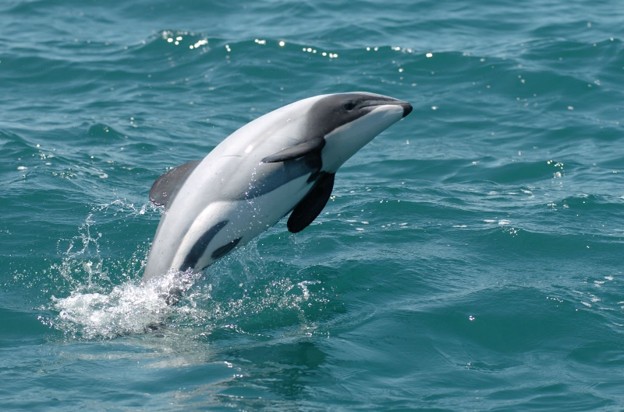
Another Māui Dolphin Dies as Scientists Search Their DNA for a Path to Survival
Liz Slooten couldn’t believe how many dead dolphins she was seeing. It was 1984, and the New Zealand-based zoology student was just beginning to study the smallest and rarest dolphins in the world. Now corpses were washing ashore in alarming numbers. Most were found entangled in fishing nets. For others, the cause of death was a mystery.
“We started asking the question, what the hell’s going on here?” Slooten remembers.
More than 40 years later, she’s still asking uncomfortable questions.
Recent
0
5
No, Drinking Water Isn’t Contaminated By Abortion Pills
This story was originally reported by Jenae Barnes, Climate Reporter of The 19th. Meet Jenae and read more of their reporting on gender, politics and policy.
Anti-abortion advocates, including Republican lawmakers and state officials, want the EPA to review mifepristone as a water contaminant. Scientists say there’s no evidence it harms the environment or people.
While there is no scientific evidence that abortion medication is contaminating Americans’ water supply, it has nonetheless bec
0
0
Dr. Green: The Psychological and Social Benefits of Green Community Spaces
The past 30-40 years have been hard on people and their relationships with neighbors and communities. Powerful interests have driven a wedge between people and divided us by promoting self-centeredness and antisocial beliefs. But there are many smart ways we can push this anti-community thinking with grace and empowerment — including the promotion of green spaces.
Dear Dr. Green,
My town has been pretty good about preserving green spaces, but lately the more MAGA-influenced people in town object
0
0
Who Really Benefits from Community Conservancies? Rethinking Equity in Kenya’s Conservation Model
Drive into the Samburu lands of northern Kenya and you’ll see a semiarid region dotted with high-end safari lodges and sprawling community conservancies. The nearby Samburu National Reserve attracts visitors from across the world and garners international recognition. Reports from nongovernmental organizations highlight millions of dollars invested throughout the region in wildlife protection, tourism enterprises, carbon markets, peacebuilding, and community initiatives.
But on these lands, the
0
0
The Plight of the Desert Penguin: Caught Between Extraction and El Niño
From the edge of a cliff in southern Peru, I watched as three Humboldt penguins made their way from their nests down a steep rocky slope, slipping at times, stopping and then starting again, tentatively navigating around sunbathing sea lions until they arrived, an hour later, on a precipice overlooking crashing waves, where they finally belly flopped into the water.
Penguins skirting sea lions. Photo: John Yunker, used with permission.
That hour was more exciting than any hour of television, the
0
0
Why The Ocean Cleanup Hasn’t Solved the Plastic Pollution Crisis
In 2019 a nonprofit called The Ocean Cleanup conducted a major test of technology designed to remove plastic pollution from the water.
It appeared to work, and the nonprofit released photos proclaiming its success.
But some scientists noticed something else among the accumulated plastic in the Ocean Cleanup’s publicity photos.
“Earlier this year I warned that @TheOceanCleanup would catch and kill floating marine life,” marine ecologist Dr. Rebecca Helm wrote on the social media platform then kno
0
0
For Bald Eagles, the Descendants of the Destroyers Became the Restorers
How quickly we forget — if we allow ourselves to.
For journalist Jason Dove Mark, bald eagles represent what the planet can lose, what it can regain, and what it can still lose in the process.
His new book, The Earth Said Remember Me: How to Revive Our Memories and Restore the Planet (W.W. Norton, published July 14), examines what scientists call “shifting baseline syndrome”: how we quickly forget the way things used to be.
For example, skies that once abounded with bald eagles — or the skies f
0
0
Harm: How Redefining One Word Strips the Endangered Species Act’s Ability to Protect Vital Habitat
By Mariah Meek, Michigan State University and Karrigan Börk, University of California, Davis
It wouldn’t make much sense to prohibit people from shooting a threatened woodpecker while allowing its forest to be cut down, or to bar killing endangered salmon while allowing a dam to dry out their habitat.
But that’s what the Trump administration is doing by changing how one word in the Endangered Species Act is interpreted: harm.
For 50 years, the U.S. government has interpreted the Endangered Speci
0
0
We Didn’t Just Fail to Stop Ebola. We Caused It.
Ebola is once again making headlines and has been declared a Public Health Emergency of International Concern — the World Health Organization’s highest level of alert — after cases crossed the border from the Democratic Republic of the Congo into Uganda.
For many people this feels too distant to be of concern, but scientists and public health experts have been warning us that the conditions that allow Ebola and other diseases to spread from animals to humans have been building for decades.
Aroun
0
0
India’s Captive Elephants in the Spotlight After High-Profile Deaths
Two incidents that generated worldwide headlines in recent months have called attention to the often-overlooked plight of India’s captive elephants.
In the first, an elderly female elephant died three months after she was painted pink by a Russian photographer.
Then, this May, a young tusker attacked an older, tuskless male elephant at a camp run by the forest department, leading to the death of a tourist and the elder elephant.
Although media around the world carried news about these two sad ev
0
0
Whale of the Month: Rice’s Whale
What whale are we talking about this month?
Thanks for asking. This time we’re looking at Rice’s whale (Balaenoptera ricei), also sometimes referred to as the Gulf of Mexico whale.
Don’t you mean the “Gulf of America” whale?
Don’t get me started.
Why not? That would actually be pretty good branding.
You know, you’re kind of right. The Trump administration, which insists on calling the Gulf of Mexico the “Gulf of America,” recently put a target on these rare, uniquely American whales’ backs by pr
0
4
Dr. Green: An Environmentalist Scientist Asks About Finding Connections and Inspiring Hope
It’s not easy being green — especially when you’re a scientist in an environmental field. Sometimes we’ve been at it for so long we lose sight of the many sympathetic folks and resources that surround us.
But there’s much we can do to find local, national, and international colleagues, and more importantly help the public understand the importance of what we do every day.
Dear Dr. Green,
I’ve been active in the environmental movement ever since high school. I’m a microbiologist st
0
3
Albanian ‘Flamingo Revolution’ Aims to Stop Kushner-Backed Resort on Protected Delta
Originally published by Mongabay.
VJOSA-NARTA, Albania — In late April, heavy machinery began moving into the Pishë Poro-Narta protected landscape on Albania’s Adriatic coast without permits or public notice. Bulldozers and excavators felled coastal pine trees, flattened sand dunes, and cut new roads through previously untouched habitat. Then, barbed wire fences went up along the shoreline.
The incursion was the realization of a luxury resort development backed by Jared Kushner, U.S. President
0
2
America’s 250th Should Tell the Full Story, Not Rewrite It
As the United States marks its 250th anniversary, there will be no shortage of speeches about freedom, patriotism, and the genius of the American experiment. The principles established at our nation’s founding — free and fair elections, checks and balances, an independent judiciary, and the right to organize — have enabled generations of Americans to demand and secure cleaner air, safer water, and a healthier environment. But one of the clearest tests of whether we believe in that experiment is
0
2
Incredible Journeys: How Hoofing It Helps Deer and Caribou
Recent studies give scientists a better understanding of animal migrations and their implications for conservation. This series focuses on what we’re learning about migrations and how that knowledge may help us protect certain species — in this case several ungulates in North America.
For decades wildlife scientists have been stumped by the burning question: Why did the ungulate cross the metaphorical road? It turns out the answer is simple: to find better food.
From 2014 to 2022, scientists use
0
4
The Armored Catfish Known as L046: Protecting the Unnamed
I’ve been a freshwater aquarium enthusiast for as long as I remember. Like many young kids, I started with guppies and quickly moved on to Amazonian fish, danios, angelfish, plecos, hatchetfish, and others. While I no longer keep fish, I’ve kept the interest.
And after all these years, certain fish species continue to attract my attention. Take, for example, the curious case of L046.
Every so often freshwater fish species show up in trade that haven’t been taxonomically described but are clearly
0
2
America 250: Echoes of the Buy-Centennial
The United States celebrated its 200th anniversary in 1976, and in a lot of ways it felt like a year-long celebration of everything that made our country great.
But there were dark sides to the American Bicentennial, including civil rights struggles, a gas crisis, and (of course) American capitalism.
The over-commercialization of the Bicentennial started long before 1976. As early as September 1974 people were already starting to call it the “Buy-centennial,” with many products designed to part
0
2
Rewilding Point Reyes National Seashore: Why and How
I’m lucky to live immediately adjacent to Point Reyes National Seashore in California and make frequent visits to indulge my photography hobby. In the summer I can work a full day and still search for bobcats through the evening golden hour. And I’m truly privileged to be able to advocate for its restoration and protection in my capacity as executive director of Turtle Island Restoration Network.
Photo: Ken Bouley. Used with permission.
Point Reyes is a coastal treasure protecting about 110 squa
0
1
Smuggled Alive: Turtles and Tortoises Trafficked Across the Mexico-U.S. Border
By the time Mexican turtles and tortoises arrive in Chris Rodriguez’s rehabilitation center in Southern California, most of them are in desperate shape.
“As with most illegally smuggled animals, they arrive dehydrated and often malnourished,” says Rodriguez. He’s the cofounder of Carapace Conservation, a rescue and rehabilitation organization specializing in trafficked turtles. “This stems from them being collected over a period of time and held in poor conditions until the poachers have enough
0
2
The Extinction of Languages Is an Environmental Issue
Environmentalists, myself included, pay close attention to gloomy topics like species extinctions and Earth’s dwindling life-support systems. It’s not for the love of dark matters that we keep tabs on depressing metrics. Rather, it’s with the hope that they teach us something and guide us toward mitigating future losses.
On the biological front, about a million species could be taken by an extinction vortex by the end of the century. That’s also when linguists estimate about one-third of the wor
0
3
Another Māui Dolphin Dies as Scientists Search Their DNA for a Path to Survival
Liz Slooten couldn’t believe how many dead dolphins she was seeing. It was 1984, and the New Zealand-based zoology stude
0
5
No, Drinking Water Isn’t Contaminated By Abortion Pills
This story was originally reported by Jenae Barnes, Climate Reporter of The 19th. Meet Jenae and read more of their rep
0
0
Dr. Green: The Psychological and Social Benefits of Green Community Spaces
The past 30-40 years have been hard on people and their relationships with neighbors and communities. Powerful interests
0
0
Who Really Benefits from Community Conservancies? Rethinking Equity in Kenya’s Conservation Model
Drive into the Samburu lands of northern Kenya and you’ll see a semiarid region dotted with high-end safari lodges and s
0
0
The Plight of the Desert Penguin: Caught Between Extraction and El Niño
From the edge of a cliff in southern Peru, I watched as three Humboldt penguins made their way from their nests down a s
0
0
Why The Ocean Cleanup Hasn’t Solved the Plastic Pollution Crisis
In 2019 a nonprofit called The Ocean Cleanup conducted a major test of technology designed to remove plastic pollution f
0
0
For Bald Eagles, the Descendants of the Destroyers Became the Restorers
How quickly we forget — if we allow ourselves to.
For journalist Jason Dove Mark, bald eagles represent what the planet
0
0
Harm: How Redefining One Word Strips the Endangered Species Act’s Ability to Protect Vital Habitat
By Mariah Meek, Michigan State University and Karrigan Börk, University of California, Davis
It wouldn’t make much sense
0
0
We Didn’t Just Fail to Stop Ebola. We Caused It.
Ebola is once again making headlines and has been declared a Public Health Emergency of International Concern — the Worl
0
0
India’s Captive Elephants in the Spotlight After High-Profile Deaths
Two incidents that generated worldwide headlines in recent months have called attention to the often-overlooked plight o
0
0
Whale of the Month: Rice’s Whale
What whale are we talking about this month?
Thanks for asking. This time we’re looking at Rice’s whale (Balaenoptera ric
0
4
Dr. Green: An Environmentalist Scientist Asks About Finding Connections and Inspiring Hope
It’s not easy being green — especially when you’re a scientist in an environmental field. Sometimes we’ve been at it for
0
3
Albanian ‘Flamingo Revolution’ Aims to Stop Kushner-Backed Resort on Protected Delta
Originally published by Mongabay.
VJOSA-NARTA, Albania — In late April, heavy machinery began moving into the Pishë Por
0
2
America’s 250th Should Tell the Full Story, Not Rewrite It
As the United States marks its 250th anniversary, there will be no shortage of speeches about freedom, patriotism, and t
0
2
Incredible Journeys: How Hoofing It Helps Deer and Caribou
Recent studies give scientists a better understanding of animal migrations and their implications for conservation. This
0
4
The Armored Catfish Known as L046: Protecting the Unnamed
I’ve been a freshwater aquarium enthusiast for as long as I remember. Like many young kids, I started with guppies and q
0
2
America 250: Echoes of the Buy-Centennial
The United States celebrated its 200th anniversary in 1976, and in a lot of ways it felt like a year-long celebration of
0
2
Rewilding Point Reyes National Seashore: Why and How
I’m lucky to live immediately adjacent to Point Reyes National Seashore in California and make frequent visits to indulg
0
1
Another Māui Dolphin Dies as Scientists Search Their DNA for a Path to Survival
Liz Slooten couldn’t believe how many dead dolphins she was seeing. It was 1984, and the New Zealand-based zoology student was just beginning to study the smallest and rarest dolphins in the world. Now corpses were washing ashore in alarming numbers. Most were found entangled in fishing nets. For others, the cause of death was a mystery.
“We started asking the question, what the hell’s going on here?” Slooten remembers.
More than 40 years later, she’s still asking uncomfortable questions.
Recent
0
5 👁
No, Drinking Water Isn’t Contaminated By Abortion Pills
This story was originally reported by Jenae Barnes, Climate Reporter of The 19th. Meet Jenae and read more of their reporting on gender, politics and policy.
Anti-abortion advocates, including Republican lawmakers and state officials, want the EPA to review mifepristone as a water contaminant. Scientists say there’s no evidence it harms the environment or people.
While there is no scientific evidence that abortion medication is contaminating Americans’ water supply, it has nonetheless bec
0
0 👁
Dr. Green: The Psychological and Social Benefits of Green Community Spaces
The past 30-40 years have been hard on people and their relationships with neighbors and communities. Powerful interests have driven a wedge between people and divided us by promoting self-centeredness and antisocial beliefs. But there are many smart ways we can push this anti-community thinking with grace and empowerment — including the promotion of green spaces.
Dear Dr. Green,
My town has been pretty good about preserving green spaces, but lately the more MAGA-influenced people in town object
0
0 👁
Who Really Benefits from Community Conservancies? Rethinking Equity in Kenya’s Conservation Model
Drive into the Samburu lands of northern Kenya and you’ll see a semiarid region dotted with high-end safari lodges and sprawling community conservancies. The nearby Samburu National Reserve attracts visitors from across the world and garners international recognition. Reports from nongovernmental organizations highlight millions of dollars invested throughout the region in wildlife protection, tourism enterprises, carbon markets, peacebuilding, and community initiatives.
But on these lands, the
0
0 👁
The Plight of the Desert Penguin: Caught Between Extraction and El Niño
From the edge of a cliff in southern Peru, I watched as three Humboldt penguins made their way from their nests down a steep rocky slope, slipping at times, stopping and then starting again, tentatively navigating around sunbathing sea lions until they arrived, an hour later, on a precipice overlooking crashing waves, where they finally belly flopped into the water.
Penguins skirting sea lions. Photo: John Yunker, used with permission.
That hour was more exciting than any hour of television, the
0
0 👁
Why The Ocean Cleanup Hasn’t Solved the Plastic Pollution Crisis
In 2019 a nonprofit called The Ocean Cleanup conducted a major test of technology designed to remove plastic pollution from the water.
It appeared to work, and the nonprofit released photos proclaiming its success.
But some scientists noticed something else among the accumulated plastic in the Ocean Cleanup’s publicity photos.
“Earlier this year I warned that @TheOceanCleanup would catch and kill floating marine life,” marine ecologist Dr. Rebecca Helm wrote on the social media platform then kno
0
0 👁
For Bald Eagles, the Descendants of the Destroyers Became the Restorers
How quickly we forget — if we allow ourselves to.
For journalist Jason Dove Mark, bald eagles represent what the planet can lose, what it can regain, and what it can still lose in the process.
His new book, The Earth Said Remember Me: How to Revive Our Memories and Restore the Planet (W.W. Norton, published July 14), examines what scientists call “shifting baseline syndrome”: how we quickly forget the way things used to be.
For example, skies that once abounded with bald eagles — or the skies f
0
0 👁
Harm: How Redefining One Word Strips the Endangered Species Act’s Ability to Protect Vital Habitat
By Mariah Meek, Michigan State University and Karrigan Börk, University of California, Davis
It wouldn’t make much sense to prohibit people from shooting a threatened woodpecker while allowing its forest to be cut down, or to bar killing endangered salmon while allowing a dam to dry out their habitat.
But that’s what the Trump administration is doing by changing how one word in the Endangered Species Act is interpreted: harm.
For 50 years, the U.S. government has interpreted the Endangered Speci
0
0 👁
We Didn’t Just Fail to Stop Ebola. We Caused It.
Ebola is once again making headlines and has been declared a Public Health Emergency of International Concern — the World Health Organization’s highest level of alert — after cases crossed the border from the Democratic Republic of the Congo into Uganda.
For many people this feels too distant to be of concern, but scientists and public health experts have been warning us that the conditions that allow Ebola and other diseases to spread from animals to humans have been building for decades.
Aroun
0
0 👁
India’s Captive Elephants in the Spotlight After High-Profile Deaths
Two incidents that generated worldwide headlines in recent months have called attention to the often-overlooked plight of India’s captive elephants.
In the first, an elderly female elephant died three months after she was painted pink by a Russian photographer.
Then, this May, a young tusker attacked an older, tuskless male elephant at a camp run by the forest department, leading to the death of a tourist and the elder elephant.
Although media around the world carried news about these two sad ev
0
0 👁
Whale of the Month: Rice’s Whale
What whale are we talking about this month?
Thanks for asking. This time we’re looking at Rice’s whale (Balaenoptera ricei), also sometimes referred to as the Gulf of Mexico whale.
Don’t you mean the “Gulf of America” whale?
Don’t get me started.
Why not? That would actually be pretty good branding.
You know, you’re kind of right. The Trump administration, which insists on calling the Gulf of Mexico the “Gulf of America,” recently put a target on these rare, uniquely American whales’ backs by pr
0
4 👁
Dr. Green: An Environmentalist Scientist Asks About Finding Connections and Inspiring Hope
It’s not easy being green — especially when you’re a scientist in an environmental field. Sometimes we’ve been at it for so long we lose sight of the many sympathetic folks and resources that surround us.
But there’s much we can do to find local, national, and international colleagues, and more importantly help the public understand the importance of what we do every day.
Dear Dr. Green,
I’ve been active in the environmental movement ever since high school. I’m a microbiologist st
0
3 👁
Albanian ‘Flamingo Revolution’ Aims to Stop Kushner-Backed Resort on Protected Delta
Originally published by Mongabay.
VJOSA-NARTA, Albania — In late April, heavy machinery began moving into the Pishë Poro-Narta protected landscape on Albania’s Adriatic coast without permits or public notice. Bulldozers and excavators felled coastal pine trees, flattened sand dunes, and cut new roads through previously untouched habitat. Then, barbed wire fences went up along the shoreline.
The incursion was the realization of a luxury resort development backed by Jared Kushner, U.S. President
0
2 👁
America’s 250th Should Tell the Full Story, Not Rewrite It
As the United States marks its 250th anniversary, there will be no shortage of speeches about freedom, patriotism, and the genius of the American experiment. The principles established at our nation’s founding — free and fair elections, checks and balances, an independent judiciary, and the right to organize — have enabled generations of Americans to demand and secure cleaner air, safer water, and a healthier environment. But one of the clearest tests of whether we believe in that experiment is
0
2 👁
Incredible Journeys: How Hoofing It Helps Deer and Caribou
Recent studies give scientists a better understanding of animal migrations and their implications for conservation. This series focuses on what we’re learning about migrations and how that knowledge may help us protect certain species — in this case several ungulates in North America.
For decades wildlife scientists have been stumped by the burning question: Why did the ungulate cross the metaphorical road? It turns out the answer is simple: to find better food.
From 2014 to 2022, scientists use
0
4 👁
The Armored Catfish Known as L046: Protecting the Unnamed
I’ve been a freshwater aquarium enthusiast for as long as I remember. Like many young kids, I started with guppies and quickly moved on to Amazonian fish, danios, angelfish, plecos, hatchetfish, and others. While I no longer keep fish, I’ve kept the interest.
And after all these years, certain fish species continue to attract my attention. Take, for example, the curious case of L046.
Every so often freshwater fish species show up in trade that haven’t been taxonomically described but are clearly
0
2 👁
America 250: Echoes of the Buy-Centennial
The United States celebrated its 200th anniversary in 1976, and in a lot of ways it felt like a year-long celebration of everything that made our country great.
But there were dark sides to the American Bicentennial, including civil rights struggles, a gas crisis, and (of course) American capitalism.
The over-commercialization of the Bicentennial started long before 1976. As early as September 1974 people were already starting to call it the “Buy-centennial,” with many products designed to part
0
2 👁
Rewilding Point Reyes National Seashore: Why and How
I’m lucky to live immediately adjacent to Point Reyes National Seashore in California and make frequent visits to indulge my photography hobby. In the summer I can work a full day and still search for bobcats through the evening golden hour. And I’m truly privileged to be able to advocate for its restoration and protection in my capacity as executive director of Turtle Island Restoration Network.
Photo: Ken Bouley. Used with permission.
Point Reyes is a coastal treasure protecting about 110 squa
0
1 👁
Smuggled Alive: Turtles and Tortoises Trafficked Across the Mexico-U.S. Border
By the time Mexican turtles and tortoises arrive in Chris Rodriguez’s rehabilitation center in Southern California, most of them are in desperate shape.
“As with most illegally smuggled animals, they arrive dehydrated and often malnourished,” says Rodriguez. He’s the cofounder of Carapace Conservation, a rescue and rehabilitation organization specializing in trafficked turtles. “This stems from them being collected over a period of time and held in poor conditions until the poachers have enough
0
2 👁
The Extinction of Languages Is an Environmental Issue
Environmentalists, myself included, pay close attention to gloomy topics like species extinctions and Earth’s dwindling life-support systems. It’s not for the love of dark matters that we keep tabs on depressing metrics. Rather, it’s with the hope that they teach us something and guide us toward mitigating future losses.
On the biological front, about a million species could be taken by an extinction vortex by the end of the century. That’s also when linguists estimate about one-third of the wor
0
3 👁
Another Māui Dolphin Dies as Scientists Search Their DNA for a Path to Survival
Liz Slooten couldn’t believe how many dead dolphins she was seeing. It was 1984, and the New Zealand-based zoology student was jus…
💬 0
👁 5
No, Drinking Water Isn’t Contaminated By Abortion Pills
The Revelator · 6d ago
💬 0
👁 0
Dr. Green: The Psychological and Social Benefits of Green Community Spaces
The Revelator · Jul 23, 2026
💬 0
👁 0
Who Really Benefits from Community Conservancies? Rethinking Equity in Kenya’s Conservation Model
The Revelator · Jul 22, 2026
💬 0
👁 0

The Plight of the Desert Penguin: Caught Between Extraction and El Niño
The Revelator · Jul 20, 2026

Why The Ocean Cleanup Hasn’t Solved the Plastic Pollution Crisis
The Revelator · Jul 15, 2026

For Bald Eagles, the Descendants of the Destroyers Became the Restorers
The Revelator · Jul 14, 2026

Harm: How Redefining One Word Strips the Endangered Species Act’s Ability to Protect Vital Habitat
The Revelator · Jul 13, 2026
We Didn’t Just Fail to Stop Ebola. We Caused It.
Ebola is once again making headlines and has been declared a Public Health Emergency of International Concern — the World Health O…
💬 0
👁 0
India’s Captive Elephants in the Spotlight After High-Profile Deaths
The Revelator · Jul 8, 2026
💬 0
👁 0
Whale of the Month: Rice’s Whale
The Revelator · Jul 1, 2026
💬 0
👁 4
Dr. Green: An Environmentalist Scientist Asks About Finding Connections and Inspiring Hope
The Revelator · Jun 30, 2026
💬 0
👁 3

Albanian ‘Flamingo Revolution’ Aims to Stop Kushner-Backed Resort on Protected Delta
The Revelator · Jun 29, 2026

America’s 250th Should Tell the Full Story, Not Rewrite It
The Revelator · Jun 25, 2026

Incredible Journeys: How Hoofing It Helps Deer and Caribou
The Revelator · Jun 24, 2026

The Armored Catfish Known as L046: Protecting the Unnamed
The Revelator · Jun 23, 2026
America 250: Echoes of the Buy-Centennial
The United States celebrated its 200th anniversary in 1976, and in a lot of ways it felt like a year-long celebration of everythin…
💬 0
👁 2
Rewilding Point Reyes National Seashore: Why and How
The Revelator · Jun 17, 2026
💬 0
👁 1
Smuggled Alive: Turtles and Tortoises Trafficked Across the Mexico-U.S. Border
The Revelator · Jun 15, 2026
💬 0
👁 2
The Extinction of Languages Is an Environmental Issue
The Revelator · Jun 11, 2026
💬 0
👁 3