Sustainable travel news
Latest Articles
Sustainable Travel International Launches AI Tool That Measures Tour Emissions in Seconds
SEATTLE, WA (June 10, 2026) — Sustainable Travel International launched Humí, a new AI-powered carbon footprinting tool for tours that turns existing itineraries into emissions reports in seconds, rather than weeks. The tool replaces manual data collection and spreadsheets with a simple workflow powered by AI and Sustainable Travel International’s tourism-specific emissions methodology. It is available for free for a limited time.
Users simply paste a tour itinerary webpage link or upload a PDF.
0
2
Climate Impact Update – 2026 Portfolio 1
Our first Climate Impact Portfolio of 2026, released on May 4, 2026, supports six carbon offset projects around the world. Read on to learn more about the impact these projects are creating for the climate, communities, and biodiversity.
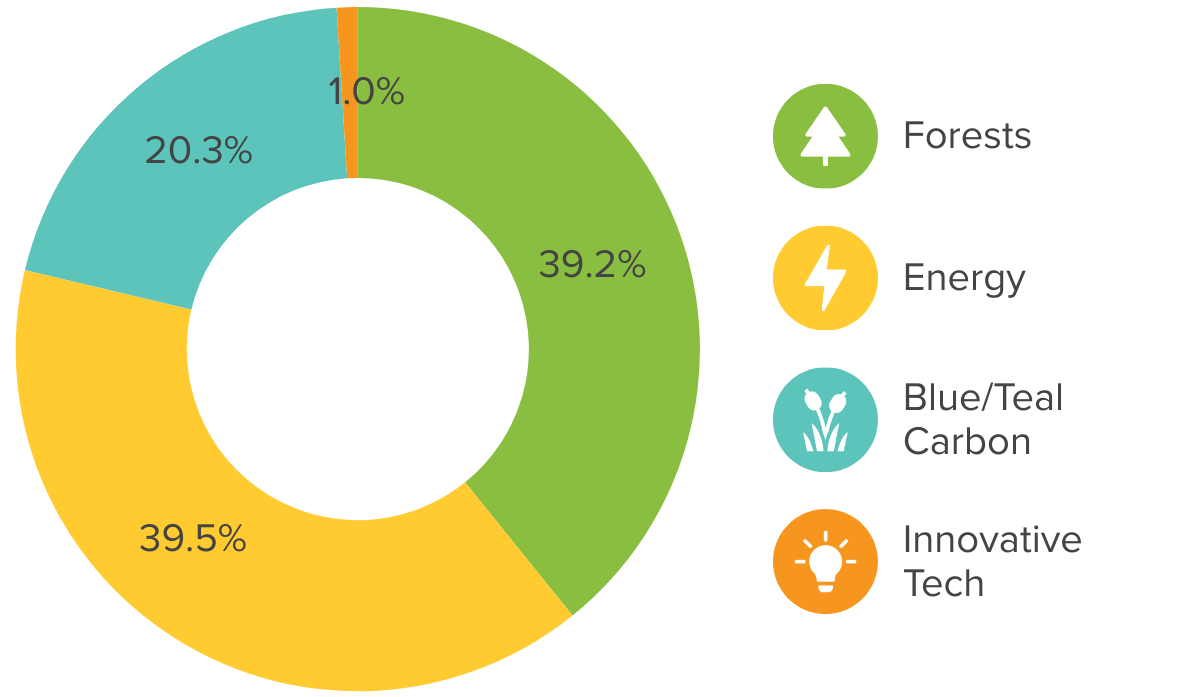
Carbon offsets purchased from Portfolio 1 of 2026 are distributed across the forestry, energy, blue/teal carbon and carbon removal projects listed below.
Carbon Dioxide Equivalent (CO2e) by Project Ty
0
4
Ecotourism Examples Around the World
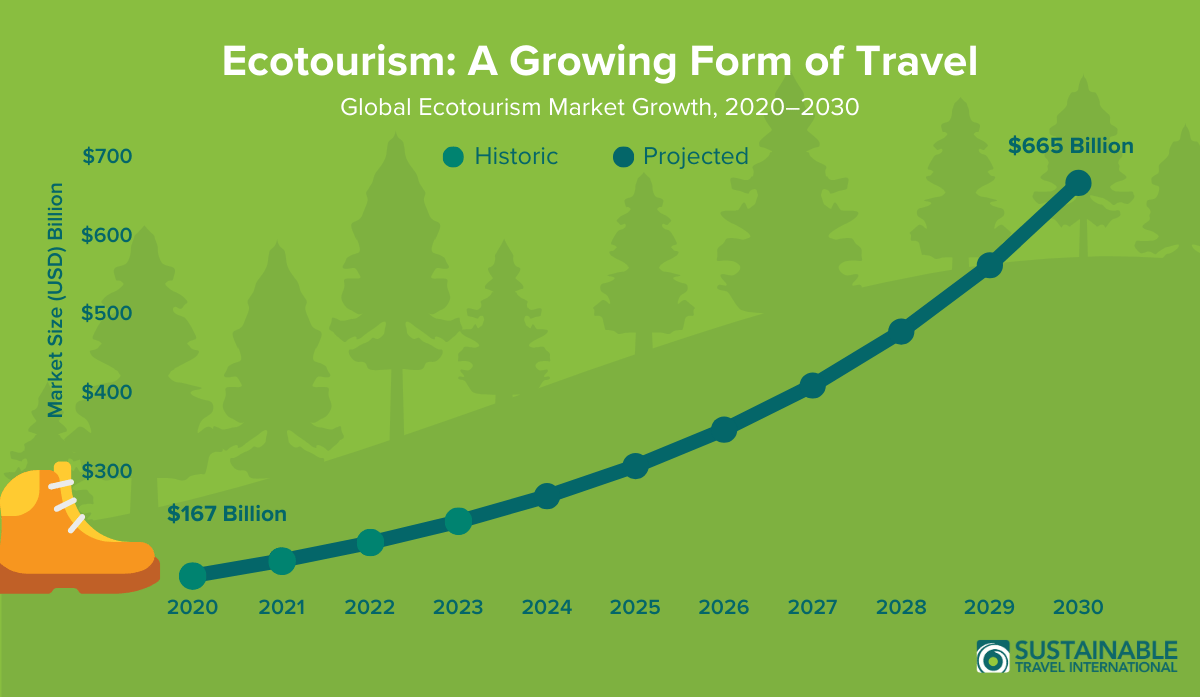
As travelers become increasingly aware of their environmental impact, many are asking how their trips affect the places they visit. Ecotourism offers a way to experience nature while helping protect it and support the communities that live alongside it.
Our guide to what ecotourism is introduces the concept and the key principles that define ecotourism. This blog builds on that foundation by showing how those principles come to life through real-world ecotourism examples from destinations around
0
10
Ecotourism Activities and Types
When people picture ecotourism, they often imagine walking through rainforests dense with vegetation, diving into the deep blue to observe marine wildlife, or hiking mountain trails where each change in elevation reveals a new landscape. These activities may look “eco,” but their impact hinges on how they are planned and managed.
Not every outdoor or nature-based activity automatically qualifies as ecotourism. Overtourism and the growing strain on fragile habitats have made this clear. As outl
0
10
[Video] Sargassum: From Problem to Solution
As record-breaking sargassum blooms overwhelm coastlines in Mexico, the Sargassum Recovery for Clean Coasts project intercepts the seaweed before it decays and releases methane. Collected locally and detoxified through bioremediation, the sargassum is transformed from waste into biochar-enriched compost that restores soils, supports farmers, and locks carbon into the ground. This project advances a circular blue economy where coastal ecosystems, tourism, and communities thrive.
The Sargassum Rec
0
10
[Video] A Voice for the Trees
In this video, members of Tanzania’s Indigenous Datooga and Hadza communities share how the Yaeda-Eyasi carbon offset project has helped them protect their land and way of life. “This land has been our home forever. It is part of who we are.”
Carbon revenue supports community-led forest protection, helping prevent land loss to invaders and reducing the need to relocate pastures. Communities are paid to protect their forests, with locally appointed rangers earning stable incomes through carbon fi
0
9
Climate Impact Update – 2025 Portfolio 4
Our fourth Climate Impact Portfolio of 2025, released on December 17, 2025, supports seven carbon offset projects around the world. Read on to learn more about the impact these projects are creating for the climate, communities, and biodiversity.
Carbon offsets purchased from Portfolio 4 of 2025 are distributed across the forestry, energy, innovative climate technology, and blue/teal carbon projects listed below.
Carbon Dioxide Equiva
0
5
What Is Ecotourism?
The world is a remarkable place — from the snowy peak of Mount Everest to the darkest depths of the Mariana Trench, and all the wondrous corners in between. People are drawn to watch elephants roam the Serengeti, learn about forest traditions from communities in the Amazon, and marvel at the reefs of the Coral Triangle. Ecotourism offers a way to do all of this while conserving the natural places we visit.
Yet in recent years, “ecotourism” has become a buzzword. The term is increasingly used to
0
4
Why Tourism Needs Offsets (and Reduction Alone Isn’t Enough)
“Tourism shouldn’t buy offsets—it should just reduce its emissions.” It’s a common refrain, but it oversimplifies a complex challenge. Offsets aren’t a loophole or an excuse. They’re a necessary counterpart to decarbonization. The industry must reduce emissions wherever possible and invest in carbon offsets as it does so.
And it’s not because tourism needs to “compensate” for what it’s still emitting. It’s because offsets accelerate progress toward net zero. They deliver real, measurable results
0
12
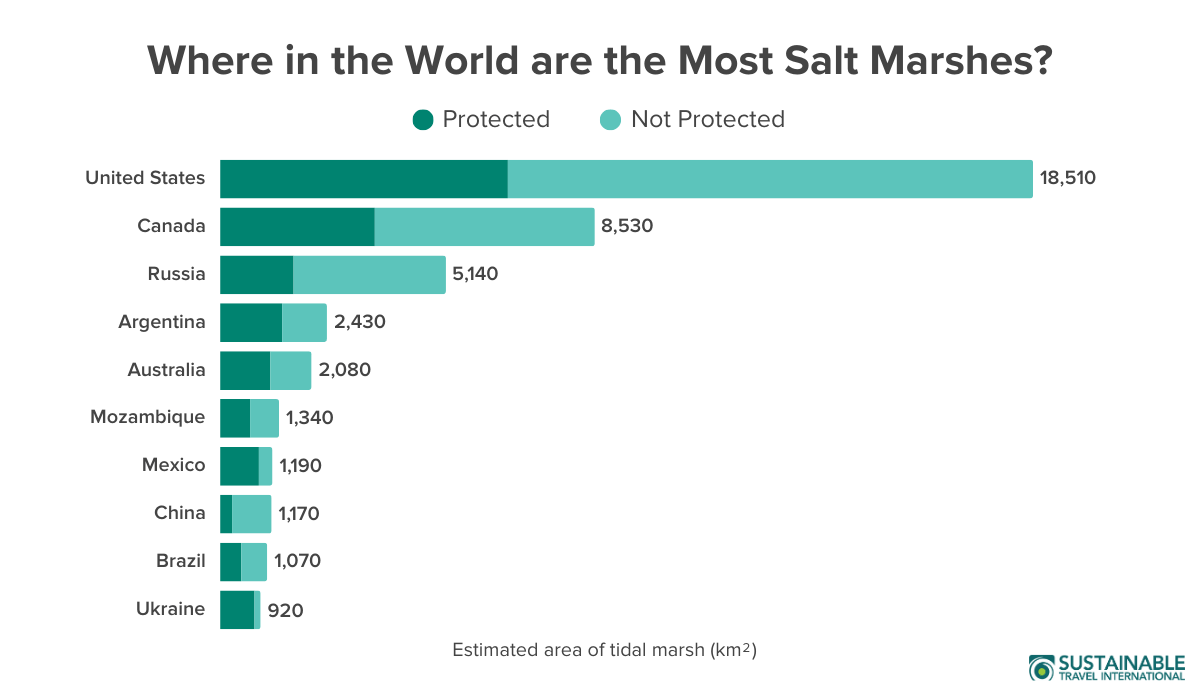
Salt Marshes: Wetlands Shaped by the Tides
Salt marshes are some of the most fascinating yet overlooked coastal landscapes. Stretching between land and sea, these wetlands are alive with movement, from shifting tides and rustling grasses to the calls of wading birds.
For travelers wandering boardwalk trails or paddling through tidal creeks, salt marshes offer a different way to experience the coast. These ecosystems shelter wildlife, protect shorelines, filter water, and store large amounts of carbon in their soils.
Read on to discover w
0
6
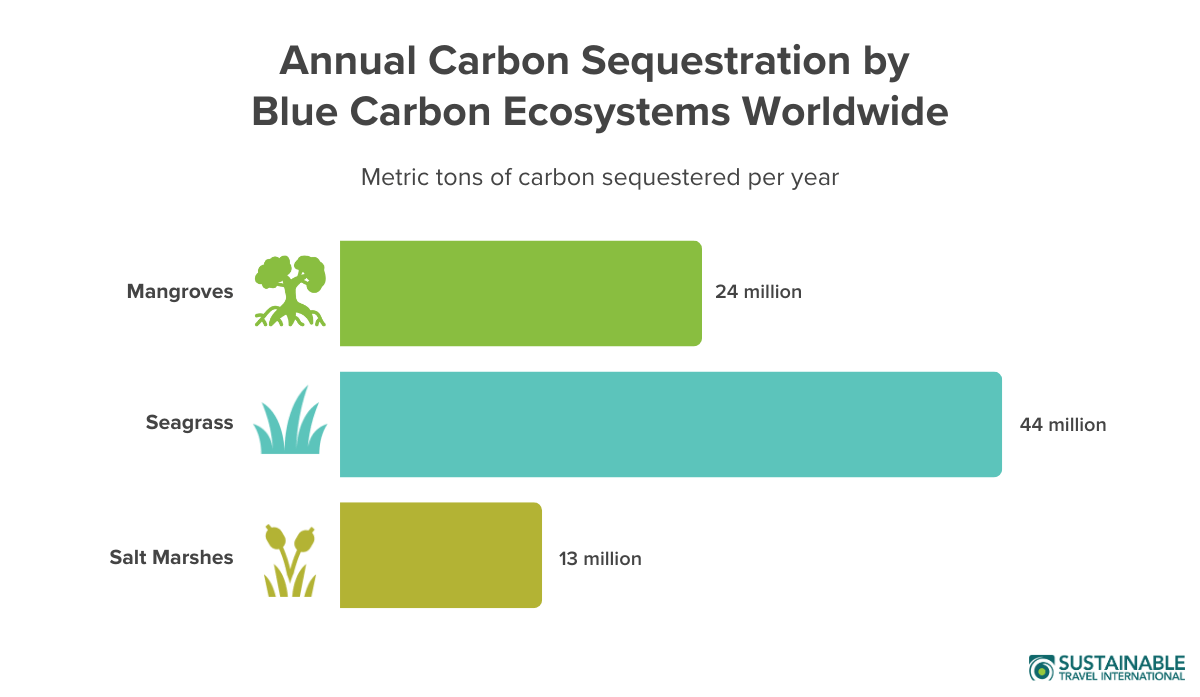
Conserving and Restoring Blue Carbon Ecosystems
Coastal ecosystems such as mangroves, seagrass meadows, and salt marshes are powerful natural climate solutions. These blue carbon habitats capture and store vast amounts of carbon while shielding shorelines, supporting marine biodiversity, and strengthening food security in climate-vulnerable regions. Yet they are disappearing due to development, pollution, and other human activities. Protecting and restoring these ecosystems is critical for both climate action and community resilience.
Read on
0
4
Why Blue Carbon Ecosystems Are Disappearing
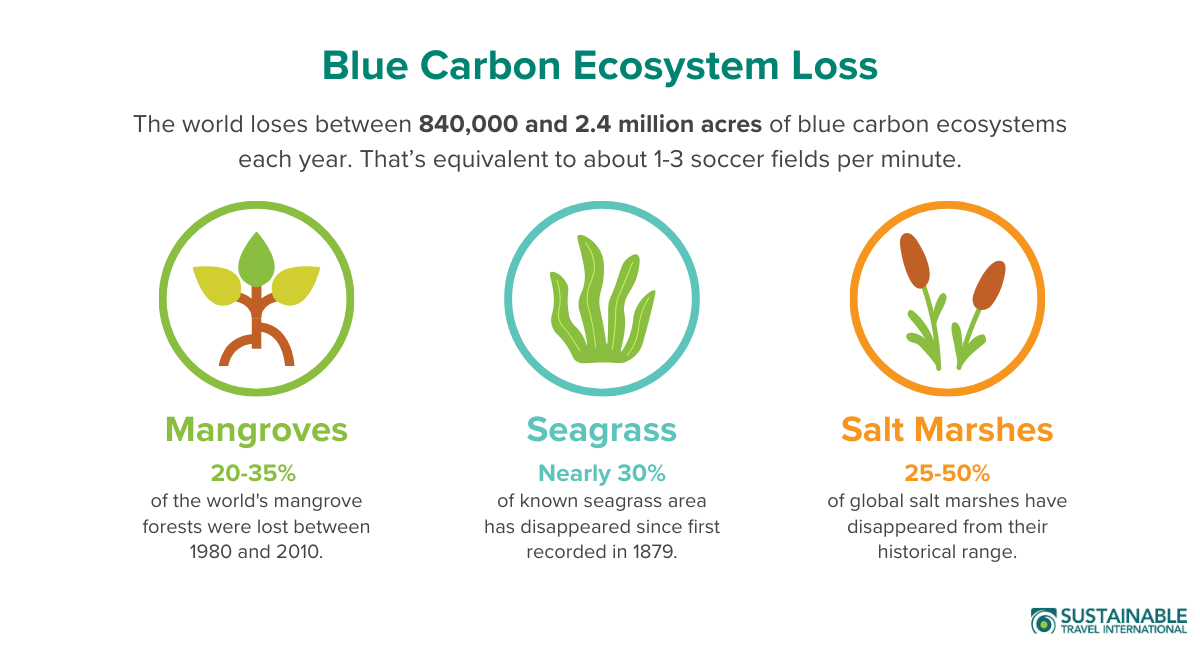
Coastal ecosystems like mangroves, seagrasses, and salt marshes do far more than paint a beautiful backdrop for a day by the sea. These blue carbon ecosystems capture and store enormous amounts of carbon, protect shorelines from storms, and support fisheries and tourism around the world. Yet despite the numerous benefits that blue carbon ecosystems bring to people, nature, and the economy, they are among the most threatened ecosystems.
Our world’s blue carbon ecosystems are rapidly shrinking in
0
4
Why Blue Carbon Ecosystems Matter
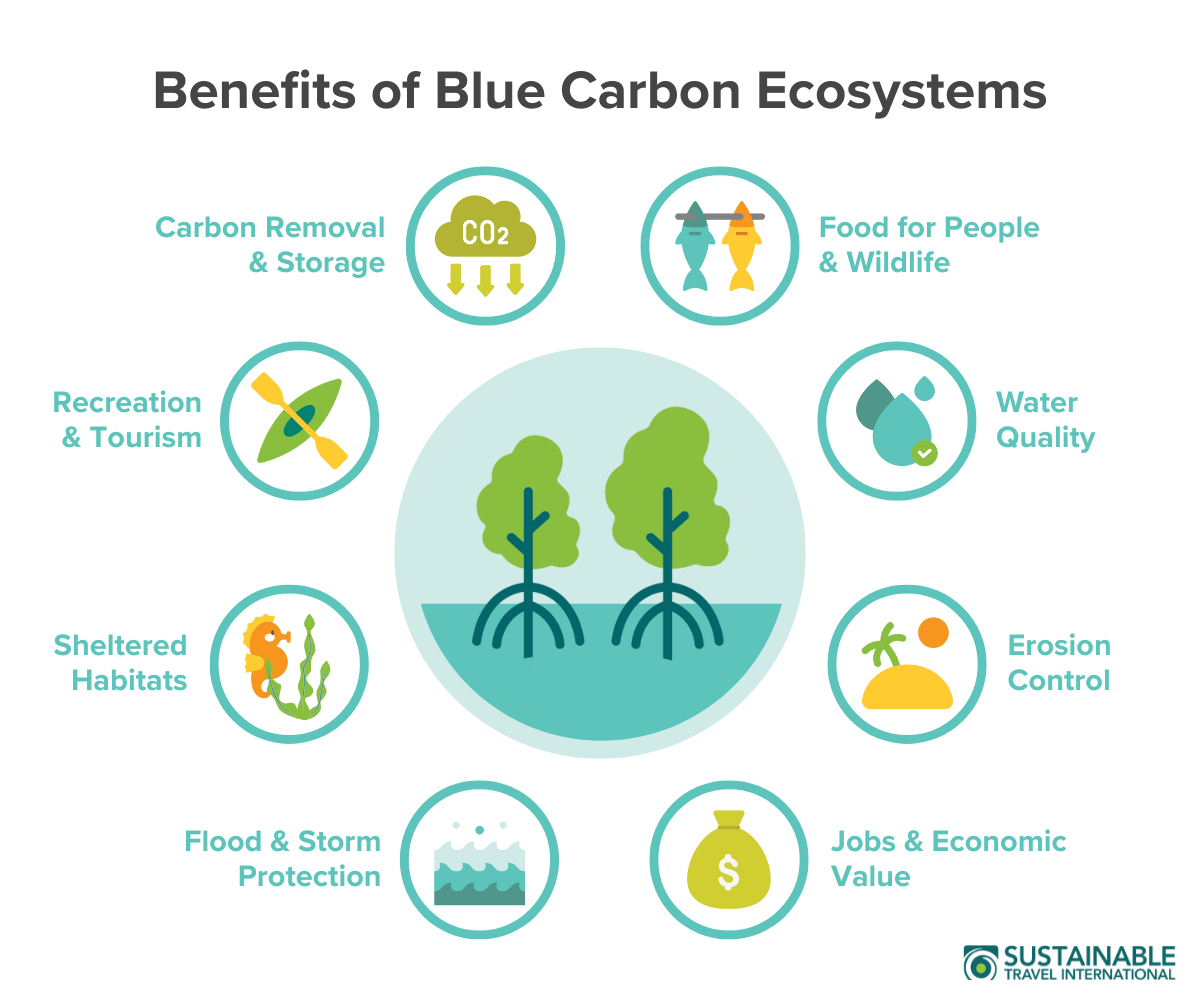
Tucked between land and sea, you’ve probably seen blue carbon ecosystems without realizing how important they are. Maybe you’ve kayaked through mangrove tunnels, floated over seagrass meadows, or spotted birds feeding in a salt marsh at low tide.
These blue carbon habitats do far more than set the scene for coastal adventures; they’re among the planet’s hardest-working ecosystems. Together, they absorb a surprising amount of carbon, shelter marine life, and protect coastal communities fro
0
3
Sustainable Travel International Launches AI Tool That Measures Tour Emissions in Seconds
SEATTLE, WA (June 10, 2026) — Sustainable Travel International launched Humí, a new AI-powered carbon footprinting tool
0
2
Climate Impact Update – 2026 Portfolio 1
Our first Climate Impact Portfolio of 2026, released on May 4, 2026, supports six carbon offset projects around the worl
0
4
Ecotourism Examples Around the World
As travelers become increasingly aware of their environmental impact, many are asking how their trips affect the places
0
10
Ecotourism Activities and Types
When people picture ecotourism, they often imagine walking through rainforests dense with vegetation, diving into the de
0
10
[Video] Sargassum: From Problem to Solution
As record-breaking sargassum blooms overwhelm coastlines in Mexico, the Sargassum Recovery for Clean Coasts project inte
0
10
[Video] A Voice for the Trees
In this video, members of Tanzania’s Indigenous Datooga and Hadza communities share how the Yaeda-Eyasi carbon offset pr
0
9
Climate Impact Update – 2025 Portfolio 4
Our fourth Climate Impact Portfolio of 2025, released on December 17, 2025, supports seven carbon offset projects around
0
5
What Is Ecotourism?
The world is a remarkable place — from the snowy peak of Mount Everest to the darkest depths of the Mariana Trench, and
0
4
Why Tourism Needs Offsets (and Reduction Alone Isn’t Enough)
“Tourism shouldn’t buy offsets—it should just reduce its emissions.” It’s a common refrain, but it oversimplifies a comp
0
12
Salt Marshes: Wetlands Shaped by the Tides
Salt marshes are some of the most fascinating yet overlooked coastal landscapes. Stretching between land and sea, these
0
6
Conserving and Restoring Blue Carbon Ecosystems
Coastal ecosystems such as mangroves, seagrass meadows, and salt marshes are powerful natural climate solutions. These b
0
4
Sustainable Travel International Launches AI Tool That Measures Tour Emissions in Seconds
SEATTLE, WA (June 10, 2026) — Sustainable Travel International launched Humí, a new AI-powered carbon footprinting tool for tours that turns existing itineraries into emissions reports in seconds, rather than weeks. The tool replaces manual data collection and spreadsheets with a simple workflow powered by AI and Sustainable Travel International’s tourism-specific emissions methodology. It is available for free for a limited time.
Users simply paste a tour itinerary webpage link or upload a PDF.
0
2 👁
Climate Impact Update – 2026 Portfolio 1
Our first Climate Impact Portfolio of 2026, released on May 4, 2026, supports six carbon offset projects around the world. Read on to learn more about the impact these projects are creating for the climate, communities, and biodiversity.
Carbon offsets purchased from Portfolio 1 of 2026 are distributed across the forestry, energy, blue/teal carbon and carbon removal projects listed below.
Carbon Dioxide Equivalent (CO2e) by Project Ty
0
4 👁
Ecotourism Examples Around the World
As travelers become increasingly aware of their environmental impact, many are asking how their trips affect the places they visit. Ecotourism offers a way to experience nature while helping protect it and support the communities that live alongside it.
Our guide to what ecotourism is introduces the concept and the key principles that define ecotourism. This blog builds on that foundation by showing how those principles come to life through real-world ecotourism examples from destinations around
0
10 👁
Ecotourism Activities and Types
When people picture ecotourism, they often imagine walking through rainforests dense with vegetation, diving into the deep blue to observe marine wildlife, or hiking mountain trails where each change in elevation reveals a new landscape. These activities may look “eco,” but their impact hinges on how they are planned and managed.
Not every outdoor or nature-based activity automatically qualifies as ecotourism. Overtourism and the growing strain on fragile habitats have made this clear. As outl
0
10 👁
[Video] Sargassum: From Problem to Solution
As record-breaking sargassum blooms overwhelm coastlines in Mexico, the Sargassum Recovery for Clean Coasts project intercepts the seaweed before it decays and releases methane. Collected locally and detoxified through bioremediation, the sargassum is transformed from waste into biochar-enriched compost that restores soils, supports farmers, and locks carbon into the ground. This project advances a circular blue economy where coastal ecosystems, tourism, and communities thrive.
The Sargassum Rec
0
10 👁
[Video] A Voice for the Trees
In this video, members of Tanzania’s Indigenous Datooga and Hadza communities share how the Yaeda-Eyasi carbon offset project has helped them protect their land and way of life. “This land has been our home forever. It is part of who we are.”
Carbon revenue supports community-led forest protection, helping prevent land loss to invaders and reducing the need to relocate pastures. Communities are paid to protect their forests, with locally appointed rangers earning stable incomes through carbon fi
0
9 👁
Climate Impact Update – 2025 Portfolio 4
Our fourth Climate Impact Portfolio of 2025, released on December 17, 2025, supports seven carbon offset projects around the world. Read on to learn more about the impact these projects are creating for the climate, communities, and biodiversity.
Carbon offsets purchased from Portfolio 4 of 2025 are distributed across the forestry, energy, innovative climate technology, and blue/teal carbon projects listed below.
Carbon Dioxide Equiva
0
5 👁
What Is Ecotourism?
The world is a remarkable place — from the snowy peak of Mount Everest to the darkest depths of the Mariana Trench, and all the wondrous corners in between. People are drawn to watch elephants roam the Serengeti, learn about forest traditions from communities in the Amazon, and marvel at the reefs of the Coral Triangle. Ecotourism offers a way to do all of this while conserving the natural places we visit.
Yet in recent years, “ecotourism” has become a buzzword. The term is increasingly used to
0
4 👁
Why Tourism Needs Offsets (and Reduction Alone Isn’t Enough)
“Tourism shouldn’t buy offsets—it should just reduce its emissions.” It’s a common refrain, but it oversimplifies a complex challenge. Offsets aren’t a loophole or an excuse. They’re a necessary counterpart to decarbonization. The industry must reduce emissions wherever possible and invest in carbon offsets as it does so.
And it’s not because tourism needs to “compensate” for what it’s still emitting. It’s because offsets accelerate progress toward net zero. They deliver real, measurable results
0
12 👁
Salt Marshes: Wetlands Shaped by the Tides
Salt marshes are some of the most fascinating yet overlooked coastal landscapes. Stretching between land and sea, these wetlands are alive with movement, from shifting tides and rustling grasses to the calls of wading birds.
For travelers wandering boardwalk trails or paddling through tidal creeks, salt marshes offer a different way to experience the coast. These ecosystems shelter wildlife, protect shorelines, filter water, and store large amounts of carbon in their soils.
Read on to discover w
0
6 👁
Conserving and Restoring Blue Carbon Ecosystems
Coastal ecosystems such as mangroves, seagrass meadows, and salt marshes are powerful natural climate solutions. These blue carbon habitats capture and store vast amounts of carbon while shielding shorelines, supporting marine biodiversity, and strengthening food security in climate-vulnerable regions. Yet they are disappearing due to development, pollution, and other human activities. Protecting and restoring these ecosystems is critical for both climate action and community resilience.
Read on
0
4 👁
Why Blue Carbon Ecosystems Are Disappearing
Coastal ecosystems like mangroves, seagrasses, and salt marshes do far more than paint a beautiful backdrop for a day by the sea. These blue carbon ecosystems capture and store enormous amounts of carbon, protect shorelines from storms, and support fisheries and tourism around the world. Yet despite the numerous benefits that blue carbon ecosystems bring to people, nature, and the economy, they are among the most threatened ecosystems.
Our world’s blue carbon ecosystems are rapidly shrinking in
0
4 👁
Why Blue Carbon Ecosystems Matter
Tucked between land and sea, you’ve probably seen blue carbon ecosystems without realizing how important they are. Maybe you’ve kayaked through mangrove tunnels, floated over seagrass meadows, or spotted birds feeding in a salt marsh at low tide.
These blue carbon habitats do far more than set the scene for coastal adventures; they’re among the planet’s hardest-working ecosystems. Together, they absorb a surprising amount of carbon, shelter marine life, and protect coastal communities fro
0
3 👁
Sustainable Travel International Launches AI Tool That Measures Tour Emissions in Seconds
SEATTLE, WA (June 10, 2026) — Sustainable Travel International launched Humí, a new AI-powered carbon footprinting tool for tours …
💬 0
👁 2
Climate Impact Update – 2026 Portfolio 1
Sustainable Travel International · May 4, 2026
💬 0
👁 4
Ecotourism Examples Around the World
Sustainable Travel International · Mar 25, 2026
💬 0
👁 10
Ecotourism Activities and Types
Sustainable Travel International · Jan 8, 2026
💬 0
👁 10
[Video] Sargassum: From Problem to Solution
Sustainable Travel International · Dec 29, 2025
[Video] A Voice for the Trees
Sustainable Travel International · Dec 20, 2025

Climate Impact Update – 2025 Portfolio 4
Sustainable Travel International · Dec 17, 2025

What Is Ecotourism?
Sustainable Travel International · Nov 24, 2025
Why Tourism Needs Offsets (and Reduction Alone Isn’t Enough)
“Tourism shouldn’t buy offsets—it should just reduce its emissions.” It’s a common refrain, but it oversimplifies a complex challe…
💬 0
👁 12
Salt Marshes: Wetlands Shaped by the Tides
Sustainable Travel International · Oct 23, 2025
💬 0
👁 6
Conserving and Restoring Blue Carbon Ecosystems
Sustainable Travel International · Oct 20, 2025
💬 0
👁 4
Why Blue Carbon Ecosystems Are Disappearing
Sustainable Travel International · Oct 18, 2025
💬 0
👁 4
…
online
0