Latest Articles
China’s is bigger: Don’t tell Trump
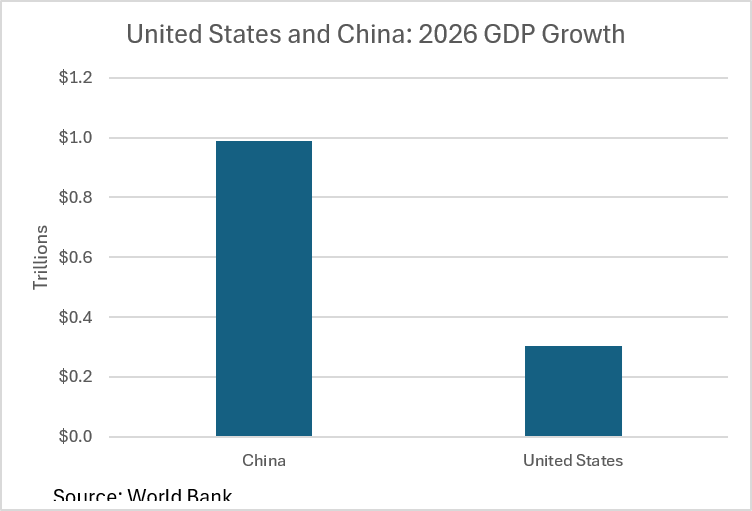
from Dean Baker Don’t worry folks, we’re keeping our PG rating here. I’m talking about GDP. I had some people question my line in yesterday’s post that China’s economy is one-third larger than the US economy and growing twice as fast. This is true. The data come from the World Bank. According to the data, China’s GDP last […]
0
1
23 Responses to Economics’ Biggest-ever Question
Economicsandthe Biophysical Limits to Economic Growth Edited by Edward Fullbrook and Jamie Morgan For over a century economics has loosely guided the global economy’s national economies. Natural science tells us that the climate crisis has been both caused by the global economy and ultimately threatens its existence. Because that crisis is now in an accelerating phase […]
0
0
The dangers of using ungrounded idealisations
from Lars Syll Using simplifying tractability or heuristic assumptions — rational expectations, common knowledge, representative agents, linearity, additivity, ergodicity, and so forth — does not exempt economists from having to justify their modelling choices, even if such assumptions are necessary for them to ‘manipulate’ their models or produce ‘rigorous’ and ‘precise’ predictions and explanations. Being […]
0
0
Quick Thoughts on Wealth
from Dean Baker Elon Musk’s trillion-dollar payday from the IPO of SpaceX has hugely amplified the public’s focus on extreme wealth inequality. Musk’s economic and political power is certainly something to be concerned about, but wealth can be a misleading focus. I have raised this point before; wealth can be a misleading measure on both […]
0
2
Krugman on Trump’s 80th birthday party
from Paul Krugman’s blog On Sunday Donald Trump celebrated his 80th birthday with a cage match on the White House lawn. The match and the events that surrounded it — especially the press conference with UFC fighters, shown above, held on the steps of the Lincoln Memorial — were a desecration of America’s capital, whose […]
0
1
Understanding entropy as a constraint on economic processes
from Luigi Capoani, Margarita Shnaider, and Martina Griseri and current issue of RWER Since entropy governs the degradation of energy and matter in all physical and biological processes, the economy – like any living system – must operate within the constraints of finite energy and material resources. Rather than presenting new empirical results or applied […]
0
1
The sociology study that changed my thinking
from Lars Syll In 2003, the American sociologist Devah Pager published a study that laid bare two ugly truths about the labour market. First, having a criminal record dramatically reduces your chances of finding a job. Second — and more disturbingly — being black is often a greater handicap than having a felony conviction. Pager’s experiment was brilliantly simple. […]
0
5
The AI Bubble
from Dean Baker The Lay of the Land The US economy has had two major bubbles in the last three decades. There are signs that we are in the midst of a third. In the late 1990s there was a tech bubble, driven to a large extent by excitement over the potential of the Internet. […]
0
2
A dominant economic fact of the past half century is . . . .
from Steve Roth and Dick Bezemer
0
3
Trickle-down economics, the Swedish way
from Lars Syll The leader of the Swedish Liberal Party, Simona Mohamsson, announced last week that she wants to turn Sweden into a tax haven and double the number of billionaires by 2037. According to Mohamsson, “we still have high taxes in Sweden, and clearly that hinders people who want to be able to roll […]
0
6
Is the U.S. Trade Deficit a Loss or a Gain?
from Xiaoping Gu Is the U.S. Trade Deficit a Loss or a Gain? The U.S. government initiated the trade war based on the “Deficit-as-Loss” narrative. But is this truly the case? Since the total collapse of the Bretton Woods system in the 1970s, the U.S. shifted from a long-term trade surplus to a deficit. Particularly […]
0
3
New models constantly renovate poverty
from Andri Stahel
0
3
Medieval inflation medicine
from Lars Syll The current inflation is partly about some companies and capital owners taking the opportunity to increase their profit margins without there being any real cost increases that would ‘justify’ this. This type of ‘stealth’ price increase becomes easier to implement as inflation expectations rise. As always in the market, it is those […]
0
4
new issue of RWER – #113
real-world economics review issue 113download whole issue Entropy and Economics:A bioeconomic perspective on economic development and sustainability 2Luigi Capoani, Margarita Shnaider and Martina Griseri Do we need our needs? 28Andri W. Stahel How invisible capital gains drive extreme U.S wealth concentration 39Steve Roth and Dirk Bezemer The systematic extraction of global resources under […]
0
5
Weekend read – Who is Neil Lawrence? Or AI and Gardening
from Peter Radford Who is Neil Lawrence? Why do I ask? The Financial Tims published a letter he wrote in which he directs us to the real value in artificial intelligence. It will not be sourced through some centrally orchestrated “grand plan” that investors in various AI businesses can more readily put a value on. […]
0
7
How economics became a religion
from Lars Syll Economics today has — as we all know — become a ‘the model is the message’ discipline. However, as long as it does not seriously examine and evaluate the compatibility between the models and their real‑world target systems, the belief that these models significantly improve our ability to understand or explain what […]
0
3
Robert Solow kicking Lucas and Sargent in the pants
from Lars Syll The purported strength of New Classical macroeconomics is that it has firm anchorage in preference-based microeconomics, and especially the decisions taken by inter-temporal utility maximising ‘forward-looking’ individuals. To some of us, however, this has come at too high a price. The almost quasi-religious insistence that macroeconomics has to have microfoundations — without […]
0
11
AI productivity boom and shorter workweeks
from Dean Baker Productivity growth is an old concept; we’ve been seeing it at a substantial pace for more than 200 years. Nonetheless, many elite intellectual types like to claim they know nothing about it when they talk about AI. It’s far from clear how much of a productivity boom we will see with AI. […]
0
6
Will gravity pull down the AI bubble?
from Dean Baker I have written before on the AI bubble. The stock valuations we are seeing now look a lot like the valuations we saw before the Internet bubble began to crash in 2000. Even a quarter century later, people miss much of the story of that bubble. It’s true we had companies that never made […]
0
4
China’s is bigger: Don’t tell Trump
from Dean Baker Don’t worry folks, we’re keeping our PG rating here. I’m talking about GDP. I had some people question m
0
1
23 Responses to Economics’ Biggest-ever Question
Economicsandthe Biophysical Limits to Economic Growth Edited by Edward Fullbrook and Jamie Morgan For over a century ec
0
0
The dangers of using ungrounded idealisations
from Lars Syll Using simplifying tractability or heuristic assumptions — rational expectations, common knowledge, repres
0
0
Quick Thoughts on Wealth
from Dean Baker Elon Musk’s trillion-dollar payday from the IPO of SpaceX has hugely amplified the public’s focus on ext
0
2
Krugman on Trump’s 80th birthday party
from Paul Krugman’s blog On Sunday Donald Trump celebrated his 80th birthday with a cage match on the White House lawn.
0
1
Understanding entropy as a constraint on economic processes
from Luigi Capoani, Margarita Shnaider, and Martina Griseri and current issue of RWER Since entropy governs the degradat
0
1
The sociology study that changed my thinking
from Lars Syll In 2003, the American sociologist Devah Pager published a study that laid bare two ugly truths about the
0
5
The AI Bubble
from Dean Baker The Lay of the Land The US economy has had two major bubbles in the last three decades. There are signs
0
2
A dominant economic fact of the past half century is . . . .
from Steve Roth and Dick Bezemer
0
3
Trickle-down economics, the Swedish way
from Lars Syll The leader of the Swedish Liberal Party, Simona Mohamsson, announced last week that she wants to turn Swe
0
6
Is the U.S. Trade Deficit a Loss or a Gain?
from Xiaoping Gu Is the U.S. Trade Deficit a Loss or a Gain? The U.S. government initiated the trade war based on the “D
0
3
New models constantly renovate poverty
from Andri Stahel
0
3
Medieval inflation medicine
from Lars Syll The current inflation is partly about some companies and capital owners taking the opportunity to increas
0
4
new issue of RWER – #113
real-world economics review issue 113download whole issue Entropy and Economics:A bioeconomic perspective on economic de
0
5
Weekend read – Who is Neil Lawrence? Or AI and Gardening
from Peter Radford Who is Neil Lawrence? Why do I ask? The Financial Tims published a letter he wrote in which he direct
0
7
How economics became a religion
from Lars Syll Economics today has — as we all know — become a ‘the model is the message’ discipline. However, as long a
0
3
Robert Solow kicking Lucas and Sargent in the pants
from Lars Syll The purported strength of New Classical macroeconomics is that it has firm anchorage in preference-based
0
11
China’s is bigger: Don’t tell Trump
from Dean Baker Don’t worry folks, we’re keeping our PG rating here. I’m talking about GDP. I had some people question my line in yesterday’s post that China’s economy is one-third larger than the US economy and growing twice as fast. This is true. The data come from the World Bank. According to the data, China’s GDP last […]
0
1 👁
23 Responses to Economics’ Biggest-ever Question
Economicsandthe Biophysical Limits to Economic Growth Edited by Edward Fullbrook and Jamie Morgan For over a century economics has loosely guided the global economy’s national economies. Natural science tells us that the climate crisis has been both caused by the global economy and ultimately threatens its existence. Because that crisis is now in an accelerating phase […]
0
0 👁
The dangers of using ungrounded idealisations
from Lars Syll Using simplifying tractability or heuristic assumptions — rational expectations, common knowledge, representative agents, linearity, additivity, ergodicity, and so forth — does not exempt economists from having to justify their modelling choices, even if such assumptions are necessary for them to ‘manipulate’ their models or produce ‘rigorous’ and ‘precise’ predictions and explanations. Being […]
0
0 👁
Quick Thoughts on Wealth
from Dean Baker Elon Musk’s trillion-dollar payday from the IPO of SpaceX has hugely amplified the public’s focus on extreme wealth inequality. Musk’s economic and political power is certainly something to be concerned about, but wealth can be a misleading focus. I have raised this point before; wealth can be a misleading measure on both […]
0
2 👁
Krugman on Trump’s 80th birthday party
from Paul Krugman’s blog On Sunday Donald Trump celebrated his 80th birthday with a cage match on the White House lawn. The match and the events that surrounded it — especially the press conference with UFC fighters, shown above, held on the steps of the Lincoln Memorial — were a desecration of America’s capital, whose […]
0
1 👁
Understanding entropy as a constraint on economic processes
from Luigi Capoani, Margarita Shnaider, and Martina Griseri and current issue of RWER Since entropy governs the degradation of energy and matter in all physical and biological processes, the economy – like any living system – must operate within the constraints of finite energy and material resources. Rather than presenting new empirical results or applied […]
0
1 👁
The sociology study that changed my thinking
from Lars Syll In 2003, the American sociologist Devah Pager published a study that laid bare two ugly truths about the labour market. First, having a criminal record dramatically reduces your chances of finding a job. Second — and more disturbingly — being black is often a greater handicap than having a felony conviction. Pager’s experiment was brilliantly simple. […]
0
5 👁
The AI Bubble
from Dean Baker The Lay of the Land The US economy has had two major bubbles in the last three decades. There are signs that we are in the midst of a third. In the late 1990s there was a tech bubble, driven to a large extent by excitement over the potential of the Internet. […]
0
2 👁
Trickle-down economics, the Swedish way
from Lars Syll The leader of the Swedish Liberal Party, Simona Mohamsson, announced last week that she wants to turn Sweden into a tax haven and double the number of billionaires by 2037. According to Mohamsson, “we still have high taxes in Sweden, and clearly that hinders people who want to be able to roll […]
0
6 👁
Is the U.S. Trade Deficit a Loss or a Gain?
from Xiaoping Gu Is the U.S. Trade Deficit a Loss or a Gain? The U.S. government initiated the trade war based on the “Deficit-as-Loss” narrative. But is this truly the case? Since the total collapse of the Bretton Woods system in the 1970s, the U.S. shifted from a long-term trade surplus to a deficit. Particularly […]
0
3 👁
Medieval inflation medicine
from Lars Syll The current inflation is partly about some companies and capital owners taking the opportunity to increase their profit margins without there being any real cost increases that would ‘justify’ this. This type of ‘stealth’ price increase becomes easier to implement as inflation expectations rise. As always in the market, it is those […]
0
4 👁
new issue of RWER – #113
real-world economics review issue 113download whole issue Entropy and Economics:A bioeconomic perspective on economic development and sustainability 2Luigi Capoani, Margarita Shnaider and Martina Griseri Do we need our needs? 28Andri W. Stahel How invisible capital gains drive extreme U.S wealth concentration 39Steve Roth and Dirk Bezemer The systematic extraction of global resources under […]
0
5 👁
Weekend read – Who is Neil Lawrence? Or AI and Gardening
from Peter Radford Who is Neil Lawrence? Why do I ask? The Financial Tims published a letter he wrote in which he directs us to the real value in artificial intelligence. It will not be sourced through some centrally orchestrated “grand plan” that investors in various AI businesses can more readily put a value on. […]
0
7 👁
How economics became a religion
from Lars Syll Economics today has — as we all know — become a ‘the model is the message’ discipline. However, as long as it does not seriously examine and evaluate the compatibility between the models and their real‑world target systems, the belief that these models significantly improve our ability to understand or explain what […]
0
3 👁
Robert Solow kicking Lucas and Sargent in the pants
from Lars Syll The purported strength of New Classical macroeconomics is that it has firm anchorage in preference-based microeconomics, and especially the decisions taken by inter-temporal utility maximising ‘forward-looking’ individuals. To some of us, however, this has come at too high a price. The almost quasi-religious insistence that macroeconomics has to have microfoundations — without […]
0
11 👁
AI productivity boom and shorter workweeks
from Dean Baker Productivity growth is an old concept; we’ve been seeing it at a substantial pace for more than 200 years. Nonetheless, many elite intellectual types like to claim they know nothing about it when they talk about AI. It’s far from clear how much of a productivity boom we will see with AI. […]
0
6 👁
Will gravity pull down the AI bubble?
from Dean Baker I have written before on the AI bubble. The stock valuations we are seeing now look a lot like the valuations we saw before the Internet bubble began to crash in 2000. Even a quarter century later, people miss much of the story of that bubble. It’s true we had companies that never made […]
0
4 👁
China’s is bigger: Don’t tell Trump
from Dean Baker Don’t worry folks, we’re keeping our PG rating here. I’m talking about GDP. I had some people question my line in …
💬 0
👁 1
23 Responses to Economics’ Biggest-ever Question
Real-World Economics Review Blog · Jul 14, 2026
💬 0
👁 0
The dangers of using ungrounded idealisations
Real-World Economics Review Blog · Jul 10, 2026
💬 0
👁 0
Quick Thoughts on Wealth
Real-World Economics Review Blog · Jun 22, 2026
💬 0
👁 2
Krugman on Trump’s 80th birthday party
Real-World Economics Review Blog · Jun 16, 2026
Understanding entropy as a constraint on economic processes
Real-World Economics Review Blog · Jun 15, 2026

The sociology study that changed my thinking
Real-World Economics Review Blog · Jun 12, 2026
The AI Bubble
Real-World Economics Review Blog · Jun 10, 2026
A dominant economic fact of the past half century is . . . .
from Steve Roth and Dick Bezemer…
💬 0
👁 3
Trickle-down economics, the Swedish way
Real-World Economics Review Blog · Jun 3, 2026
💬 0
👁 6
Is the U.S. Trade Deficit a Loss or a Gain?
Real-World Economics Review Blog · Jun 2, 2026
💬 0
👁 3
New models constantly renovate poverty
Real-World Economics Review Blog · Jun 1, 2026
💬 0
👁 3

Medieval inflation medicine
Real-World Economics Review Blog · May 29, 2026
new issue of RWER – #113
Real-World Economics Review Blog · May 26, 2026
Weekend read – Who is Neil Lawrence? Or AI and Gardening
Real-World Economics Review Blog · May 16, 2026

How economics became a religion
Real-World Economics Review Blog · May 14, 2026
What is to be done?
Source…
💬 0
👁 3
Robert Solow kicking Lucas and Sargent in the pants
Real-World Economics Review Blog · May 10, 2026
💬 0
👁 11
AI productivity boom and shorter workweeks
Real-World Economics Review Blog · May 7, 2026
💬 0
👁 6
Will gravity pull down the AI bubble?
Real-World Economics Review Blog · May 1, 2026
💬 0
👁 4