The best free cultural & educational media on the web
Latest Articles
The Ancient Greek Water Clock That Kept the Most Accurate Time for 1,800 Years
Today, we’re surrounded by technologies we could justifiably describe as time thieves. In ancient Greece, those who wanted to know where their time was going consulted a device they called a “water thief.” The roots of the clepsydra, or water clock, go back as far as the sixteenth century BC, with evidence of such devices found in modern-day Iraq, Iran, and Egypt, and more ambiguous evidence unearthed in places like India and China. The mechanism in the earliest examples takes not much more
0
2
Historian Timothy Snyder Teaches a Free Course on Hitler, Stalin & How “It” Can Happen Here
When the historian Timothy Snyder left Yale for the University of Toronto in 2024, he took with him the practice of occasionally putting his course lectures online, making them available to anyone who cares to learn from them. Above, you can watch ten lectures from his recent course Hitler and Stalin Today. In this course:
Snyder examines the Nazi and Soviet responses to the new globalized world they shared. The course begins with the colonial background that made totalitarianism possible, and w
0
2
Frank Lloyd Wright’s Secret Career as a Japanese Art Dealer & How It Shaped His Architecture
Frank Lloyd Wright was often strapped for cash. In that respect, he had something in common with Vincent van Gogh, who passed most of his much shorter life in more dire circumstances. Unlike Wright, who enjoyed decades of fame at the pinnacle of the American architectural profession, van Gogh remained practically unknown until after his death. But if they’ve encountered one another in the afterlife, they’ve certainly discussed one subject above all others: their shared appreciation for Japanese
0
2
How the Japanese Practice of “Forest Bathing”—Or Just Hanging Out in the Woods—Can Lower Stress Levels and Fight Disease
When the U.S. media began reporting on the phenomenon of “forest bathing” as a therapy for mental and physical health, the online commentariat—as it will—mocked the concept relentlessly as yet another pretentious, bourgeois repackaging of something thoroughly mundane. Didn’t we just used to call it “going outside”?
Well, yes, if all “forest bathing” means is “going outside,” then it does sound like a grandiose and unnecessary phrase. The term, however, is not an American marketing invention but
0
2
Bertrand Russell Explains Why Karl Marx’s Philosophy Produced the Disaster of Communism
In 1927, Bertrand Russell delivered a lecture titled “Why I Am Not a Christian.” At the time, such a declaration was still fairly bold, as was the reasoning he provided for it. Nearly three decades thereafter, he included in his collection Portraits from Memory another, shorter piece, “Why I Am Not a Communist.” That description was safe to apply to oneself in 1954, at least in the mainstream of the English-speaking world. It would have been riskier for those who moved in intellectual circl
0
2
Meet Lloyd Kahn, the Counterculture Publisher Who Is Skateboarding at 91
Lloyd Kahn worked as an insurance broker before quitting in 1965. Then, he took a turn into the DIY building movement that emerged with the 1960s counterculture. Soon enough, he found himself editing the influential Whole Earth Catalog and publishing Shelter in 1973, a book still considered the bible of hand-built homes. Now 91 years old, Lloyd remains active in publishing. He also continues to run, paddleboard, and skateboard, a sport he took up when he turned 65. How many people can say that?
0
2
Why Inventing Color TV Was So Difficult
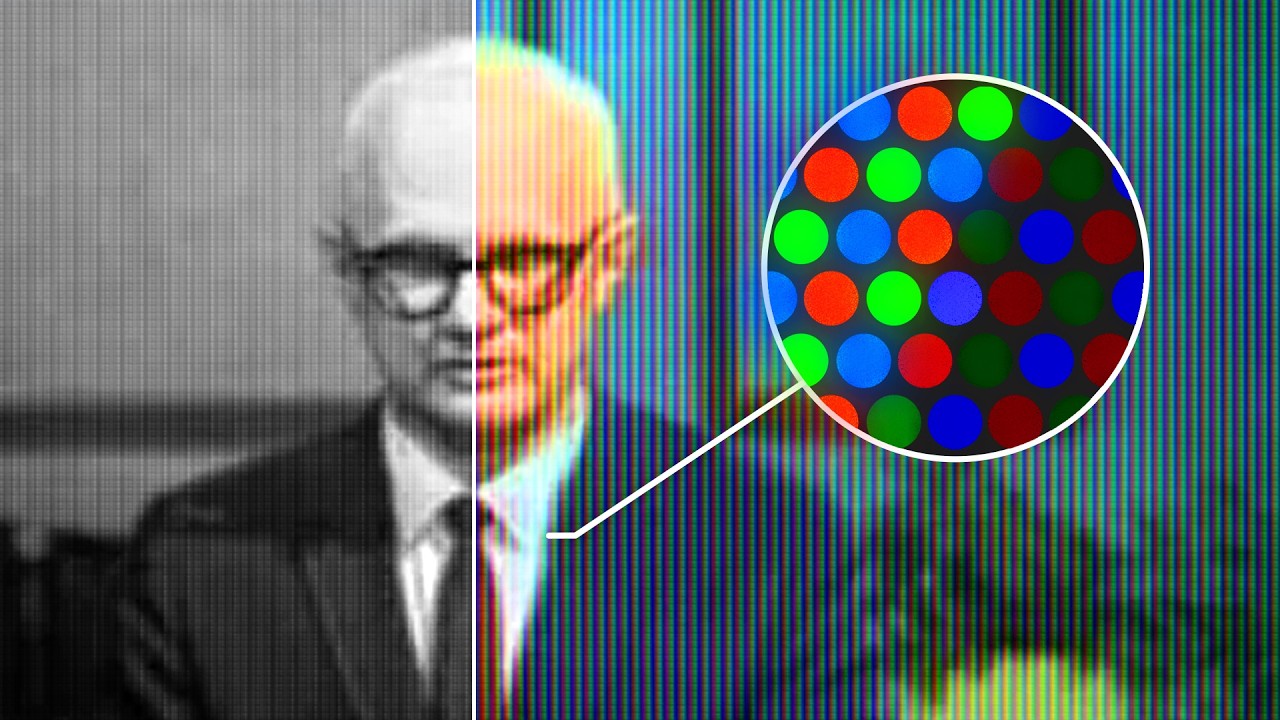
Many who read this will remember watching television on a black-and-white set at some point in their lives. Fewer will remember doing so because only black-and-white sets existed. Of course, your own experience will depend upon your country of origin. The United States began the transition to color television in 1953, and more than half of its population owned color sets less than twenty years thereafter. France’s stations started to change over in 1967, and the last one did so in 1983. South Ko
0
4
Wes Anderson Picks Nine of His Favorite Criterion Films
Many an internet cinephile has wondered aloud if the Criterion Closet is a real place, or just a set thrown together to make videos when famous directors like Christopher Nolan, Francis Ford Coppola, or Jim Jarmusch drop by. It turns out indeed to exist, not only at Criterion’s offices in New York, but also elsewhere. The Criterion Mobile Closet, for example, has taken the label’s home-video library on the road since 2024, the 40th anniversary of the company’s foundation. If it comes to your tow
0
4
Discover J.R.R. Tolkien’s Personal Book Cover Designs for The Lord of the Rings Trilogy
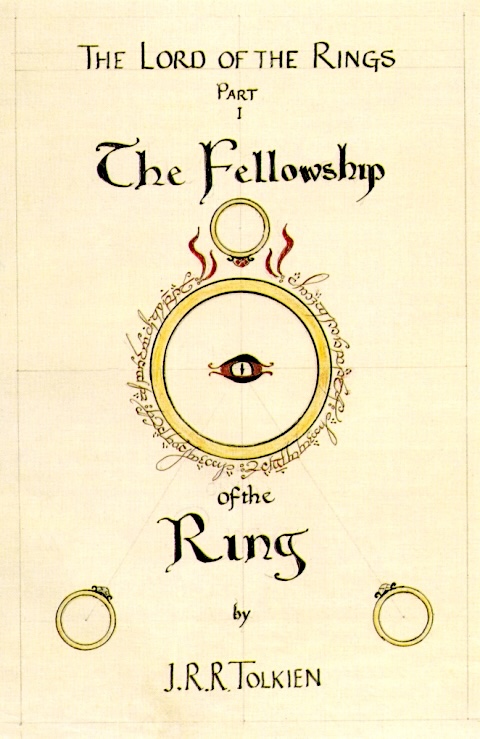
In some rare cases, adaptations and interpretations of a literary work can surpass the source. Despite hundreds of valiant efforts on the part of fans, filmmakers, game/toy designers, and radio producers, this has never been true of the fully-realized fantasy world in J.R.R. Tolkien’s The Hobbit and The Lord of the Rings trilogy (not that it’s ever been anyone’s intent). As we noted in a previous post, Tolkien’s fictional world is so intricate, its sources so vast and varied, that Core
0
4
How Leonardo da Vinci’s Procrastination Contributed to His Creativity
At the height of their productivity as Beatles, neither Paul McCartney nor John Lennon could read or write music notation. Clearly it didn’t keep them from making a cultural impact, and as with so much else in life, they regarded it humorously. As McCartney has said, they used to liken themselves to ancient Egyptian pharaohs, who relied on scribes rather than being literate themselves. It’s worth considering whether, all things considered, this inability was really a deficiency: not being rigoro
0
7
Watch the Completely Unsafe, Vertigo-Inducing Footage of Workers Building New York’s Iconic Skyscrapers
Would anyone in their right mind sign up for a job that had a high risk of mortality/disability? Or a job where red hot metal is being hurled directly at your face? Back in the 1920s this was the lot of the men who built New York’s skyline, the men who constructed the Chrysler Building and the Empire State, giant phallic symbols of America’s burgeoning wealth and power.
In this short clip (remastered and quite decently colorized) from the Smithsonian Channel, we get a brief glimpse of the perils
0
7
How Phone Addiction Keeps You from Achieving a Productive “Flow State”
If you have an iPhone, try pushing its side button three times in a row. Just like magic, the screen should turn from color into black-and-white, or rather grayscale. (To do the same on an Android phone, you’ll have to dive into settings, then “accessibility,” “vision enhancements,” and “color correction.”) Why would you want that in the first place? As Harvard Kennedy School and Harvard Business School professor Arthur C. Brooks explains in the Big Think video above, “one of the ways that you c
0
7
Milton Glaser’s 10 Rules for Life & Work: The Celebrated Designer Dispenses Wisdom Gained Over His Long Life & Career
“None of us has really the ability to understand our path until it’s over,” the celebrated graphic designer Milton Glaser mused less than a minute into the above video.
The late Milton Glaser’s many contributions to pop culture—the I ❤ NY logo, the psychedelic portrait of a rainbow-haired Bob Dylan, DC Comics’ classic bullet logo—conferred undeniable authority. To the outside eye, he seemed to have a pretty firm handle on the path he traveled for lo those many decades. Aspirant designers would d
0
7
Tim Curry (RIP) Breaks Down His Most Iconic Roles: Rocky Horror, Clue, Muppet Treasure Island & More
Upon hearing of Tim Curry’s death last week, some of us could recall having seen him on stage: in Amadeus or Spamalot on Broadway, perhaps, though he also drew acclaim in the work of Stoppard, Brecht, and Shakespeare. For many more of us — perhaps all of us — it was his most memorable film and television performances that sprang to mind. To an extent, which ones are most memorable depends on the viewer. Some will forever remember Curry as DJ Johnny LaGuardia in Times Square,
0
5
The Periodic Table of Endangered Elements: Visualizing the Chemical Elements That Could Vanish Before You Know It
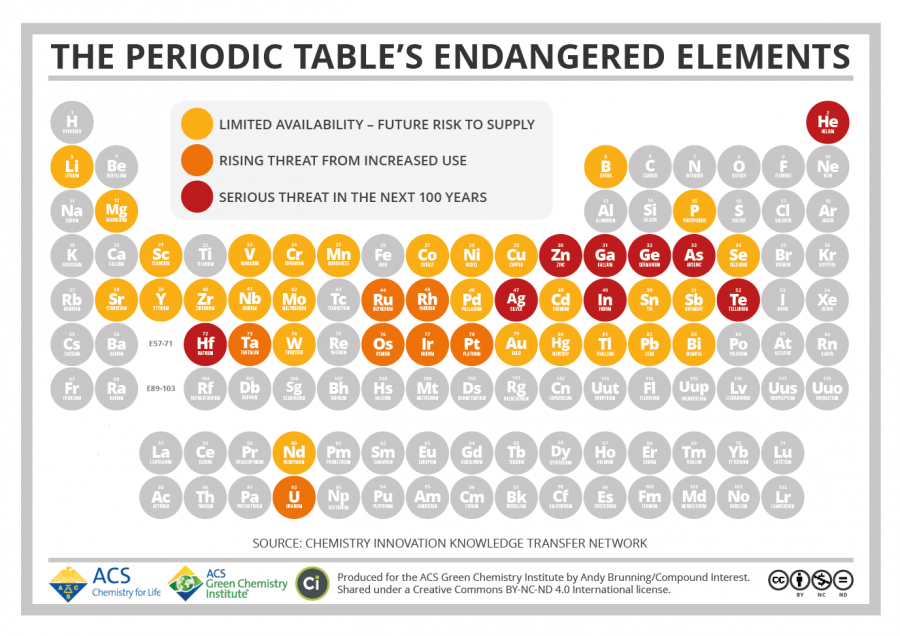
The Periodic Table of Elements lists the 118 chemical elements that make up everything in our world. Some you’re familiar with—Hydrogen, Oxygen, Nitrogen, etc. Others maybe less so—Vanadium, Germanium, and Yttrium.
According to the American Chemical Society, 44 of those 118 elements might disappear by century’s end. Enter the Periodic Table of Endangered Elements (shown above). The most endangered ones, highlighted in red, are Zinc, Gallium, Germanium, Arsenic (is this a good or very b
0
4
Why AI Companies Are Buying—And Then Destroying—Old Books
We’ve long joked about delaying bedtime in order to read the entire internet, but the prospect of actually doing so doesn’t sound as appealing as it used to. An ever-growing proportion of text online, we may sense, hasn’t been written by humans, but generated by artificial intelligence. One solution is to return to reading on paper, and beyond that, spending our time only with books published before the advent — and thus uncorrupted by the output — of large language models. Ironically, that’s wh
0
4
The Art of Splendor Solis, the Most Glorious Illuminated Alchemical Manuscript of Them All
When it was published in the United States in 1998, Harry Potter and the Philosopher’s Stone was retitled Harry Potter and the Sorcerer’s Stone. The jokes about the American reading public’s apparent allergy to the very word philosopher write themselves, but the change was also unfortunate for more substantial reasons. A “sorcerer’s stone” had no cultural resonance at all, whereas the philosopher’s stone had been sought after since, at the very latest, the dawn of the fourth century. S
0
7
Isaac Asimov Explains His Three Laws of Robots: Do No Harm, Follow Orders, Survive, in That Order
A number of futurists, philosophers, and technophiles believe we are approaching what they call the “singularity”: a point in time when smart machines become much smarter, stronger, and faster than their creators, and then become self-conscious. Whatever the chance of this occurring, it’s worthwhile to ponder the consequences. But we do already, all the time—in existentially bleak scenarios like Blade Runner, the Terminator series, the rebooted Battlestar Galactica (and its failed prequel Capric
0
6
Why Reading Egyptian Hieroglyphics Is Easier Than You Think
We’ve featured Egyptologist Ilona Regulski here on Open Culture a few times before. Once, she explained how to read ancient Egyptian hieroglyphs; another time, she told us what the Rosetta Stone actually says. It was, perhaps, inevitable that she would cross paths with Rob Watts, creator of the YouTube channel RobWords, whose videos we often post. When he made the journey to Berlin’s Neues Museum, and specifically to its Egyptian Museum, Regulski was the expert he sought out to tell him — a
0
1
Dolly Parton’s “Jolene” Slowed Down to 33 RPM Sounds Great and Takes on New, Unexpected Meanings (RIP)
Note: We were sad to see the news that Dolly Parton passed away. Today we are bringing back one of our favorite Dolly Parton posts. She will be missed.
The Walrus is… Dolly Parton?
Not every record yields gold when played backwards or spun more slowly than recommended, but a 45 of Parton’s 1973 hit “Jolene” played at 33 RPM not only sounds wonderful, it also manages to reframe the narrative.
As Andrea DenHoed notes in The New Yorker, “Slow Ass Jolene,” above, transforms Parton’s “baby-high sopra
0
4
The Ancient Greek Water Clock That Kept the Most Accurate Time for 1,800 Years
Today, we’re surrounded by technologies we could justifiably describe as time thieves. In ancient Greece, those who want
0
2
Historian Timothy Snyder Teaches a Free Course on Hitler, Stalin & How “It” Can Happen Here
When the historian Timothy Snyder left Yale for the University of Toronto in 2024, he took with him the practice of occa
0
2
Frank Lloyd Wright’s Secret Career as a Japanese Art Dealer & How It Shaped His Architecture
Frank Lloyd Wright was often strapped for cash. In that respect, he had something in common with Vincent van Gogh, who p
0
2
How the Japanese Practice of “Forest Bathing”—Or Just Hanging Out in the Woods—Can Lower Stress Levels and Fight Disease
When the U.S. media began reporting on the phenomenon of “forest bathing” as a therapy for mental and physical health, t
0
2
Bertrand Russell Explains Why Karl Marx’s Philosophy Produced the Disaster of Communism
In 1927, Bertrand Russell delivered a lecture titled “Why I Am Not a Christian.” At the time, such a declaration was sti
0
2
Meet Lloyd Kahn, the Counterculture Publisher Who Is Skateboarding at 91
Lloyd Kahn worked as an insurance broker before quitting in 1965. Then, he took a turn into the DIY building movement th
0
2
Why Inventing Color TV Was So Difficult
Many who read this will remember watching television on a black-and-white set at some point in their lives. Fewer will r
0
4
Wes Anderson Picks Nine of His Favorite Criterion Films
Many an internet cinephile has wondered aloud if the Criterion Closet is a real place, or just a set thrown together to
0
4
Discover J.R.R. Tolkien’s Personal Book Cover Designs for The Lord of the Rings Trilogy
In some rare cases, adaptations and interpretations of a literary work can surpass the source. Despite hundreds of valia
0
4
How Leonardo da Vinci’s Procrastination Contributed to His Creativity
At the height of their productivity as Beatles, neither Paul McCartney nor John Lennon could read or write music notatio
0
7
Watch the Completely Unsafe, Vertigo-Inducing Footage of Workers Building New York’s Iconic Skyscrapers
Would anyone in their right mind sign up for a job that had a high risk of mortality/disability? Or a job where red hot
0
7
How Phone Addiction Keeps You from Achieving a Productive “Flow State”
If you have an iPhone, try pushing its side button three times in a row. Just like magic, the screen should turn from co
0
7
Milton Glaser’s 10 Rules for Life & Work: The Celebrated Designer Dispenses Wisdom Gained Over His Long Life & Career
“None of us has really the ability to understand our path until it’s over,” the celebrated graphic designer Milton Glase
0
7
Tim Curry (RIP) Breaks Down His Most Iconic Roles: Rocky Horror, Clue, Muppet Treasure Island & More
Upon hearing of Tim Curry’s death last week, some of us could recall having seen him on stage: in Amadeus or Spamal
0
5
The Periodic Table of Endangered Elements: Visualizing the Chemical Elements That Could Vanish Before You Know It
The Periodic Table of Elements lists the 118 chemical elements that make up everything in our world. Some you’re familia
0
4
Why AI Companies Are Buying—And Then Destroying—Old Books
We’ve long joked about delaying bedtime in order to read the entire internet, but the prospect of actually doing so does
0
4
The Art of Splendor Solis, the Most Glorious Illuminated Alchemical Manuscript of Them All
When it was published in the United States in 1998, Harry Potter and the Philosopher’s Stone was retitled Harr
0
7
Isaac Asimov Explains His Three Laws of Robots: Do No Harm, Follow Orders, Survive, in That Order
A number of futurists, philosophers, and technophiles believe we are approaching what they call the “singularity”: a poi
0
6
The Ancient Greek Water Clock That Kept the Most Accurate Time for 1,800 Years
Today, we’re surrounded by technologies we could justifiably describe as time thieves. In ancient Greece, those who wanted to know where their time was going consulted a device they called a “water thief.” The roots of the clepsydra, or water clock, go back as far as the sixteenth century BC, with evidence of such devices found in modern-day Iraq, Iran, and Egypt, and more ambiguous evidence unearthed in places like India and China. The mechanism in the earliest examples takes not much more
0
2 👁
Historian Timothy Snyder Teaches a Free Course on Hitler, Stalin & How “It” Can Happen Here
When the historian Timothy Snyder left Yale for the University of Toronto in 2024, he took with him the practice of occasionally putting his course lectures online, making them available to anyone who cares to learn from them. Above, you can watch ten lectures from his recent course Hitler and Stalin Today. In this course:
Snyder examines the Nazi and Soviet responses to the new globalized world they shared. The course begins with the colonial background that made totalitarianism possible, and w
0
2 👁
Frank Lloyd Wright’s Secret Career as a Japanese Art Dealer & How It Shaped His Architecture
Frank Lloyd Wright was often strapped for cash. In that respect, he had something in common with Vincent van Gogh, who passed most of his much shorter life in more dire circumstances. Unlike Wright, who enjoyed decades of fame at the pinnacle of the American architectural profession, van Gogh remained practically unknown until after his death. But if they’ve encountered one another in the afterlife, they’ve certainly discussed one subject above all others: their shared appreciation for Japanese
0
2 👁
How the Japanese Practice of “Forest Bathing”—Or Just Hanging Out in the Woods—Can Lower Stress Levels and Fight Disease
When the U.S. media began reporting on the phenomenon of “forest bathing” as a therapy for mental and physical health, the online commentariat—as it will—mocked the concept relentlessly as yet another pretentious, bourgeois repackaging of something thoroughly mundane. Didn’t we just used to call it “going outside”?
Well, yes, if all “forest bathing” means is “going outside,” then it does sound like a grandiose and unnecessary phrase. The term, however, is not an American marketing invention but
0
2 👁
Bertrand Russell Explains Why Karl Marx’s Philosophy Produced the Disaster of Communism
In 1927, Bertrand Russell delivered a lecture titled “Why I Am Not a Christian.” At the time, such a declaration was still fairly bold, as was the reasoning he provided for it. Nearly three decades thereafter, he included in his collection Portraits from Memory another, shorter piece, “Why I Am Not a Communist.” That description was safe to apply to oneself in 1954, at least in the mainstream of the English-speaking world. It would have been riskier for those who moved in intellectual circl
0
2 👁
Meet Lloyd Kahn, the Counterculture Publisher Who Is Skateboarding at 91
Lloyd Kahn worked as an insurance broker before quitting in 1965. Then, he took a turn into the DIY building movement that emerged with the 1960s counterculture. Soon enough, he found himself editing the influential Whole Earth Catalog and publishing Shelter in 1973, a book still considered the bible of hand-built homes. Now 91 years old, Lloyd remains active in publishing. He also continues to run, paddleboard, and skateboard, a sport he took up when he turned 65. How many people can say that?
0
2 👁
Why Inventing Color TV Was So Difficult
Many who read this will remember watching television on a black-and-white set at some point in their lives. Fewer will remember doing so because only black-and-white sets existed. Of course, your own experience will depend upon your country of origin. The United States began the transition to color television in 1953, and more than half of its population owned color sets less than twenty years thereafter. France’s stations started to change over in 1967, and the last one did so in 1983. South Ko
0
4 👁
Wes Anderson Picks Nine of His Favorite Criterion Films
Many an internet cinephile has wondered aloud if the Criterion Closet is a real place, or just a set thrown together to make videos when famous directors like Christopher Nolan, Francis Ford Coppola, or Jim Jarmusch drop by. It turns out indeed to exist, not only at Criterion’s offices in New York, but also elsewhere. The Criterion Mobile Closet, for example, has taken the label’s home-video library on the road since 2024, the 40th anniversary of the company’s foundation. If it comes to your tow
0
4 👁
Discover J.R.R. Tolkien’s Personal Book Cover Designs for The Lord of the Rings Trilogy
In some rare cases, adaptations and interpretations of a literary work can surpass the source. Despite hundreds of valiant efforts on the part of fans, filmmakers, game/toy designers, and radio producers, this has never been true of the fully-realized fantasy world in J.R.R. Tolkien’s The Hobbit and The Lord of the Rings trilogy (not that it’s ever been anyone’s intent). As we noted in a previous post, Tolkien’s fictional world is so intricate, its sources so vast and varied, that Core
0
4 👁
How Leonardo da Vinci’s Procrastination Contributed to His Creativity
At the height of their productivity as Beatles, neither Paul McCartney nor John Lennon could read or write music notation. Clearly it didn’t keep them from making a cultural impact, and as with so much else in life, they regarded it humorously. As McCartney has said, they used to liken themselves to ancient Egyptian pharaohs, who relied on scribes rather than being literate themselves. It’s worth considering whether, all things considered, this inability was really a deficiency: not being rigoro
0
7 👁
Watch the Completely Unsafe, Vertigo-Inducing Footage of Workers Building New York’s Iconic Skyscrapers
Would anyone in their right mind sign up for a job that had a high risk of mortality/disability? Or a job where red hot metal is being hurled directly at your face? Back in the 1920s this was the lot of the men who built New York’s skyline, the men who constructed the Chrysler Building and the Empire State, giant phallic symbols of America’s burgeoning wealth and power.
In this short clip (remastered and quite decently colorized) from the Smithsonian Channel, we get a brief glimpse of the perils
0
7 👁
How Phone Addiction Keeps You from Achieving a Productive “Flow State”
If you have an iPhone, try pushing its side button three times in a row. Just like magic, the screen should turn from color into black-and-white, or rather grayscale. (To do the same on an Android phone, you’ll have to dive into settings, then “accessibility,” “vision enhancements,” and “color correction.”) Why would you want that in the first place? As Harvard Kennedy School and Harvard Business School professor Arthur C. Brooks explains in the Big Think video above, “one of the ways that you c
0
7 👁
Milton Glaser’s 10 Rules for Life & Work: The Celebrated Designer Dispenses Wisdom Gained Over His Long Life & Career
“None of us has really the ability to understand our path until it’s over,” the celebrated graphic designer Milton Glaser mused less than a minute into the above video.
The late Milton Glaser’s many contributions to pop culture—the I ❤ NY logo, the psychedelic portrait of a rainbow-haired Bob Dylan, DC Comics’ classic bullet logo—conferred undeniable authority. To the outside eye, he seemed to have a pretty firm handle on the path he traveled for lo those many decades. Aspirant designers would d
0
7 👁
Tim Curry (RIP) Breaks Down His Most Iconic Roles: Rocky Horror, Clue, Muppet Treasure Island & More
Upon hearing of Tim Curry’s death last week, some of us could recall having seen him on stage: in Amadeus or Spamalot on Broadway, perhaps, though he also drew acclaim in the work of Stoppard, Brecht, and Shakespeare. For many more of us — perhaps all of us — it was his most memorable film and television performances that sprang to mind. To an extent, which ones are most memorable depends on the viewer. Some will forever remember Curry as DJ Johnny LaGuardia in Times Square,
0
5 👁
The Periodic Table of Endangered Elements: Visualizing the Chemical Elements That Could Vanish Before You Know It
The Periodic Table of Elements lists the 118 chemical elements that make up everything in our world. Some you’re familiar with—Hydrogen, Oxygen, Nitrogen, etc. Others maybe less so—Vanadium, Germanium, and Yttrium.
According to the American Chemical Society, 44 of those 118 elements might disappear by century’s end. Enter the Periodic Table of Endangered Elements (shown above). The most endangered ones, highlighted in red, are Zinc, Gallium, Germanium, Arsenic (is this a good or very b
0
4 👁
Why AI Companies Are Buying—And Then Destroying—Old Books
We’ve long joked about delaying bedtime in order to read the entire internet, but the prospect of actually doing so doesn’t sound as appealing as it used to. An ever-growing proportion of text online, we may sense, hasn’t been written by humans, but generated by artificial intelligence. One solution is to return to reading on paper, and beyond that, spending our time only with books published before the advent — and thus uncorrupted by the output — of large language models. Ironically, that’s wh
0
4 👁
The Art of Splendor Solis, the Most Glorious Illuminated Alchemical Manuscript of Them All
When it was published in the United States in 1998, Harry Potter and the Philosopher’s Stone was retitled Harry Potter and the Sorcerer’s Stone. The jokes about the American reading public’s apparent allergy to the very word philosopher write themselves, but the change was also unfortunate for more substantial reasons. A “sorcerer’s stone” had no cultural resonance at all, whereas the philosopher’s stone had been sought after since, at the very latest, the dawn of the fourth century. S
0
7 👁
Isaac Asimov Explains His Three Laws of Robots: Do No Harm, Follow Orders, Survive, in That Order
A number of futurists, philosophers, and technophiles believe we are approaching what they call the “singularity”: a point in time when smart machines become much smarter, stronger, and faster than their creators, and then become self-conscious. Whatever the chance of this occurring, it’s worthwhile to ponder the consequences. But we do already, all the time—in existentially bleak scenarios like Blade Runner, the Terminator series, the rebooted Battlestar Galactica (and its failed prequel Capric
0
6 👁
Why Reading Egyptian Hieroglyphics Is Easier Than You Think
We’ve featured Egyptologist Ilona Regulski here on Open Culture a few times before. Once, she explained how to read ancient Egyptian hieroglyphs; another time, she told us what the Rosetta Stone actually says. It was, perhaps, inevitable that she would cross paths with Rob Watts, creator of the YouTube channel RobWords, whose videos we often post. When he made the journey to Berlin’s Neues Museum, and specifically to its Egyptian Museum, Regulski was the expert he sought out to tell him — a
0
1 👁
Dolly Parton’s “Jolene” Slowed Down to 33 RPM Sounds Great and Takes on New, Unexpected Meanings (RIP)
Note: We were sad to see the news that Dolly Parton passed away. Today we are bringing back one of our favorite Dolly Parton posts. She will be missed.
The Walrus is… Dolly Parton?
Not every record yields gold when played backwards or spun more slowly than recommended, but a 45 of Parton’s 1973 hit “Jolene” played at 33 RPM not only sounds wonderful, it also manages to reframe the narrative.
As Andrea DenHoed notes in The New Yorker, “Slow Ass Jolene,” above, transforms Parton’s “baby-high sopra
0
4 👁
The Ancient Greek Water Clock That Kept the Most Accurate Time for 1,800 Years
Today, we’re surrounded by technologies we could justifiably describe as time thieves. In ancient Greece, those who wanted to know…
💬 0
👁 2
Historian Timothy Snyder Teaches a Free Course on Hitler, Stalin & How “It” Can Happen Here
Open Culture · 6d ago
💬 0
👁 2
Frank Lloyd Wright’s Secret Career as a Japanese Art Dealer & How It Shaped His Architecture
Open Culture · 6d ago
💬 0
👁 2
How the Japanese Practice of “Forest Bathing”—Or Just Hanging Out in the Woods—Can Lower Stress Levels and Fight Disease
Open Culture · Sep 8, 2026
💬 0
👁 2

Bertrand Russell Explains Why Karl Marx’s Philosophy Produced the Disaster of Communism
Open Culture · Sep 7, 2026

Meet Lloyd Kahn, the Counterculture Publisher Who Is Skateboarding at 91
Open Culture · Sep 7, 2026

Why Inventing Color TV Was So Difficult
Open Culture · Sep 4, 2026

Wes Anderson Picks Nine of His Favorite Criterion Films
Open Culture · Sep 3, 2026
Discover J.R.R. Tolkien’s Personal Book Cover Designs for The Lord of the Rings Trilogy
In some rare cases, adaptations and interpretations of a literary work can surpass the source. Despite hundreds of valiant efforts…
💬 0
👁 4
How Leonardo da Vinci’s Procrastination Contributed to His Creativity
Open Culture · Sep 2, 2026
💬 0
👁 7
Watch the Completely Unsafe, Vertigo-Inducing Footage of Workers Building New York’s Iconic Skyscrapers
Open Culture · Sep 2, 2026
💬 0
👁 7
How Phone Addiction Keeps You from Achieving a Productive “Flow State”
Open Culture · Sep 1, 2026
💬 0
👁 7
Milton Glaser’s 10 Rules for Life & Work: The Celebrated Designer Dispenses Wisdom Gained Over His Long Life & Career
Open Culture · Sep 1, 2026

Tim Curry (RIP) Breaks Down His Most Iconic Roles: Rocky Horror, Clue, Muppet Treasure Island & More
Open Culture · Aug 31, 2026

The Periodic Table of Endangered Elements: Visualizing the Chemical Elements That Could Vanish Before You Know It
Open Culture · Aug 31, 2026

Why AI Companies Are Buying—And Then Destroying—Old Books
Open Culture · Aug 28, 2026
The Art of Splendor Solis, the Most Glorious Illuminated Alchemical Manuscript of Them All
When it was published in the United States in 1998, Harry Potter and the Philosopher’s Stone was retitled Harry Potter a…
💬 0
👁 7
Isaac Asimov Explains His Three Laws of Robots: Do No Harm, Follow Orders, Survive, in That Order
Open Culture · Aug 27, 2026
💬 0
👁 6
Why Reading Egyptian Hieroglyphics Is Easier Than You Think
Open Culture · Aug 26, 2026
💬 0
👁 1
Dolly Parton’s “Jolene” Slowed Down to 33 RPM Sounds Great and Takes on New, Unexpected Meanings (RIP)
Open Culture · Aug 26, 2026
💬 0
👁 4