Literary news and essays
Latest Articles
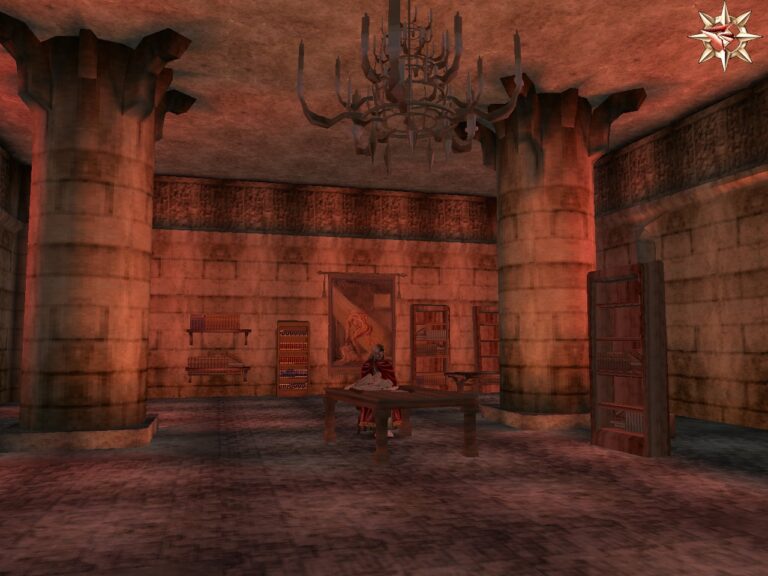
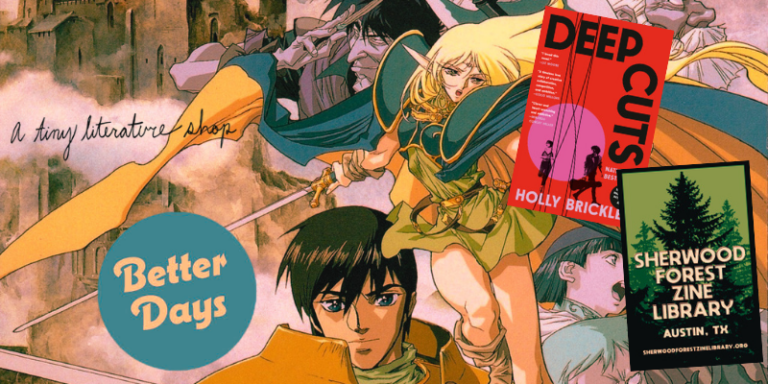
On the strange, literary video games of Inpatient Press.
The indie publisher Inpatient Press is doing fascinating, form-breaking work, publishing everything from novels, reprints, zines, and games since 2013. Inpatient’s publisher, Mitch Anzuoni, studied computer science and creative writing in college (fittingly) and aims “to publish what others do not.”
Anzuoni told MIT Press, which distributes Inpatient’s book, that “the most important, and perhaps defining, characteristic of my publishing is the treatment of the book as a substantial object on its
0
1
Lit Hub Daily: September 9, 2026
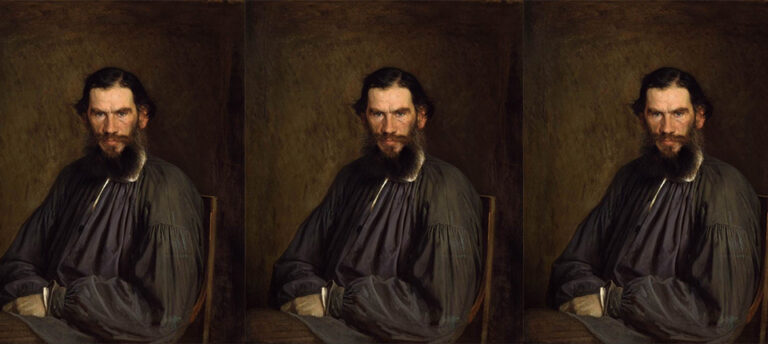
TODAY: In 1828, Leo Tolstoy is born.
“Language is something that is practiced and learned and something that you can be awful at, and also something that you can get better at. But the only way that you get better is by making mistakes.” R.F. Kuang talks to Adam Dalva. | Lit Hub In Conversation
What Wiemar Germany’s theater can teach us about artistic expression in the shadow of rising fascism. | Lit Hub Craft
Tom Allon remembers advice on teaching high school from his friend
0
1
Learning From Shame: R.F. Kuang on Diaspora, Language and Writing Young Protagonists
R.F. Kuang is, in the best sense, a literary chameleon. Each one of her novels presents a different setting and dynamic, but her oeuvre is unified by careful thought, sharp style, and an uncanny ability to make the pages want to turn. Taipei Story, her seventh book since 2018, is about Lily, a college freshman spending a summer abroad in Taiwan to learn Mandarin. She struggles with assimilation, her roommate, Anna, her internet-famous classmate, JC, her self-perception, and the death of her gran
0
2
What Weimar Berlin’s Most Famous Plays Revealed About Artistic Freedom
Is there a German word that means the opposite of “doppelgänger”—not the uncannily mysterious twin, but the secretly matched-up opponent who stands for everything one hates and also hates everything one stands for? If so, Bertolt Brecht could have filled that role for Vladimir Nabokov. It would be hard to imagine two more dissimilar writers inhabiting the same city at the same time. While Nabokov was yearning toward a lost aristocratic past, Brecht was actively championing a proletarian future i
0
1
What Peatlands Can Teach Us About Time
I am sitting in a frost pocket in West Virginia, looking at a Canada warbler.
It is World Migratory Bird Day in spring, the second Saturday of May, and I have spent the past week in search of warblers. The Appalachian Mountains roll out a green carpet for songbirds making their annual migration between the winter warmth of Central and South America and the northern habitats they need to breed and nest. Some birds will pass through and continue on to the boreal forests of Canada; this warbler mig
0
2
“Get Out.” Advice on Teaching High School From the Late, Great Frank McCourt
On my second day as a rookie English teacher at my alma mater, Stuyvesant High School, I walked down the fourth floor hallway on my way to class.
Behind a thick column, lurking in the shadows, a kind looking man with an Irish brogue quietly summoned me. “Psst…hey, come over here.”
When I strolled over, he blurted out: “Get out while you can!”
He saw my quizzical expression, not quite comprehending his warning.
“It’s five shows a day, in front of the toughest audience you’ll ever face,” he
0
2
Read the Winners of American Short Fiction’s 2026 Insider Prize
Writing is a challenge, at every level. There are constant pressures acting upon a writer: juggling between responsibilities and work; prioritizing health; making and somehow slowing down time; even, perhaps, the arresting, infinite possibilities of the page. Not to mention, all the subconscious terrain, where one wrestles with memory, vulnerability, and presence.
And yet—
These five pieces, selected as the winners by novelist and short story writer Elizabeth McCracken for the 2026 Insider Prize
0
1
The Literary Agent Who Lost the Narrative Thread
As a literary agent, I’ve spent years shaping the stories of other people’s grief. There was the Pulitzer-nominated journalist who’d lost her only child when he was seven. And the Black descendent of Thomas Jefferson who, upon her father’s death, finally took the stories of his lineage seriously. Then there was the New York Times bestselling author who cared for young animals only to have to euthanize them when the time came.
Over the years, I’d built a business around refining narratives of hea
0
2
A Legal History of Anti-Chinese Racism in America
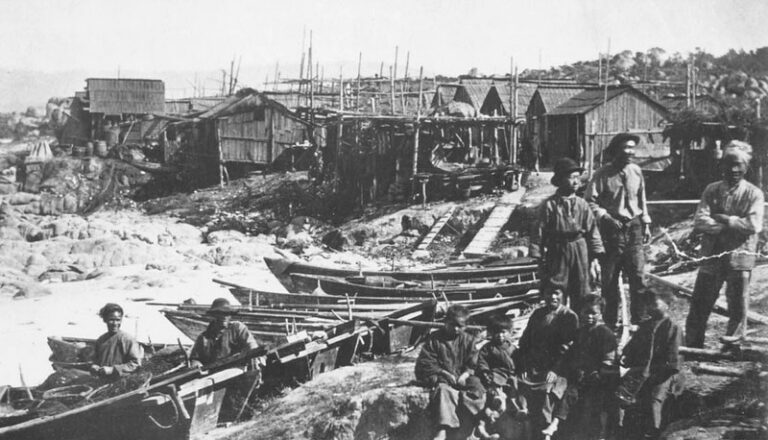
In the history of the Chinese in America, the border has caught our attention and held it. Chinese migrants’ attempts to cross the border, and America’s attempts to stop them, is the story that historians have told and retold. But long before the Chinese faced the first exclusion laws, and long afterward as well, they endured a racial regime within America every day. This book is the history of that racial regime and the lives it touched.
Arriving on California’s shores in the 1850s, Chinese mig
0
2
Adam Erlich Sachs on Heinrich von Kleist’s Michael Kohlhaas
The Windham-Campbell Prizes Podcast features a series of conversations with past and present Windham-Campbell Prize winners about their favorite books and plays. Hosted by Michael Kelleher.
For the final episode of our 2026 season, Mike talks with Adam Erlich Sachs (recipient of a 2026 Windham-Campbell Prize for Fiction) about the historical Kantian thicket of Heinrich von Kleist’s Michael Kohlhaas, translated by Michael Hoffman.
Adam Ehrlich Sachs is the author of three works of fiction—
0
1
Lit Hub Weekly: August 31 – September 4, 2026
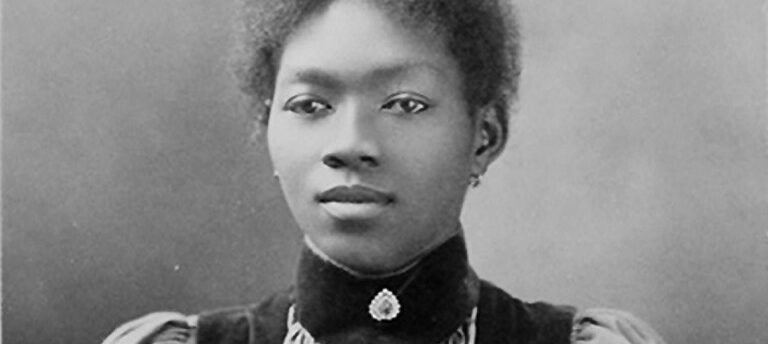
TODAY: In 1859, Harriet E. Wilson, often considered the first African American woman novelist, publishes her book Our Nig anonymously.
Marlon James tells Eric Olson about (finally!) writing a novel that draws from his life. | Lit Hub In Conversation
“Terror wasn’t the only weapon the Nazis used against the American prisoners. Sometimes, they used propagandistic persuasion as well.” On Vonnegut’s Dresden in Slaughterhouse-Five. | Lit Hub Biography
“Cormac asks what we think of the home so far,
0
5
This week’s news in Venn diagrams.
The imminent arrival of fall means I’ve been pulling out all my jackets in eager anticipation—I’m not a fan of summer, especially when it’s been nearly tropical in NYC these past few months.
Arguably the best part of pulling out jackets for the season are the Pocket Surprises, items that you stuffed in a pocket and forgot about. So far I’ve re-found:
– One receipt that I wrote “paranoia” on, eerie
– Two ticket stubs, one from a movie I didn’t
0
4
Here’s what’s making us happy this week.
As summer comes to a close, we at Lit Hub are celebrating milestones and jumping into the deep end. What’s making us happy? Climbing mountains. We’re looking autumn square in the face and saying: bring it on.
Molly Odintz, for instance, is moving in with her other half. The happy couple is making designs on a fire pit. And last week, Drew Broussard cracked an especially tricky part of his novel-in-progress, to much rejoicing. A section that’s been bedeviling our podcasts edito
0
4
Lit Hub Daily: September 4, 2026
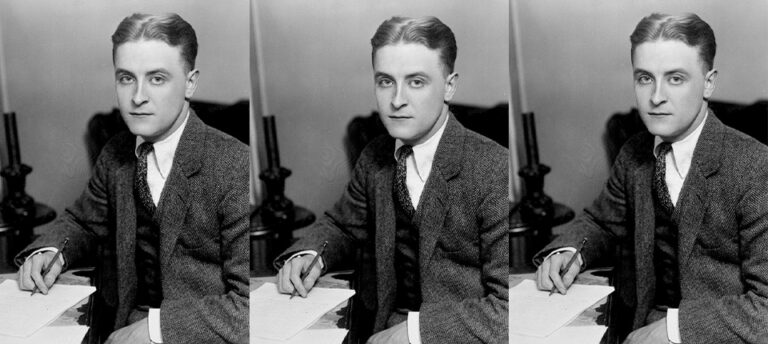
TODAY: In 1919, F. Scott Fitzgerald gives the manuscript of This Side of Paradise to his friend Shane Leslie to deliver to Maxwell Perkins, editor at Charles Scribner’s Sons in New York.
Suzanne Roberts offers advice (and prompts!) for writing about sex. | Lit Hub Craft
How does time actually work? Jim Al-Khalili explores the flow of physics. | Lit Hub Science
These Latin American novels from the 1920s chronicled an era of agriculture and labor. | Lit Hub Criticism
Eric T. Jennings intro
0
4
Is Time Even Real? Does It Even Flow?
You might consider time to be such a fundamental feature of our existence that there really is nothing profound or meaningful that we can say about it. Maybe time, like space, simply is. Many have even argued time out of existence altogether. For example, if we were to split it up into three components: the past, the present and the future, then we can examine each in turn.
Those who deny the reality of time will say something like this: The past has happened and is gone; all we have left of it
0
4
How to Get Over the Hump of Writing Sex
This first appeared in Lit Hub’s Craft of Writing newsletter—sign up here.
Only trouble is interesting, and what causes more trouble for us humans than our love lives? With love, we’re leaping into the unknown, and it’s thrilling, surprising, scary, overwhelming (and sometimes underwhelming and disappointing) all at once. Love is often unrequited, dangerous, or forbidden, and even when it’s straightforward, there’s still a story in it because we are mortal beings, hurtling toward an impending en
0
4
10 Literary Science Fiction and Fantasy Novels That Offer Hope for the Future
During graduate school, I finished the novel that found me an agent—but when my agent submitted it to publishers, all twenty of them turned the manuscript down. Truthfully, it was closer to a collection of loosely-linked short stories, and the feedback from editors was consistent: Pretty sentences. But nothing really happens.
This is not to impugn books in which little happens! I love those books, which is why I tried to write one. As a teenager, I revered realist literary fiction, stories whos
0
4
What Should You Read Next? Here Are the Best Reviewed Books of the Week
Marlon James’ The Disappearers, Jon Ronson’s The Castle, Chloe Benjamin’s Under Story, and Emily Wilson’s Crossing the Wine Dark Sea all feature among the best reviewed books of the month.
Brought to you by Book Marks, Lit Hub’s home for book reviews.
*
Fiction
1. The Disappearers by Marlon James
(Riverhead)
13 Rave • 2 Positive • 2 Mixed
Read a profile of Marlon James here
“A harrowing, hilarious, magnificent novel that will stand the test of time … He invents his own literary language, horny
0
4
How Fordism and Fascism Gave Birth to Modern Car Culture
In 1934, writing from his prison cell, Antonio Gramsci reflected on the sweeping transformations reshaping industrial production in the United States. The rise of the automobile and the wider Fordist factory, he argued, signaled a new economic and moral order, one that imposed discipline upon the worker, imbued the wage with ethical significance and blurred the line between production and private life. Of the industrial innovations underpinning this order, the assembly line and vertical integrat
0
4
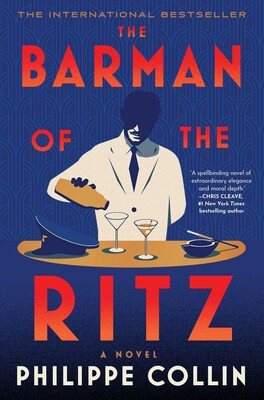
The Barman of the Ritz
Paris was occupied by German troops from June 14, 1940, to August 25, 1944: 1,533 nights. One thousand five hundred and thirty-three nights during which the Ritz was transformed from a luxury hotel into a stomping ground for the Nazi elite. There are a thousand and one ways to recount this story; The Barman of the Ritz is a novel based on actual facts and actual people. It is an account of those dark years in France. But there are grey areas in the life of Frank Meier that—as René Girard puts it
0
4
On the strange, literary video games of Inpatient Press.
The indie publisher Inpatient Press is doing fascinating, form-breaking work, publishing everything from novels, reprint
0
1
Lit Hub Daily: September 9, 2026
TODAY: In 1828, Leo Tolstoy is born.
“Language is something that is practiced and learned and something that you
0
1
Learning From Shame: R.F. Kuang on Diaspora, Language and Writing Young Protagonists
R.F. Kuang is, in the best sense, a literary chameleon. Each one of her novels presents a different setting and dynamic,
0
2
What Weimar Berlin’s Most Famous Plays Revealed About Artistic Freedom
Is there a German word that means the opposite of “doppelgänger”—not the uncannily mysterious twin, but the secretly mat
0
1
What Peatlands Can Teach Us About Time
I am sitting in a frost pocket in West Virginia, looking at a Canada warbler.
It is World Migratory Bird Day in spring,
0
2
“Get Out.” Advice on Teaching High School From the Late, Great Frank McCourt
On my second day as a rookie English teacher at my alma mater, Stuyvesant High School, I walked down the fourth floor ha
0
2
Read the Winners of American Short Fiction’s 2026 Insider Prize
Writing is a challenge, at every level. There are constant pressures acting upon a writer: juggling between responsibili
0
1
The Literary Agent Who Lost the Narrative Thread
As a literary agent, I’ve spent years shaping the stories of other people’s grief. There was the Pulitzer-nominated jour
0
2
A Legal History of Anti-Chinese Racism in America
In the history of the Chinese in America, the border has caught our attention and held it. Chinese migrants’ attempts to
0
2
Adam Erlich Sachs on Heinrich von Kleist’s Michael Kohlhaas
The Windham-Campbell Prizes Podcast features a series of conversations with past and present Windham-Campbell Prize winn
0
1
Lit Hub Weekly: August 31 – September 4, 2026
TODAY: In 1859, Harriet E. Wilson, often considered the first African American woman novelist, publishes her book Our Ni
0
5
This week’s news in Venn diagrams.
The imminent arrival of fall means I’ve been pulling out all my jackets in eager anticipation—I’m not a fan
0
4
Here’s what’s making us happy this week.
As summer comes to a close, we at Lit Hub are celebrating milestones and jumping into the deep end. What’s making
0
4
Lit Hub Daily: September 4, 2026
TODAY: In 1919, F. Scott Fitzgerald gives the manuscript of This Side of Paradise to his friend Shane Leslie to deliver
0
4
Is Time Even Real? Does It Even Flow?
You might consider time to be such a fundamental feature of our existence that there really is nothing profound or meani
0
4
How to Get Over the Hump of Writing Sex
This first appeared in Lit Hub’s Craft of Writing newsletter—sign up here.
Only trouble is interesting, and what causes
0
4
10 Literary Science Fiction and Fantasy Novels That Offer Hope for the Future
During graduate school, I finished the novel that found me an agent—but when my agent submitted it to publishers, all tw
0
4
What Should You Read Next? Here Are the Best Reviewed Books of the Week
Marlon James’ The Disappearers, Jon Ronson’s The Castle, Chloe Benjamin’s Under Story, and Emily Wilson’s Crossing the W
0
4
On the strange, literary video games of Inpatient Press.
The indie publisher Inpatient Press is doing fascinating, form-breaking work, publishing everything from novels, reprints, zines, and games since 2013. Inpatient’s publisher, Mitch Anzuoni, studied computer science and creative writing in college (fittingly) and aims “to publish what others do not.”
Anzuoni told MIT Press, which distributes Inpatient’s book, that “the most important, and perhaps defining, characteristic of my publishing is the treatment of the book as a substantial object on its
0
1 👁
Lit Hub Daily: September 9, 2026
TODAY: In 1828, Leo Tolstoy is born.
“Language is something that is practiced and learned and something that you can be awful at, and also something that you can get better at. But the only way that you get better is by making mistakes.” R.F. Kuang talks to Adam Dalva. | Lit Hub In Conversation
What Wiemar Germany’s theater can teach us about artistic expression in the shadow of rising fascism. | Lit Hub Craft
Tom Allon remembers advice on teaching high school from his friend
0
1 👁
Learning From Shame: R.F. Kuang on Diaspora, Language and Writing Young Protagonists
R.F. Kuang is, in the best sense, a literary chameleon. Each one of her novels presents a different setting and dynamic, but her oeuvre is unified by careful thought, sharp style, and an uncanny ability to make the pages want to turn. Taipei Story, her seventh book since 2018, is about Lily, a college freshman spending a summer abroad in Taiwan to learn Mandarin. She struggles with assimilation, her roommate, Anna, her internet-famous classmate, JC, her self-perception, and the death of her gran
0
2 👁
What Weimar Berlin’s Most Famous Plays Revealed About Artistic Freedom
Is there a German word that means the opposite of “doppelgänger”—not the uncannily mysterious twin, but the secretly matched-up opponent who stands for everything one hates and also hates everything one stands for? If so, Bertolt Brecht could have filled that role for Vladimir Nabokov. It would be hard to imagine two more dissimilar writers inhabiting the same city at the same time. While Nabokov was yearning toward a lost aristocratic past, Brecht was actively championing a proletarian future i
0
1 👁
What Peatlands Can Teach Us About Time
I am sitting in a frost pocket in West Virginia, looking at a Canada warbler.
It is World Migratory Bird Day in spring, the second Saturday of May, and I have spent the past week in search of warblers. The Appalachian Mountains roll out a green carpet for songbirds making their annual migration between the winter warmth of Central and South America and the northern habitats they need to breed and nest. Some birds will pass through and continue on to the boreal forests of Canada; this warbler mig
0
2 👁
“Get Out.” Advice on Teaching High School From the Late, Great Frank McCourt
On my second day as a rookie English teacher at my alma mater, Stuyvesant High School, I walked down the fourth floor hallway on my way to class.
Behind a thick column, lurking in the shadows, a kind looking man with an Irish brogue quietly summoned me. “Psst…hey, come over here.”
When I strolled over, he blurted out: “Get out while you can!”
He saw my quizzical expression, not quite comprehending his warning.
“It’s five shows a day, in front of the toughest audience you’ll ever face,” he
0
2 👁
Read the Winners of American Short Fiction’s 2026 Insider Prize
Writing is a challenge, at every level. There are constant pressures acting upon a writer: juggling between responsibilities and work; prioritizing health; making and somehow slowing down time; even, perhaps, the arresting, infinite possibilities of the page. Not to mention, all the subconscious terrain, where one wrestles with memory, vulnerability, and presence.
And yet—
These five pieces, selected as the winners by novelist and short story writer Elizabeth McCracken for the 2026 Insider Prize
0
1 👁
The Literary Agent Who Lost the Narrative Thread
As a literary agent, I’ve spent years shaping the stories of other people’s grief. There was the Pulitzer-nominated journalist who’d lost her only child when he was seven. And the Black descendent of Thomas Jefferson who, upon her father’s death, finally took the stories of his lineage seriously. Then there was the New York Times bestselling author who cared for young animals only to have to euthanize them when the time came.
Over the years, I’d built a business around refining narratives of hea
0
2 👁
A Legal History of Anti-Chinese Racism in America
In the history of the Chinese in America, the border has caught our attention and held it. Chinese migrants’ attempts to cross the border, and America’s attempts to stop them, is the story that historians have told and retold. But long before the Chinese faced the first exclusion laws, and long afterward as well, they endured a racial regime within America every day. This book is the history of that racial regime and the lives it touched.
Arriving on California’s shores in the 1850s, Chinese mig
0
2 👁
Adam Erlich Sachs on Heinrich von Kleist’s Michael Kohlhaas
The Windham-Campbell Prizes Podcast features a series of conversations with past and present Windham-Campbell Prize winners about their favorite books and plays. Hosted by Michael Kelleher.
For the final episode of our 2026 season, Mike talks with Adam Erlich Sachs (recipient of a 2026 Windham-Campbell Prize for Fiction) about the historical Kantian thicket of Heinrich von Kleist’s Michael Kohlhaas, translated by Michael Hoffman.
Adam Ehrlich Sachs is the author of three works of fiction—
0
1 👁
Lit Hub Weekly: August 31 – September 4, 2026
TODAY: In 1859, Harriet E. Wilson, often considered the first African American woman novelist, publishes her book Our Nig anonymously.
Marlon James tells Eric Olson about (finally!) writing a novel that draws from his life. | Lit Hub In Conversation
“Terror wasn’t the only weapon the Nazis used against the American prisoners. Sometimes, they used propagandistic persuasion as well.” On Vonnegut’s Dresden in Slaughterhouse-Five. | Lit Hub Biography
“Cormac asks what we think of the home so far,
0
5 👁
This week’s news in Venn diagrams.
The imminent arrival of fall means I’ve been pulling out all my jackets in eager anticipation—I’m not a fan of summer, especially when it’s been nearly tropical in NYC these past few months.
Arguably the best part of pulling out jackets for the season are the Pocket Surprises, items that you stuffed in a pocket and forgot about. So far I’ve re-found:
– One receipt that I wrote “paranoia” on, eerie
– Two ticket stubs, one from a movie I didn’t
0
4 👁
Here’s what’s making us happy this week.
As summer comes to a close, we at Lit Hub are celebrating milestones and jumping into the deep end. What’s making us happy? Climbing mountains. We’re looking autumn square in the face and saying: bring it on.
Molly Odintz, for instance, is moving in with her other half. The happy couple is making designs on a fire pit. And last week, Drew Broussard cracked an especially tricky part of his novel-in-progress, to much rejoicing. A section that’s been bedeviling our podcasts edito
0
4 👁
Lit Hub Daily: September 4, 2026
TODAY: In 1919, F. Scott Fitzgerald gives the manuscript of This Side of Paradise to his friend Shane Leslie to deliver to Maxwell Perkins, editor at Charles Scribner’s Sons in New York.
Suzanne Roberts offers advice (and prompts!) for writing about sex. | Lit Hub Craft
How does time actually work? Jim Al-Khalili explores the flow of physics. | Lit Hub Science
These Latin American novels from the 1920s chronicled an era of agriculture and labor. | Lit Hub Criticism
Eric T. Jennings intro
0
4 👁
Is Time Even Real? Does It Even Flow?
You might consider time to be such a fundamental feature of our existence that there really is nothing profound or meaningful that we can say about it. Maybe time, like space, simply is. Many have even argued time out of existence altogether. For example, if we were to split it up into three components: the past, the present and the future, then we can examine each in turn.
Those who deny the reality of time will say something like this: The past has happened and is gone; all we have left of it
0
4 👁
How to Get Over the Hump of Writing Sex
This first appeared in Lit Hub’s Craft of Writing newsletter—sign up here.
Only trouble is interesting, and what causes more trouble for us humans than our love lives? With love, we’re leaping into the unknown, and it’s thrilling, surprising, scary, overwhelming (and sometimes underwhelming and disappointing) all at once. Love is often unrequited, dangerous, or forbidden, and even when it’s straightforward, there’s still a story in it because we are mortal beings, hurtling toward an impending en
0
4 👁
10 Literary Science Fiction and Fantasy Novels That Offer Hope for the Future
During graduate school, I finished the novel that found me an agent—but when my agent submitted it to publishers, all twenty of them turned the manuscript down. Truthfully, it was closer to a collection of loosely-linked short stories, and the feedback from editors was consistent: Pretty sentences. But nothing really happens.
This is not to impugn books in which little happens! I love those books, which is why I tried to write one. As a teenager, I revered realist literary fiction, stories whos
0
4 👁
What Should You Read Next? Here Are the Best Reviewed Books of the Week
Marlon James’ The Disappearers, Jon Ronson’s The Castle, Chloe Benjamin’s Under Story, and Emily Wilson’s Crossing the Wine Dark Sea all feature among the best reviewed books of the month.
Brought to you by Book Marks, Lit Hub’s home for book reviews.
*
Fiction
1. The Disappearers by Marlon James
(Riverhead)
13 Rave • 2 Positive • 2 Mixed
Read a profile of Marlon James here
“A harrowing, hilarious, magnificent novel that will stand the test of time … He invents his own literary language, horny
0
4 👁
How Fordism and Fascism Gave Birth to Modern Car Culture
In 1934, writing from his prison cell, Antonio Gramsci reflected on the sweeping transformations reshaping industrial production in the United States. The rise of the automobile and the wider Fordist factory, he argued, signaled a new economic and moral order, one that imposed discipline upon the worker, imbued the wage with ethical significance and blurred the line between production and private life. Of the industrial innovations underpinning this order, the assembly line and vertical integrat
0
4 👁
The Barman of the Ritz
Paris was occupied by German troops from June 14, 1940, to August 25, 1944: 1,533 nights. One thousand five hundred and thirty-three nights during which the Ritz was transformed from a luxury hotel into a stomping ground for the Nazi elite. There are a thousand and one ways to recount this story; The Barman of the Ritz is a novel based on actual facts and actual people. It is an account of those dark years in France. But there are grey areas in the life of Frank Meier that—as René Girard puts it
0
4 👁
On the strange, literary video games of Inpatient Press.
The indie publisher Inpatient Press is doing fascinating, form-breaking work, publishing everything from novels, reprints, zines, …
💬 0
👁 1
Lit Hub Daily: September 9, 2026
Literary Hub · 5d ago
💬 0
👁 1
Learning From Shame: R.F. Kuang on Diaspora, Language and Writing Young Protagonists
Literary Hub · 5d ago
💬 0
👁 2
What Weimar Berlin’s Most Famous Plays Revealed About Artistic Freedom
Literary Hub · 5d ago
💬 0
👁 1

What Peatlands Can Teach Us About Time
Literary Hub · 5d ago

“Get Out.” Advice on Teaching High School From the Late, Great Frank McCourt
Literary Hub · 5d ago

Read the Winners of American Short Fiction’s 2026 Insider Prize
Literary Hub · 5d ago

The Literary Agent Who Lost the Narrative Thread
Literary Hub · 5d ago
A Legal History of Anti-Chinese Racism in America
In the history of the Chinese in America, the border has caught our attention and held it. Chinese migrants’ attempts to cross the…
💬 0
👁 2
Adam Erlich Sachs on Heinrich von Kleist’s Michael Kohlhaas
Literary Hub · 5d ago
💬 0
👁 1
Lit Hub Weekly: August 31 – September 4, 2026
Literary Hub · Sep 5, 2026
💬 0
👁 5
This week’s news in Venn diagrams.
Literary Hub · Sep 4, 2026
💬 0
👁 4

Here’s what’s making us happy this week.
Literary Hub · Sep 4, 2026

Lit Hub Daily: September 4, 2026
Literary Hub · Sep 4, 2026

Is Time Even Real? Does It Even Flow?
Literary Hub · Sep 4, 2026

How to Get Over the Hump of Writing Sex
Literary Hub · Sep 4, 2026
10 Literary Science Fiction and Fantasy Novels That Offer Hope for the Future
During graduate school, I finished the novel that found me an agent—but when my agent submitted it to publishers, all twenty of th…
💬 0
👁 4