Environmental news nonprofit
Latest Articles

Federal agency to open tens of thousands of acres of Colorado wilderness to oil drilling
A federal agency will offer tens of thousands of acres in northwestern Colorado that the nation’s largest elk herd relies upon for migration, foraging, and winter habitat to oil and gas companies for lease in the state’s biggest such sale in modern history.
More than 100 parcels included in a June 16 lease sale by the Bureau of Land Management encompass elk, pronghorn, and mule deer migration corridors that extend into southern Wyoming. Many sit in Moffat County, which bills itself as the “El
0
2
Your local park is bringing in the green (and by that, we mean money)
In an increasingly divided nation, Americans agree on at least two things. For one, politicians across the political spectrum are scrambling to get more housing built, which happens to be an accidentally powerful way to fight climate change. And two, Americans love their parks: A recent poll found that 88 percent of them visited one in the past year. Nearly 90 percent of people who voted for Kamala Harris, and 80 percent of those who voted for Donald Trump, consider these spaces critical infrast
0
0
In the Smoky Mountains, a volunteer effort aims to document every species — before it’s too late
A gentle shower fell as four people in rain gear made their way deep into a spruce-fir forest high in Great Smoky Mountains National Park. Ducking beneath bright green underbrush and stepping away from the road, a hush took over.
Just a few steps in, they came across an aging yellow birch tree covered in moss.
But it wasn’t just moss. James Hollinger, a retired computer scientist turned amateur lichen scientist, leaned closer and spotted a rare, spongy lichen that has been documented about
0
0
Blood in the well: One town’s fight against the slaughterhouse polluting it
When Trish Leigey’s taps started running brown and foul in late 2019, she had an uneasy suspicion about what was tainting the once-clear mountain water.
Tests later confirmed her hunch. Bovine DNA had infiltrated drinking water supplies in rural Loganton, Pennsylvania — contamination her lawyers linked to Nicholas Meat and its practice of spreading liquefied animal waste on nearby fields.
That may not have surprised many of Leigey’s neighbors. Most of them were well aware of the desi
0
0
No, rolling back these environmental rules won’t lower your grocery bill
Nearly six years ago, during Donald Trump’s first term in the White House, the president signed a piece of bipartisan legislation introduced to phase out the rampant use of hydrofluorocarbons, or HFCs, which are potent greenhouse gases commonly used in commercial cooling equipment in grocery stores and air-conditioning systems.
At the time, he praised the American Innovation and Manufacturing Act, created in line with an international agreement to tamp down widespread use of the “super
0
0
New York backtracked on its climate goals. Here’s why.
Last week, New York became the first state in the country to weaken a mandatory climate law passed by its own legislature.
The change comes at the behest of Governor Kathy Hochul, a moderate Democrat who has often criticized climate action for increasing consumer costs. After months of backroom negotiation, the legislature reached a deal that weakens the 2019 law in several different ways — most notably by giving the state an additional decade to meet legally-required emissions targets.
Th
0
0
Nebraskans are taking a hard look at data centers
This story is made possible through a partnership between Grist and The Flatwater Free Press, Nebraska’s first independent, nonprofit newsroom focused on investigations and feature stories.
Standing before the Otoe County Board and a room of neighbors, Wynee Benedict ticked through a long list of concerns.
Do we have enough water for them? Who pays for their power? What if they create a heat island?
The source of Benedict’s worries: data centers. Since learning earlier this year that th
0
0
Biden’s clean drinking water plan is being rebranded as MAHA
The Trump administration is promoting multibillion-dollar funding packages to help states and disadvantaged communities secure clean drinking water as part of its promise to “Make America Healthy Again.” There’s just one catch: The federal dollars were previously promised under a climate and infrastructure law passed by Congress during the Biden administration.
Last month, the EPA announced a $1 billion commitment to address drinking water contaminated by PFAS, a class of synthetic compounds
0
0
Why is this Trump official dead set on saving a failing California dam?
The Potter Valley Project, which dams Northern California’s Eel River, isn’t doing very much right now. Its reservoir is clogged with sediment, and drought often empties it out. The project once supported a hydroelectric power plant that could produce about 9 megawatts of electricity, which is about 1 percent of a typical fossil-fuel-fired plant, but it has not worked in years. Plus, some of its infrastructure may be at risk of collapsing during an earthquake.
Like thousands of other small da
0
0
The hidden cost of owning an EV: Expensive insurance
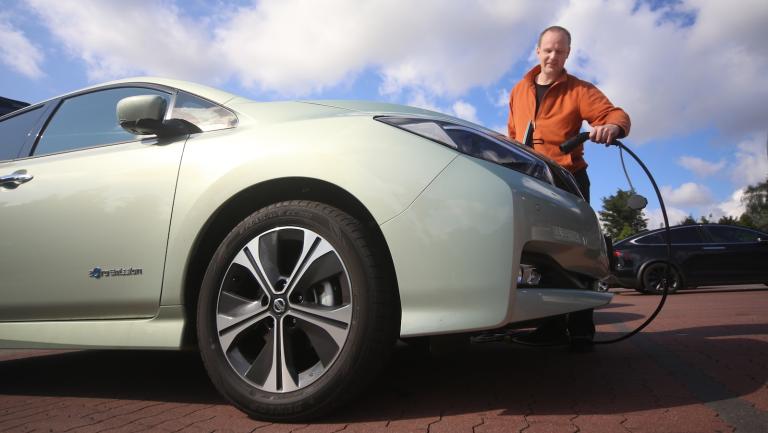
Electric vehicles offer many opportunities to save money: on gas, on oil changes, on engine maintenance. But, it turns out, insurance isn’t one of them. In fact, the latest data shows that EVs typically cost $3,159 per year to insure — nearly $1,000 more than gas-powered cars. It’s an added burden that could make the payback period on EVs significantly longer.
On average, the insurance gap between electric and internal combustion engine, or ICE, vehicles was 42 percent, according to a r
0
0
The fight to protect pollinators and people from the ‘pesticides that are everywhere’
Born and raised in Colorado, Cory Kreft began working on a honey farm at 15 years old. He returned to beekeeping after college, eventually buying the business from his former boss. But in 2021, his bees suddenly began dying. He lost 85 percent of his hives. The losses continued the next year, and the next. After extensive testing, he identified the culprit: a relatively new class of pesticides called neonicotinoids, often shortened to neonics.
These chemicals are commonly used to coat c
0
0
US host cities made transit improvements a World Cup goooooooal
The latest addition to Seattle’s already impressive public transit system opened to great fanfare this spring when more than 200,000 people rode the Crosslake Connection light rail line.
Its March 28 debut was second only to the parade that followed the Seahawks’ Super Bowl victory as Sound Transit’s busiest day ever. Trains now glide across Lake Washington on what is believed to be the world’s first electric rail line that spans a floating bridge, linking the city with Bellevue and Red
0
0
A simple — yet expensive — way to climate-proof the grid: Bury the power lines
Power lines across the country weren’t designed for a changing climate, with much of the nation’s grid built more than half a century ago. Today, stronger storms and heavier precipitation cause hundreds of outages a year, many because of trees falling on above-ground power lines.
In northern Michigan, some utilities want to change that.
In March 2025, a devastating ice storm hit the region, knocking down trees and snapping utility poles. Thousands of people lost power for weeks.
D
0
0
The USDA canceled $300M in farm grants, citing fraud. Did it make up the evidence?
Leah Atwood was rattled. It was the tail end of March, and for days she and her colleagues at Agroecology Commons had been fielding dozens of emails alerting them to grant terminations targeting a $300 million U.S. Department of Agriculture program. One after another, within a single week, 49 of the 50 grantees received notices from the USDA informing them that their grants were canceled.
By the end of the month, Agroecology Commons still hadn’t gotten a notice from the USDA. While their pee
0
0
70-foot wastewater geyser reflects New Mexico’s latest oilfield challenge
At first, he thought it was smoke.
Jackie Onsurez was driving the bustling New Mexico highway between his home in Loving and nearby Carlsbad last Tuesday evening when he thought the smoke didn’t look right. As he pulled closer, he saw that the 70-foot plume was actually a roaring geyser of toxic oilfield wastewater, commonly called produced water, spewing from a pipe at a site operated by NGL Energy Partners.
Onsurez, who until recently was running for the state’s lieutenant governor
0
5
A first among major nations, India is industrializing with solar
A sea of solar panels is rapidly engulfing one of the world’s largest salt deserts. By 2029, nearly 60 million panels will cover 280 square miles of India’s Rann of Kutch, extending right up to the border with Pakistan. The Khavda solar park is set to be the world’s largest and most powerful supplier of electricity from the sun, with a generating capacity of 30 gigawatts — 30 times the size of a typical coal or nuclear power station and enough to power Austria.
With India’s economy now
0
4
Pacific Islanders slowly recover from the strongest storm of the year
Katelynn Delos Reyes thought she knew what to expect when Typhoon Sinlaku slammed into Saipan last month. As a lifelong resident of the island, Delos Reyes had survived frequent storms, including Supertyphoon Yutu, the second-strongest in U.S. history. Eight years ago, Yutu’s 170-mph winds devastated her village in the southern end of Saipan. Just three years before that, she survived Typhoon Soudelor.
But Sinlaku was different. “At the beginning, it was OK. But later on it wasn’t,” sai
0
3
Ask a Climate Therapist: Is it still ‘catastrophizing’ if the threat is real?
Dear Leslie,
A lot of my work in therapy for anxiety has focused on recognizing catastrophic thinking and assessing what is more realistic. How would you suggest adapting this for a world where reality itself is increasingly becoming more catastrophic, and science suggests things will get worse in the future?
— Anonymously Anxious
Submit a question for a future Ask a Climate Therapist column
Dear Anonymously Anxious,
Your question points to something I’ve h
0
2
Everlane, Shein, and the myth of sustainable fashion
As a college sophomore with an internet connection during the Obama era, I was instantly intrigued by the promise of the new direct-to-consumer clothing brand Everlane. I don’t remember how or when I found out about the fashion startup exactly; I just remember getting the emails. Launched around 2011 with venture capital funding, Everlane styled itself in a sort-of minimalist, pro-consumer ethos. The idea was simple: sell beautiful clothing made really well — so-called “modern basics”
0
2
Wildfire smoke engulfed their cities. Did it make their babies sick?
They never thought the fires would reach them. They lived in cities, after all, far from the parched, combustible wilderness.
There’s the woman who never expected to have to grab her 1-year-old out of her bed in the middle of the night, shielding her soft head from a hailstorm of flaming embers as she dashed to the car. Or the mom of two who wound up on the beach holding her youngest, a 9-week-old baby, wondering how she would swim if the fires bearing down on her from the hills above forced
0
1
Federal agency to open tens of thousands of acres of Colorado wilderness to oil drilling
A federal agency will offer tens of thousands of acres in northwestern Colorado that the nation’s largest elk herd relie
0
2
Your local park is bringing in the green (and by that, we mean money)
In an increasingly divided nation, Americans agree on at least two things. For one, politicians across the political spe
0
0
In the Smoky Mountains, a volunteer effort aims to document every species — before it’s too late
A gentle shower fell as four people in rain gear made their way deep into a spruce-fir forest high in Great Smoky Mounta
0
0
Blood in the well: One town’s fight against the slaughterhouse polluting it
When Trish Leigey’s taps started running brown and foul in late 2019, she had an uneasy suspicion about what was taintin
0
0
No, rolling back these environmental rules won’t lower your grocery bill
Nearly six years ago, during Donald Trump’s first term in the White House, the president signed a piece of bipartisan le
0
0
New York backtracked on its climate goals. Here’s why.
Last week, New York became the first state in the country to weaken a mandatory climate law passed by its own legislatur
0
0
Nebraskans are taking a hard look at data centers
This story is made possible through a partnership between Grist and The Flatwater Free Press, Nebraska’s first independe
0
0
Biden’s clean drinking water plan is being rebranded as MAHA
The Trump administration is promoting multibillion-dollar funding packages to help states and disadvantaged communities
0
0
Why is this Trump official dead set on saving a failing California dam?
The Potter Valley Project, which dams Northern California’s Eel River, isn’t doing very much right now. Its reservoir is
0
0
The hidden cost of owning an EV: Expensive insurance
Electric vehicles offer many opportunities to save money: on gas, on oil changes, on engine maintenance. But, it turns o
0
0
The fight to protect pollinators and people from the ‘pesticides that are everywhere’
Born and raised in Colorado, Cory Kreft began working on a honey farm at 15 years old. He returned to beekeeping after c
0
0
US host cities made transit improvements a World Cup goooooooal
The latest addition to Seattle’s already impressive public transit system opened to great fanfare this spring when more
0
0
A simple — yet expensive — way to climate-proof the grid: Bury the power lines
Power lines across the country weren’t designed for a changing climate, with much of the nation’s grid built more
0
0
The USDA canceled $300M in farm grants, citing fraud. Did it make up the evidence?
Leah Atwood was rattled. It was the tail end of March, and for days she and her colleagues at Agroecology Commons had be
0
0
70-foot wastewater geyser reflects New Mexico’s latest oilfield challenge
At first, he thought it was smoke.
Jackie Onsurez was driving the bustling New Mexico highway between his home in Lov
0
5
A first among major nations, India is industrializing with solar
A sea of solar panels is rapidly engulfing one of the world’s largest salt deserts. By 2029, nearly 60 million panels wi
0
4
Pacific Islanders slowly recover from the strongest storm of the year
Katelynn Delos Reyes thought she knew what to expect when Typhoon Sinlaku slammed into Saipan last month. As a lifelong
0
3
Ask a Climate Therapist: Is it still ‘catastrophizing’ if the threat is real?
Dear Leslie,
A lot of my work in therapy for anxiety has focused on recognizing catastrophic thinking and asses
0
2
Federal agency to open tens of thousands of acres of Colorado wilderness to oil drilling
A federal agency will offer tens of thousands of acres in northwestern Colorado that the nation’s largest elk herd relies upon for migration, foraging, and winter habitat to oil and gas companies for lease in the state’s biggest such sale in modern history.
More than 100 parcels included in a June 16 lease sale by the Bureau of Land Management encompass elk, pronghorn, and mule deer migration corridors that extend into southern Wyoming. Many sit in Moffat County, which bills itself as the “El
0
2 👁
Your local park is bringing in the green (and by that, we mean money)
In an increasingly divided nation, Americans agree on at least two things. For one, politicians across the political spectrum are scrambling to get more housing built, which happens to be an accidentally powerful way to fight climate change. And two, Americans love their parks: A recent poll found that 88 percent of them visited one in the past year. Nearly 90 percent of people who voted for Kamala Harris, and 80 percent of those who voted for Donald Trump, consider these spaces critical infrast
0
0 👁
In the Smoky Mountains, a volunteer effort aims to document every species — before it’s too late
A gentle shower fell as four people in rain gear made their way deep into a spruce-fir forest high in Great Smoky Mountains National Park. Ducking beneath bright green underbrush and stepping away from the road, a hush took over.
Just a few steps in, they came across an aging yellow birch tree covered in moss.
But it wasn’t just moss. James Hollinger, a retired computer scientist turned amateur lichen scientist, leaned closer and spotted a rare, spongy lichen that has been documented about
0
0 👁
Blood in the well: One town’s fight against the slaughterhouse polluting it
When Trish Leigey’s taps started running brown and foul in late 2019, she had an uneasy suspicion about what was tainting the once-clear mountain water.
Tests later confirmed her hunch. Bovine DNA had infiltrated drinking water supplies in rural Loganton, Pennsylvania — contamination her lawyers linked to Nicholas Meat and its practice of spreading liquefied animal waste on nearby fields.
That may not have surprised many of Leigey’s neighbors. Most of them were well aware of the desi
0
0 👁
No, rolling back these environmental rules won’t lower your grocery bill
Nearly six years ago, during Donald Trump’s first term in the White House, the president signed a piece of bipartisan legislation introduced to phase out the rampant use of hydrofluorocarbons, or HFCs, which are potent greenhouse gases commonly used in commercial cooling equipment in grocery stores and air-conditioning systems.
At the time, he praised the American Innovation and Manufacturing Act, created in line with an international agreement to tamp down widespread use of the “super
0
0 👁
New York backtracked on its climate goals. Here’s why.
Last week, New York became the first state in the country to weaken a mandatory climate law passed by its own legislature.
The change comes at the behest of Governor Kathy Hochul, a moderate Democrat who has often criticized climate action for increasing consumer costs. After months of backroom negotiation, the legislature reached a deal that weakens the 2019 law in several different ways — most notably by giving the state an additional decade to meet legally-required emissions targets.
Th
0
0 👁
Nebraskans are taking a hard look at data centers
This story is made possible through a partnership between Grist and The Flatwater Free Press, Nebraska’s first independent, nonprofit newsroom focused on investigations and feature stories.
Standing before the Otoe County Board and a room of neighbors, Wynee Benedict ticked through a long list of concerns.
Do we have enough water for them? Who pays for their power? What if they create a heat island?
The source of Benedict’s worries: data centers. Since learning earlier this year that th
0
0 👁
Biden’s clean drinking water plan is being rebranded as MAHA
The Trump administration is promoting multibillion-dollar funding packages to help states and disadvantaged communities secure clean drinking water as part of its promise to “Make America Healthy Again.” There’s just one catch: The federal dollars were previously promised under a climate and infrastructure law passed by Congress during the Biden administration.
Last month, the EPA announced a $1 billion commitment to address drinking water contaminated by PFAS, a class of synthetic compounds
0
0 👁
Why is this Trump official dead set on saving a failing California dam?
The Potter Valley Project, which dams Northern California’s Eel River, isn’t doing very much right now. Its reservoir is clogged with sediment, and drought often empties it out. The project once supported a hydroelectric power plant that could produce about 9 megawatts of electricity, which is about 1 percent of a typical fossil-fuel-fired plant, but it has not worked in years. Plus, some of its infrastructure may be at risk of collapsing during an earthquake.
Like thousands of other small da
0
0 👁
The hidden cost of owning an EV: Expensive insurance
Electric vehicles offer many opportunities to save money: on gas, on oil changes, on engine maintenance. But, it turns out, insurance isn’t one of them. In fact, the latest data shows that EVs typically cost $3,159 per year to insure — nearly $1,000 more than gas-powered cars. It’s an added burden that could make the payback period on EVs significantly longer.
On average, the insurance gap between electric and internal combustion engine, or ICE, vehicles was 42 percent, according to a r
0
0 👁
The fight to protect pollinators and people from the ‘pesticides that are everywhere’
Born and raised in Colorado, Cory Kreft began working on a honey farm at 15 years old. He returned to beekeeping after college, eventually buying the business from his former boss. But in 2021, his bees suddenly began dying. He lost 85 percent of his hives. The losses continued the next year, and the next. After extensive testing, he identified the culprit: a relatively new class of pesticides called neonicotinoids, often shortened to neonics.
These chemicals are commonly used to coat c
0
0 👁
US host cities made transit improvements a World Cup goooooooal
The latest addition to Seattle’s already impressive public transit system opened to great fanfare this spring when more than 200,000 people rode the Crosslake Connection light rail line.
Its March 28 debut was second only to the parade that followed the Seahawks’ Super Bowl victory as Sound Transit’s busiest day ever. Trains now glide across Lake Washington on what is believed to be the world’s first electric rail line that spans a floating bridge, linking the city with Bellevue and Red
0
0 👁
A simple — yet expensive — way to climate-proof the grid: Bury the power lines
Power lines across the country weren’t designed for a changing climate, with much of the nation’s grid built more than half a century ago. Today, stronger storms and heavier precipitation cause hundreds of outages a year, many because of trees falling on above-ground power lines.
In northern Michigan, some utilities want to change that.
In March 2025, a devastating ice storm hit the region, knocking down trees and snapping utility poles. Thousands of people lost power for weeks.
D
0
0 👁
The USDA canceled $300M in farm grants, citing fraud. Did it make up the evidence?
Leah Atwood was rattled. It was the tail end of March, and for days she and her colleagues at Agroecology Commons had been fielding dozens of emails alerting them to grant terminations targeting a $300 million U.S. Department of Agriculture program. One after another, within a single week, 49 of the 50 grantees received notices from the USDA informing them that their grants were canceled.
By the end of the month, Agroecology Commons still hadn’t gotten a notice from the USDA. While their pee
0
0 👁
70-foot wastewater geyser reflects New Mexico’s latest oilfield challenge
At first, he thought it was smoke.
Jackie Onsurez was driving the bustling New Mexico highway between his home in Loving and nearby Carlsbad last Tuesday evening when he thought the smoke didn’t look right. As he pulled closer, he saw that the 70-foot plume was actually a roaring geyser of toxic oilfield wastewater, commonly called produced water, spewing from a pipe at a site operated by NGL Energy Partners.
Onsurez, who until recently was running for the state’s lieutenant governor
0
5 👁
A first among major nations, India is industrializing with solar
A sea of solar panels is rapidly engulfing one of the world’s largest salt deserts. By 2029, nearly 60 million panels will cover 280 square miles of India’s Rann of Kutch, extending right up to the border with Pakistan. The Khavda solar park is set to be the world’s largest and most powerful supplier of electricity from the sun, with a generating capacity of 30 gigawatts — 30 times the size of a typical coal or nuclear power station and enough to power Austria.
With India’s economy now
0
4 👁
Pacific Islanders slowly recover from the strongest storm of the year
Katelynn Delos Reyes thought she knew what to expect when Typhoon Sinlaku slammed into Saipan last month. As a lifelong resident of the island, Delos Reyes had survived frequent storms, including Supertyphoon Yutu, the second-strongest in U.S. history. Eight years ago, Yutu’s 170-mph winds devastated her village in the southern end of Saipan. Just three years before that, she survived Typhoon Soudelor.
But Sinlaku was different. “At the beginning, it was OK. But later on it wasn’t,” sai
0
3 👁
Ask a Climate Therapist: Is it still ‘catastrophizing’ if the threat is real?
Dear Leslie,
A lot of my work in therapy for anxiety has focused on recognizing catastrophic thinking and assessing what is more realistic. How would you suggest adapting this for a world where reality itself is increasingly becoming more catastrophic, and science suggests things will get worse in the future?
— Anonymously Anxious
Submit a question for a future Ask a Climate Therapist column
Dear Anonymously Anxious,
Your question points to something I’ve h
0
2 👁
Everlane, Shein, and the myth of sustainable fashion
As a college sophomore with an internet connection during the Obama era, I was instantly intrigued by the promise of the new direct-to-consumer clothing brand Everlane. I don’t remember how or when I found out about the fashion startup exactly; I just remember getting the emails. Launched around 2011 with venture capital funding, Everlane styled itself in a sort-of minimalist, pro-consumer ethos. The idea was simple: sell beautiful clothing made really well — so-called “modern basics”
0
2 👁
Wildfire smoke engulfed their cities. Did it make their babies sick?
They never thought the fires would reach them. They lived in cities, after all, far from the parched, combustible wilderness.
There’s the woman who never expected to have to grab her 1-year-old out of her bed in the middle of the night, shielding her soft head from a hailstorm of flaming embers as she dashed to the car. Or the mom of two who wound up on the beach holding her youngest, a 9-week-old baby, wondering how she would swim if the fires bearing down on her from the hills above forced
0
1 👁
Federal agency to open tens of thousands of acres of Colorado wilderness to oil drilling
A federal agency will offer tens of thousands of acres in northwestern Colorado that the nation’s largest elk herd relies upon for…
💬 0
👁 2
Your local park is bringing in the green (and by that, we mean money)
Grist · 4d ago
💬 0
👁 0
In the Smoky Mountains, a volunteer effort aims to document every species — before it’s too late
Grist · 4d ago
💬 0
👁 0
Blood in the well: One town’s fight against the slaughterhouse polluting it
Grist · 5d ago
💬 0
👁 0

No, rolling back these environmental rules won’t lower your grocery bill
Grist · 5d ago

New York backtracked on its climate goals. Here’s why.
Grist · 6d ago

Nebraskans are taking a hard look at data centers
Grist · 6d ago
Biden’s clean drinking water plan is being rebranded as MAHA
Grist · 6d ago
Why is this Trump official dead set on saving a failing California dam?
The Potter Valley Project, which dams Northern California’s Eel River, isn’t doing very much right now. Its reservoir is clogged w…
💬 0
👁 0
The hidden cost of owning an EV: Expensive insurance
Grist · Jun 2, 2026
💬 0
👁 0
The fight to protect pollinators and people from the ‘pesticides that are everywhere’
Grist · Jun 1, 2026
💬 0
👁 0
US host cities made transit improvements a World Cup goooooooal
Grist · Jun 1, 2026
💬 0
👁 0

A simple — yet expensive — way to climate-proof the grid: Bury the power lines
Grist · Jun 1, 2026

The USDA canceled $300M in farm grants, citing fraud. Did it make up the evidence?
Grist · Jun 1, 2026

70-foot wastewater geyser reflects New Mexico’s latest oilfield challenge
Grist · May 31, 2026

A first among major nations, India is industrializing with solar
Grist · May 30, 2026
Pacific Islanders slowly recover from the strongest storm of the year
Katelynn Delos Reyes thought she knew what to expect when Typhoon Sinlaku slammed into Saipan last month. As a lifelong resident o…
💬 0
👁 3
Ask a Climate Therapist: Is it still ‘catastrophizing’ if the threat is real?
Grist · May 29, 2026
💬 0
👁 2
Everlane, Shein, and the myth of sustainable fashion
Grist · May 28, 2026
💬 0
👁 2
Wildfire smoke engulfed their cities. Did it make their babies sick?
Grist · May 28, 2026
💬 0
👁 1