Latest Articles
A Game for Teaching Ancient Philosophy
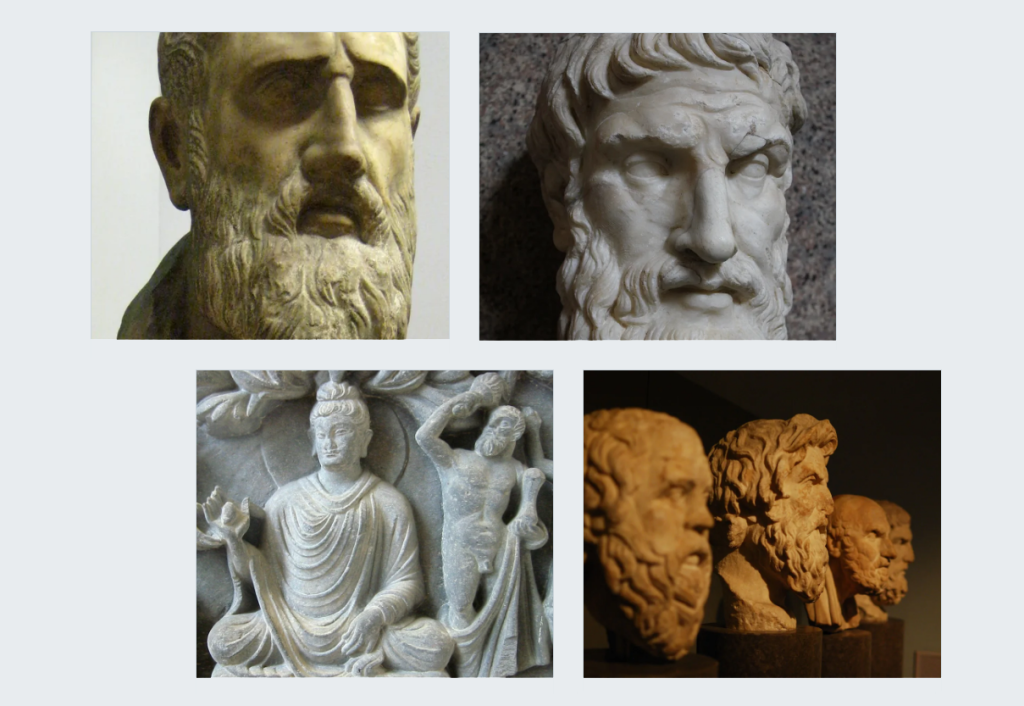
Javier Hidalgo, a philosopher at the University of Richmond, has developed a classroom simulation game to teach about different ancient philosophies called “Ancient Philosophy as a Way of Life.” Generously, Professor Hidalgo has created a website to share the game with anyone who may wish to try it out in their own courses. He writes: Ancient Philosophy as a Way of Life is a free classroom role-playing game that introduces students to Hellenistic philosophy, plus a bit of Buddhist philosophy. Th
0
0
What the End of Anonymous Writing Means for Academia
A reader who asked to remain anonymous (seriously) pointed me to an article about the impending end of anonymous writing. Large language models are getting increasingly good at identifying the authors of human-written text. In a preprint, “Frontier models need only one text to unmask its human or AI author,” a team of authors claim that: Given a single text and a simple zero-shot prompt (no web access, tools, candidate lists, or writing samples), frontier models can answer “who wrote this?” at t
0
0
New: Chinese Journal of Philosophy (and Lecture Series)
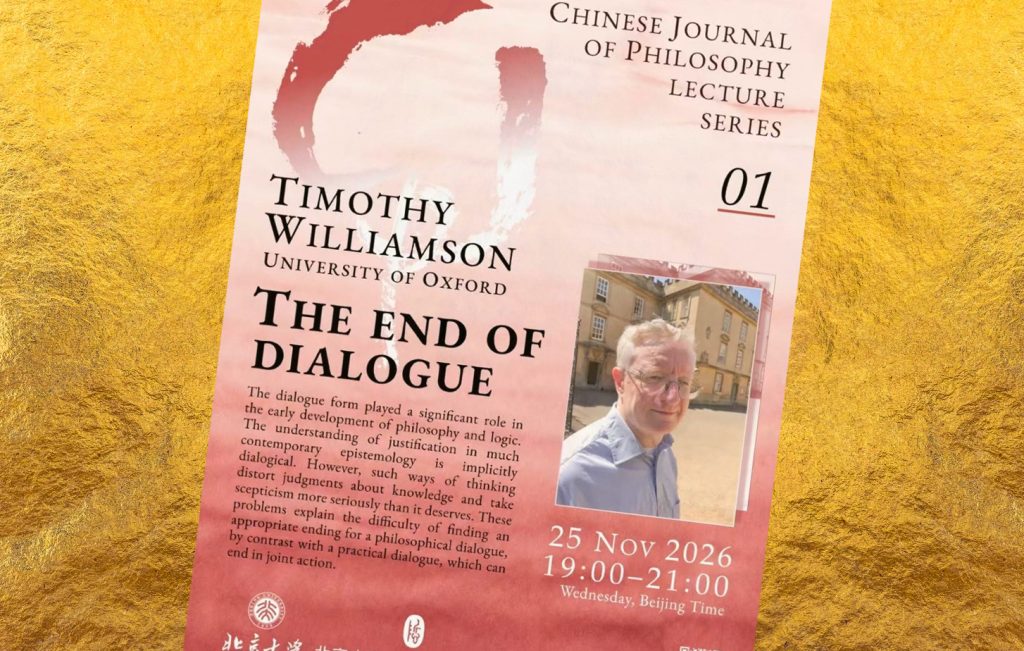
Timothy Williamson will be the inaugural speaker in a new lecture series accompanying a new journal: The Chinese Journal of Philosophy (CJP). Published by Oxford University Press, the CJP is an open-access (including no cost to authors) general philosophy journal. It is edited by Roger T. Ames (Hawaii), Wei Cheng (Peking), Nicolas De Warren (Penn State), Sebastian Sunday Grève (Peking), and You Zhao (Peking). The journal is open to submissions “from anyone working in philosophy and on all philos
0
0
What Question Have You Been Working On Lately?
People say that philosophers have been working on the same questions for thousands of years. True, we are persistent—thanks for noticing! But it’s also the case that philosophers are often working on new questions, ones that did not exist thousands or hundreds of years ago, or even decades ago. We’re inventive, too! Today is World Philosophy Day. To mark the occasion, I thought it would be a good idea to let people know what philosophers are asking about today. For that, I’ll need your help. Phi
0
1
How Much AI-Generated Text Is In Today’s Philosophy Journals? (guest post)
“It seems that philosophers have started to make substantial use of AI in their papers, and it’s not uncommon for AI-generated text to make it into philosophy published in decent journals.” Not uncommon. How much are we talking here? That’s the question Maximillian Noichl (Utrecht) recently took up. His answer? An estimated “12% of published philosophy in 2026 [involves] some AI assistance,” though he notes that the figure will vary depending on the AI detection software used and how the false-p
0
3
Nagel Wins Berggruen Prize
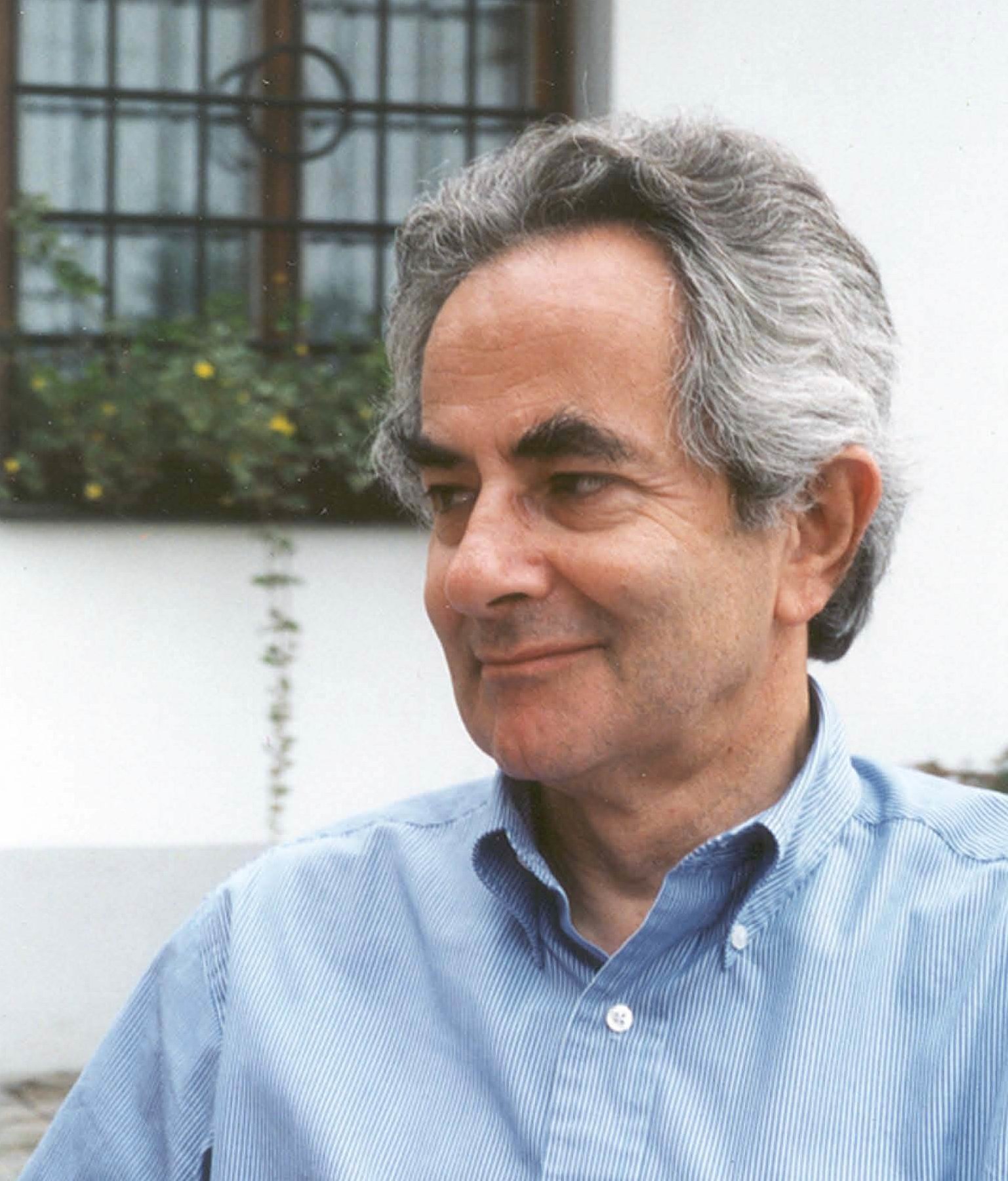
Thomas Nagel is the 2026 winner of the $1 million Berggruen Prize for Philosophy & Culture. The Berggruen Institute called Nagel, professor emeritus of philosophy and law at New York University, “one of the most significant philosophers of our time,” and praising his “long-lasting contributions through his scholarly work and commentary in the public sphere,” referencing his work in moral philosophy, legal and political theory, metaphysics, and philosophy of mind, and his contributions to our und
0
0
Philosophy Department Bans AI Use
The Department of Philosophy at Trinity College in Hartford, Connecticut has adopted a new policy banning students from using AI in classrooms or for coursework. The policy states: Deliberate use of AI in philosophy courses, in any capacity and for any purpose, is forbidden. This includes, but is not limited to: using AI to summarize reading assignments; using it to “brainstorm” and come up with ideas; as a research tool for presentations or oral examinations, or as a tool to aid in the writing
0
1
New: “(Æ)Lab:999”
(Æ)Lab:999 is a new open-access, peer-reviewed forum for work in philosophical aesthetics. All submissions to it must be no more than 999 words long. The executive editor of the journal is Aaron Meskin (University of Georgia). Its managing editor is Danielle Kotrla and its assistant managing editor is Alex Hollatz-Guastella. The journal’s editorial consultants are Rok Benčin, Adriana Clavel-Vazquez, Ley David Elliette Cray, John Dyck, Brandon Polite, Jon Robson, Brooke Rudow, Elizabeth Scarbroug
0
1
Philosophers Among Recent ERC Starting Grant Winners
A few philosophers were among the winners of the European Research Council (ERC) Starting Grants announced earlier this season. They are: Piotr Bystranowski (Jagiellonian University)NormasNescio: Normative Ignorance in Complex Societies We will study normative ignorance: a situation in which a person does not know the norms that apply in a given environment. Think of a tourist unaware of local tipping norms, or a user of an online platform who does not realise that their conduct might violate so
0
0
Open Plato Project Releases First Dialogue
A new, open access, annotated edition of Plato’s Alcibiades is now available online. “Alcibades Being Taught by Socrates” by François-André Vincent The dialogue is the first release from the Open Plato Project, whose mission is “to widen the audience of people who are able to find joy and meaning” in ancient Greek philosophical texts. Marc Gasser-Wingate (Boston University), one of the scholars working on the project, writes: This digital edition includes two new translations: one aimed at first
0
2
Listening and Diagnosing (guest post)
“Over and over again I see philosophers go so far to take everything at face value that it leads them to a worse understanding of what is actually going on in an argument.” Philosophers are an unusual bunch. Normally when someone gets up in front of their colleagues at work and gives a speech about, say, how “life has no ultimate meaning,” the appropriate response would be something along the lines of, “hey, are you feeling alright?” and perhaps a call
0
4
What May Artificial Intelligence Do for Writers? (updated)
When it comes to permissible uses of AI in professional writing, one philosopher argues that “anything that is acceptable to ask a human to do is, other things equal, acceptable for an LLM to do. (Equivalently, anything it would be wrong to ask a human to do is wrong to ask an LLM to do.)” This “simple principle” was put forward by Kyle van Oosterum (Southampton) at his newsletter, Unchambered, several months ago. The principle rules out, van Oosterum says,
0
5
New Digital Editions of Hegel, Schelling
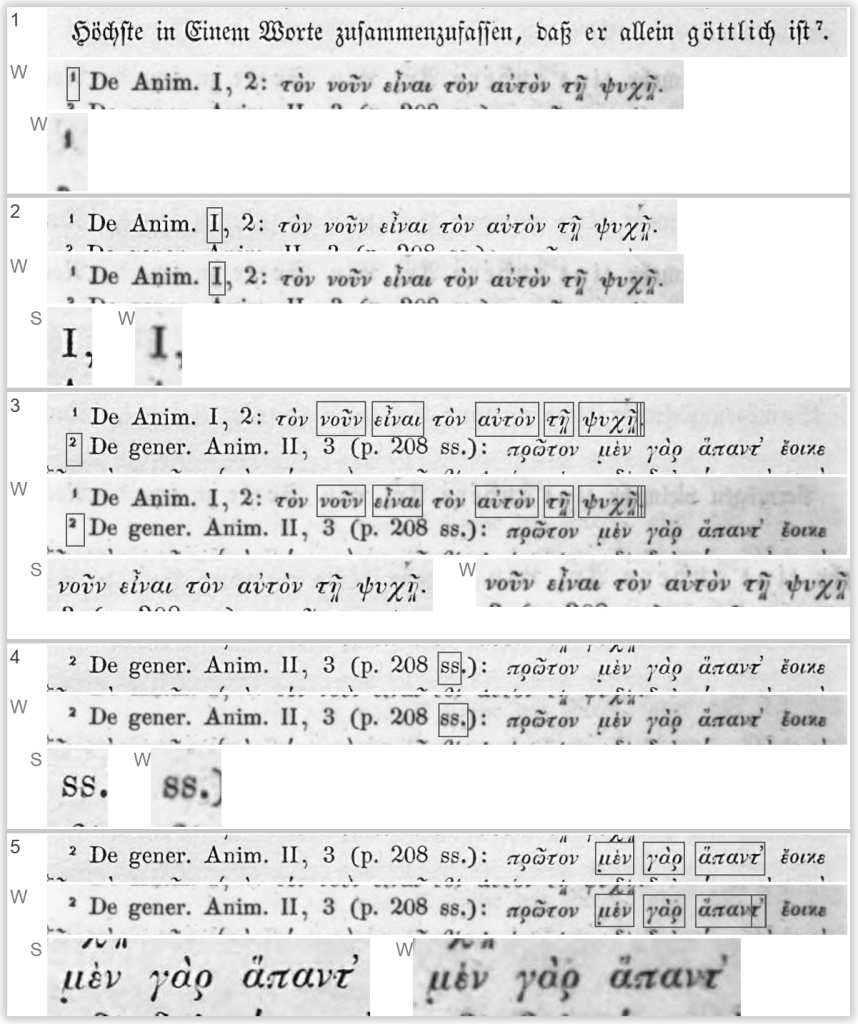
Giuliano Infantino, a postdoctoral fellow at the University of Toronto, has created new, freely accessible digital editions of the works of Hegel and Schelling. About the Hegel collection, Infantino writes: Digital Hegel texts have existed for a long time; they mostly follow older editions of the works, often in modernized spelling and without Hegel’s letter-spacing. This digital edition presents Hegel’s text according to the Gesammelte Werke (GW), the authoritative historical-critica
0
4
John Heil (1943-2026)
John Heil, emeritus professor of philosophy at Washington University in St. Louis and Durham University, has died. Professor Heil was well-known for his work in metaphysics and philosophy of mind. He is the author of From an Ontological Point of View (Oxford University Press 2006), The Universe as We Find It (Oxford University Press 2012), Appearance in Reality (Oxford University Press 2021), What is Metaphysics? (Polity Press 2021), and Relations (Cambridge University Press 2021), am
0
16
Major Threats to the Health of Philosophy, Real and Imagined (guest post)
“We are frankly stunned to find a focus… on intemperate social media posts, papers that didn’t after all get retracted, and books being published by second-choice publishers.” * * * The Vanderbilt “Report on the State of Scholarship in the Humanities and the Humanistic Social Sciences,” was published this past summer, with a special report about academic philosophy authored by Kit Fine (NYU) and Gideon Rosen (Princeton). In the following guest post, Talia Bet
0
4
David Lyons (1935-2026)
David Lyons, emeritus professor of philosophy and law at Boston University, has died. The following memorial notice is by Aaron Garret (Boston University). David Lyons David Lyons passed away at his home on October 24th at the age of 91. He had an extremely distinguished philosophical and legal academic career. David was John Rawls’ first doctoral student and his thesis became the groundbreaking book Forms and Limits of Utilitarianism. After a year at Oxford under the su
0
3
Online Philosophy Resources Weekly Update
New and revised entries at online philosophy resources, new reviews of philosophy books, new podcast episodes, recently published open access philosophy books, and more… . (If we missed something, let us know.) Stanford Encyclopedia of Philosophy New: Bioethics and Moral Reasoning by Jennifer Flynn. Epistemic Closure by Marc Alspector-Kelly. Revised: Medieval Theories of Practical Reason by Anthony Celano. Isaiah Berlin by Joshua L. Cherniss and Henry Hardy. Emotions in the Christian Tradition b
0
1
University of Cape Town vs. Free Speech
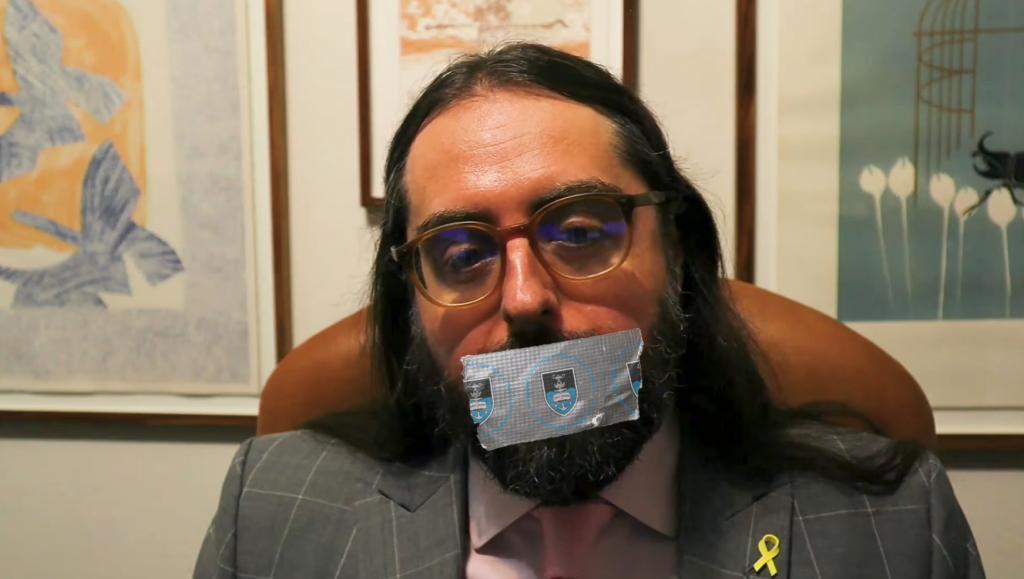
Mark Oppenheimer, a lawyer in South Africa whom readers may know as the co-host of the popular Brain in a Vat philosophy podcast, is facing removal from his position as a member of the Council (the governing body) of the University of Cape Town (UCT) because of remarks he made while being interviewed on someone else’s podcast. An open letter defending Oppenheimer’s right to free speech is currently accepting signatures. On the UCT Council website, it’s noted that Opp
0
7
The Enhanced SEP Experience, Version 2
Five years ago, Andrew Shen created a browser extension, SEP+, that improved the experience of using the Stanford Encyclopedia of Philosophy in various ways. He has now released an update, SEP+ v2, which does even more. The old version moved each article’s navigation outline to the side of the page, offered the option of “dark mode”, added keyboard shortcuts for search, removed irrelevant sections when printing, and improved the typography. The new version does all that but also includ
0
6
Philosopher-led Team Nets $2.91 Million in Grants for Project on Safeguards of Liberalism
A team of researchers led by Purdue University associate professor of philosophy J.P. Messina has been awarded a nearly $2.91 million in funding for its project, “The Neglected Safeguards of Liberalism.” J.P. Messina, Brian Kogelmann, Jesse Crosson, and Logan Strother The team includes co-principal investigators Jesse Crosson (associate professor of political science), Brian Kogelmann (associate professor of philosophy and political science), and Logan Strother (associate p
0
3
A Game for Teaching Ancient Philosophy
Javier Hidalgo, a philosopher at the University of Richmond, has developed a classroom simulation game to teach about di
0
0
What the End of Anonymous Writing Means for Academia
A reader who asked to remain anonymous (seriously) pointed me to an article about the impending end of anonymous writing
0
0
New: Chinese Journal of Philosophy (and Lecture Series)
Timothy Williamson will be the inaugural speaker in a new lecture series accompanying a new journal: The Chinese Journal
0
0
What Question Have You Been Working On Lately?
People say that philosophers have been working on the same questions for thousands of years. True, we are persistent—tha
0
1
How Much AI-Generated Text Is In Today’s Philosophy Journals? (guest post)
“It seems that philosophers have started to make substantial use of AI in their papers, and it’s not uncommon for AI-gen
0
3
Nagel Wins Berggruen Prize
Thomas Nagel is the 2026 winner of the $1 million Berggruen Prize for Philosophy & Culture. The Berggruen Institute call
0
0
Philosophy Department Bans AI Use
The Department of Philosophy at Trinity College in Hartford, Connecticut has adopted a new policy banning students from
0
1
New: “(Æ)Lab:999”
(Æ)Lab:999 is a new open-access, peer-reviewed forum for work in philosophical aesthetics. All submissions to it must be
0
1
Philosophers Among Recent ERC Starting Grant Winners
A few philosophers were among the winners of the European Research Council (ERC) Starting Grants announced earlier this
0
0
Open Plato Project Releases First Dialogue
A new, open access, annotated edition of Plato’s Alcibiades is now available online. “Alcibades Being Taught by Socrates
0
2
Listening and Diagnosing (guest post)
“Over and over again I see philosophers go so far to take everything at face value that it leads them to a worse u
0
4
What May Artificial Intelligence Do for Writers? (updated)
When it comes to permissible uses of AI in professional writing, one philosopher argues that “anything that is acc
0
5
New Digital Editions of Hegel, Schelling
Giuliano Infantino, a postdoctoral fellow at the University of Toronto, has created new, freely accessible digital editi
0
4
John Heil (1943-2026)
John Heil, emeritus professor of philosophy at Washington University in St. Louis and Durham University, has died.
0
16
Major Threats to the Health of Philosophy, Real and Imagined (guest post)
“We are frankly stunned to find a focus… on intemperate social media posts, papers that didn’t after all get
0
4
David Lyons (1935-2026)
David Lyons, emeritus professor of philosophy and law at Boston University, has died.
The following memorial noti
0
3
Online Philosophy Resources Weekly Update
New and revised entries at online philosophy resources, new reviews of philosophy books, new podcast episodes, recently
0
1
University of Cape Town vs. Free Speech
Mark Oppenheimer, a lawyer in South Africa whom readers may know as the co-host of the popular Brain in a Vat philosophy
0
7
A Game for Teaching Ancient Philosophy
Javier Hidalgo, a philosopher at the University of Richmond, has developed a classroom simulation game to teach about different ancient philosophies called “Ancient Philosophy as a Way of Life.” Generously, Professor Hidalgo has created a website to share the game with anyone who may wish to try it out in their own courses. He writes: Ancient Philosophy as a Way of Life is a free classroom role-playing game that introduces students to Hellenistic philosophy, plus a bit of Buddhist philosophy. Th
0
0 👁
What the End of Anonymous Writing Means for Academia
A reader who asked to remain anonymous (seriously) pointed me to an article about the impending end of anonymous writing. Large language models are getting increasingly good at identifying the authors of human-written text. In a preprint, “Frontier models need only one text to unmask its human or AI author,” a team of authors claim that: Given a single text and a simple zero-shot prompt (no web access, tools, candidate lists, or writing samples), frontier models can answer “who wrote this?” at t
0
0 👁
New: Chinese Journal of Philosophy (and Lecture Series)
Timothy Williamson will be the inaugural speaker in a new lecture series accompanying a new journal: The Chinese Journal of Philosophy (CJP). Published by Oxford University Press, the CJP is an open-access (including no cost to authors) general philosophy journal. It is edited by Roger T. Ames (Hawaii), Wei Cheng (Peking), Nicolas De Warren (Penn State), Sebastian Sunday Grève (Peking), and You Zhao (Peking). The journal is open to submissions “from anyone working in philosophy and on all philos
0
0 👁
What Question Have You Been Working On Lately?
People say that philosophers have been working on the same questions for thousands of years. True, we are persistent—thanks for noticing! But it’s also the case that philosophers are often working on new questions, ones that did not exist thousands or hundreds of years ago, or even decades ago. We’re inventive, too! Today is World Philosophy Day. To mark the occasion, I thought it would be a good idea to let people know what philosophers are asking about today. For that, I’ll need your help. Phi
0
1 👁
How Much AI-Generated Text Is In Today’s Philosophy Journals? (guest post)
“It seems that philosophers have started to make substantial use of AI in their papers, and it’s not uncommon for AI-generated text to make it into philosophy published in decent journals.” Not uncommon. How much are we talking here? That’s the question Maximillian Noichl (Utrecht) recently took up. His answer? An estimated “12% of published philosophy in 2026 [involves] some AI assistance,” though he notes that the figure will vary depending on the AI detection software used and how the false-p
0
3 👁
Nagel Wins Berggruen Prize
Thomas Nagel is the 2026 winner of the $1 million Berggruen Prize for Philosophy & Culture. The Berggruen Institute called Nagel, professor emeritus of philosophy and law at New York University, “one of the most significant philosophers of our time,” and praising his “long-lasting contributions through his scholarly work and commentary in the public sphere,” referencing his work in moral philosophy, legal and political theory, metaphysics, and philosophy of mind, and his contributions to our und
0
0 👁
Philosophy Department Bans AI Use
The Department of Philosophy at Trinity College in Hartford, Connecticut has adopted a new policy banning students from using AI in classrooms or for coursework. The policy states: Deliberate use of AI in philosophy courses, in any capacity and for any purpose, is forbidden. This includes, but is not limited to: using AI to summarize reading assignments; using it to “brainstorm” and come up with ideas; as a research tool for presentations or oral examinations, or as a tool to aid in the writing
0
1 👁
New: “(Æ)Lab:999”
(Æ)Lab:999 is a new open-access, peer-reviewed forum for work in philosophical aesthetics. All submissions to it must be no more than 999 words long. The executive editor of the journal is Aaron Meskin (University of Georgia). Its managing editor is Danielle Kotrla and its assistant managing editor is Alex Hollatz-Guastella. The journal’s editorial consultants are Rok Benčin, Adriana Clavel-Vazquez, Ley David Elliette Cray, John Dyck, Brandon Polite, Jon Robson, Brooke Rudow, Elizabeth Scarbroug
0
1 👁
Philosophers Among Recent ERC Starting Grant Winners
A few philosophers were among the winners of the European Research Council (ERC) Starting Grants announced earlier this season. They are: Piotr Bystranowski (Jagiellonian University)NormasNescio: Normative Ignorance in Complex Societies We will study normative ignorance: a situation in which a person does not know the norms that apply in a given environment. Think of a tourist unaware of local tipping norms, or a user of an online platform who does not realise that their conduct might violate so
0
0 👁
Open Plato Project Releases First Dialogue
A new, open access, annotated edition of Plato’s Alcibiades is now available online. “Alcibades Being Taught by Socrates” by François-André Vincent The dialogue is the first release from the Open Plato Project, whose mission is “to widen the audience of people who are able to find joy and meaning” in ancient Greek philosophical texts. Marc Gasser-Wingate (Boston University), one of the scholars working on the project, writes: This digital edition includes two new translations: one aimed at first
0
2 👁
Listening and Diagnosing (guest post)
“Over and over again I see philosophers go so far to take everything at face value that it leads them to a worse understanding of what is actually going on in an argument.” Philosophers are an unusual bunch. Normally when someone gets up in front of their colleagues at work and gives a speech about, say, how “life has no ultimate meaning,” the appropriate response would be something along the lines of, “hey, are you feeling alright?” and perhaps a call
0
4 👁
What May Artificial Intelligence Do for Writers? (updated)
When it comes to permissible uses of AI in professional writing, one philosopher argues that “anything that is acceptable to ask a human to do is, other things equal, acceptable for an LLM to do. (Equivalently, anything it would be wrong to ask a human to do is wrong to ask an LLM to do.)” This “simple principle” was put forward by Kyle van Oosterum (Southampton) at his newsletter, Unchambered, several months ago. The principle rules out, van Oosterum says,
0
5 👁
New Digital Editions of Hegel, Schelling
Giuliano Infantino, a postdoctoral fellow at the University of Toronto, has created new, freely accessible digital editions of the works of Hegel and Schelling. About the Hegel collection, Infantino writes: Digital Hegel texts have existed for a long time; they mostly follow older editions of the works, often in modernized spelling and without Hegel’s letter-spacing. This digital edition presents Hegel’s text according to the Gesammelte Werke (GW), the authoritative historical-critica
0
4 👁
John Heil (1943-2026)
John Heil, emeritus professor of philosophy at Washington University in St. Louis and Durham University, has died. Professor Heil was well-known for his work in metaphysics and philosophy of mind. He is the author of From an Ontological Point of View (Oxford University Press 2006), The Universe as We Find It (Oxford University Press 2012), Appearance in Reality (Oxford University Press 2021), What is Metaphysics? (Polity Press 2021), and Relations (Cambridge University Press 2021), am
0
16 👁
Major Threats to the Health of Philosophy, Real and Imagined (guest post)
“We are frankly stunned to find a focus… on intemperate social media posts, papers that didn’t after all get retracted, and books being published by second-choice publishers.” * * * The Vanderbilt “Report on the State of Scholarship in the Humanities and the Humanistic Social Sciences,” was published this past summer, with a special report about academic philosophy authored by Kit Fine (NYU) and Gideon Rosen (Princeton). In the following guest post, Talia Bet
0
4 👁
David Lyons (1935-2026)
David Lyons, emeritus professor of philosophy and law at Boston University, has died. The following memorial notice is by Aaron Garret (Boston University). David Lyons David Lyons passed away at his home on October 24th at the age of 91. He had an extremely distinguished philosophical and legal academic career. David was John Rawls’ first doctoral student and his thesis became the groundbreaking book Forms and Limits of Utilitarianism. After a year at Oxford under the su
0
3 👁
Online Philosophy Resources Weekly Update
New and revised entries at online philosophy resources, new reviews of philosophy books, new podcast episodes, recently published open access philosophy books, and more… . (If we missed something, let us know.) Stanford Encyclopedia of Philosophy New: Bioethics and Moral Reasoning by Jennifer Flynn. Epistemic Closure by Marc Alspector-Kelly. Revised: Medieval Theories of Practical Reason by Anthony Celano. Isaiah Berlin by Joshua L. Cherniss and Henry Hardy. Emotions in the Christian Tradition b
0
1 👁
University of Cape Town vs. Free Speech
Mark Oppenheimer, a lawyer in South Africa whom readers may know as the co-host of the popular Brain in a Vat philosophy podcast, is facing removal from his position as a member of the Council (the governing body) of the University of Cape Town (UCT) because of remarks he made while being interviewed on someone else’s podcast. An open letter defending Oppenheimer’s right to free speech is currently accepting signatures. On the UCT Council website, it’s noted that Opp
0
7 👁
The Enhanced SEP Experience, Version 2
Five years ago, Andrew Shen created a browser extension, SEP+, that improved the experience of using the Stanford Encyclopedia of Philosophy in various ways. He has now released an update, SEP+ v2, which does even more. The old version moved each article’s navigation outline to the side of the page, offered the option of “dark mode”, added keyboard shortcuts for search, removed irrelevant sections when printing, and improved the typography. The new version does all that but also includ
0
6 👁
Philosopher-led Team Nets $2.91 Million in Grants for Project on Safeguards of Liberalism
A team of researchers led by Purdue University associate professor of philosophy J.P. Messina has been awarded a nearly $2.91 million in funding for its project, “The Neglected Safeguards of Liberalism.” J.P. Messina, Brian Kogelmann, Jesse Crosson, and Logan Strother The team includes co-principal investigators Jesse Crosson (associate professor of political science), Brian Kogelmann (associate professor of philosophy and political science), and Logan Strother (associate p
0
3 👁
A Game for Teaching Ancient Philosophy
Javier Hidalgo, a philosopher at the University of Richmond, has developed a classroom simulation game to teach about different……
💬 0
👁 0
What the End of Anonymous Writing Means for Academia
Daily Nous · 1d ago
💬 0
👁 0
New: Chinese Journal of Philosophy (and Lecture Series)
Daily Nous · 2d ago
💬 0
👁 0
What Question Have You Been Working On Lately?
Daily Nous · 6d ago
💬 0
👁 1

How Much AI-Generated Text Is In Today’s Philosophy Journals? (guest post)
Daily Nous · Nov 18, 2026

Nagel Wins Berggruen Prize
Daily Nous · Nov 17, 2026

Philosophy Department Bans AI Use
Daily Nous · Nov 16, 2026

New: “(Æ)Lab:999”
Daily Nous · Nov 16, 2026
Philosophers Among Recent ERC Starting Grant Winners
A few philosophers were among the winners of the European Research Council (ERC) Starting Grants announced earlier this season.……
💬 0
👁 0
Open Plato Project Releases First Dialogue
Daily Nous · Nov 13, 2026
💬 0
👁 2
Listening and Diagnosing (guest post)
Daily Nous · Nov 12, 2026
💬 0
👁 4
What May Artificial Intelligence Do for Writers? (updated)
Daily Nous · Nov 11, 2026
💬 0
👁 5

New Digital Editions of Hegel, Schelling
Daily Nous · Nov 10, 2026

John Heil (1943-2026)
Daily Nous · Nov 10, 2026

Major Threats to the Health of Philosophy, Real and Imagined (guest post)
Daily Nous · Nov 9, 2026

David Lyons (1935-2026)
Daily Nous · Nov 9, 2026
Online Philosophy Resources Weekly Update
New and revised entries at online philosophy resources, new reviews of philosophy books, new podcast episodes, recently published……
💬 0
👁 1
University of Cape Town vs. Free Speech
Daily Nous · Nov 6, 2026
💬 0
👁 7
The Enhanced SEP Experience, Version 2
Daily Nous · Nov 5, 2026
💬 0
👁 6
Philosopher-led Team Nets $2.91 Million in Grants for Project on Safeguards of Liberalism
Daily Nous · Nov 4, 2026
💬 0
👁 3