Latest Articles
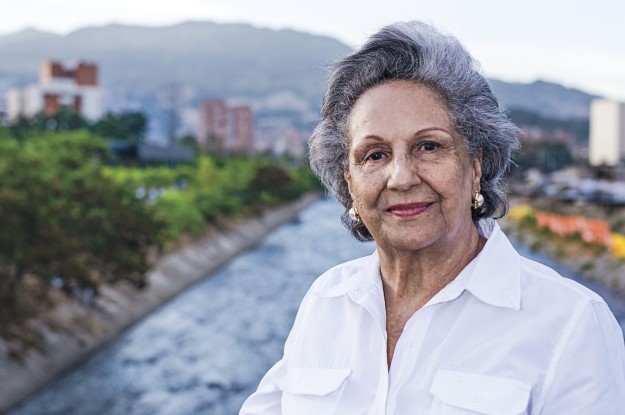
Inside the dramatic turnaround that made Colombia’s second city a model for water management.
Reading Time: 10 minutesMEDELLÍN— For much of the 20th century, the Medellín River was an open sewer, collecting the untreated human and industrial waste of the Aburrá Valley.
Stretching through the valley’s center, Medellín — a fast-growing city with a reputation for entrepreneurship— turned its collective back and closed its collective nose. Warehouses and rail tracks buffered the city from the rank waters, fed by the hundreds of creeks that started out crystalline high above the city but co
0
8
Disrupt Latin America
Reading Time: 5 minutesMicrofinance revolutionized the financial services sector in Latin America over 40 years ago. Millions of individuals who were excluded from traditional financial institutions obtained access to a variety of financial products and services for the first time. Inevitably, there were gaps in coverage. In recent years, various players have been looking beyond microfinance to find ways to fill those gaps. Their main weapon has been the disruptive force of new technology.
Acr
0
13
Argentina’s Debt: A Conflict of Principles
Reading Time: 2 minutesThe reverberations of Argentina’s loss in NML Capital Ltd. vs. Republic of Argentina continue.
The conflict stems from a 2012 decision by United States District Court for the Southern District of New York (SDNY) Judge Thomas Griesa in a case brought by the hedge fund NML Capital Ltd. and others (NML), over $1.3 billion of bonds they hold, issued by Argentina under a 1994 Fiscal Agency Agreement and governed under New York law, that Argentina defaulted on in 2001. Argenti
0
20
Mexico’s Foreign Policy Agenda in Central America
Reading Time: < 1 minuteIn the past decade, Mexico has made strengthening ties with Latin America a top priority, reorienting its gaze from north to south. This is the product of two factors: criticism that Mexico was ignoring its southern neighbors, and strategic concern over Brazil’s assertion of leadership in the region.
Starting in the 1990s with the implementation of the North American Free Trade Agreement (NAFTA), Mexico focused its economic and diplomatic energy north, neglecting Lat
0
16
Venezuela’s Post-Chávez Foreign Policy
Reading Time: < 1 minutePresident Nicolás Maduro inherited a dramatically changed country—and economic situation—when he came to power following Chávez’ death from cancer in 2013. Within a year of Maduro’s election in March 2013, oil prices had started a steady decline. And as investment in the industry also dropped, production fell to 2.62 million barrels per day (bpd) from 3.48 million bpd when Chávez was sworn in to office.1 To complicate matters, the rapidly deteriorating economy, combi
0
10
Cuba and the Summits of the Americas
Reading Time: 2 minutesIn the coming months, the United States is going to face a tough choice: either alter its policy toward Cuba or face the virtual collapse of its diplomacy in Latin America. The upcoming Summit of the Americas, the seventh meeting of democratically elected heads of state throughout the Americas, due to convene in April 2015 in Panama, will force the Barack Obama administration to choose between its instincts to reset Cuba policy to coincide more closely with hemispheric o
0
10
A Skeptic’s View on the “Peace Dividend”
Reading Time: < 1 minuteOn July 20, 2010, President Juan Manuel Santos promised the 9 million voters who had just elected him to his first term that he would build on the foundation created “by a giant, our President Álvaro Uribe.”1 He declared that Colombia could now look to the future with hope, thanks to the multiple successes that Uribe had achieved during his eight years in power.
In his televised speech to the nation that night, the president-elect also told Colombians that he would c
0
17
Post-Conflict Campesinos: Recovering Rural Colombia
Reading Time: < 1 minuteArmed conflict and the presence of non-state armed actors harm both agricultural production and rural households’ well-being, for at least two broad reasons. First, conflict disrupts economic activities by hampering access to critical inputs and markets. As a result, producers may reduce or curtail planting or harvesting. Second, rural producers face an unpredictable environment for making economic decisions. Armed actors may “tax” producers, coerce them into growing
0
10
Double Trouble: Currency Unification in Cuba
Reading Time: 2 minutesAfter nearly 20 years, the dual currency system enacted by Cuba to help mitigate the economic shock from the collapse of the Soviet Union is set to be retired. As part of the government’s efforts to develop the country’s socialist economy, the Cuban government recently announced that it would unify its complicated currency system.
In practice, the dual currency system has meant the simultaneous circulation of two domestic currencies: Cuban Pesos (CUP) and Convertible Cub
0
16
Protest U.
Reading Time: 2 minutesMillions of students have taken to the streets across Latin America in recent years in protests that reflect an unprecedentedly broad mobilization of popular opinion.
Following massive demonstrations led by secondary school students in 2006 in Chile, university students launched a series of protests in May 2011. Powered by a coalition of public and private university students, the protests succeeded in shutting down most of the university system as well as major technica
0
8
Inside the dramatic turnaround that made Colombia’s second city a model for water management.
Reading Time: 10 minutesMEDELLÍN— For much of the 20th century, the Medellín River was an open sewer, collecting the u
0
8
Disrupt Latin America
Reading Time: 5 minutesMicrofinance revolutionized the financial services sector in Latin America over 40 years ago. M
0
13
Argentina’s Debt: A Conflict of Principles
Reading Time: 2 minutesThe reverberations of Argentina’s loss in NML Capital Ltd. vs. Republic of Argentina continue.
0
20
Mexico’s Foreign Policy Agenda in Central America
Reading Time: < 1 minuteIn the past decade, Mexico has made strengthening ties with Latin America a top priority, r
0
16
Venezuela’s Post-Chávez Foreign Policy
Reading Time: < 1 minutePresident Nicolás Maduro inherited a dramatically changed country—and economic situation—wh
0
10
Cuba and the Summits of the Americas
Reading Time: 2 minutesIn the coming months, the United States is going to face a tough choice: either alter its polic
0
10
A Skeptic’s View on the “Peace Dividend”
Reading Time: < 1 minuteOn July 20, 2010, President Juan Manuel Santos promised the 9 million voters who had just e
0
17
Post-Conflict Campesinos: Recovering Rural Colombia
Reading Time: < 1 minuteArmed conflict and the presence of non-state armed actors harm both agricultural production
0
10
Inside the dramatic turnaround that made Colombia’s second city a model for water management.
Reading Time: 10 minutesMEDELLÍN— For much of the 20th century, the Medellín River was an open sewer, collecting the untreated human and industrial waste of the Aburrá Valley.
Stretching through the valley’s center, Medellín — a fast-growing city with a reputation for entrepreneurship— turned its collective back and closed its collective nose. Warehouses and rail tracks buffered the city from the rank waters, fed by the hundreds of creeks that started out crystalline high above the city but co
0
8 👁
Disrupt Latin America
Reading Time: 5 minutesMicrofinance revolutionized the financial services sector in Latin America over 40 years ago. Millions of individuals who were excluded from traditional financial institutions obtained access to a variety of financial products and services for the first time. Inevitably, there were gaps in coverage. In recent years, various players have been looking beyond microfinance to find ways to fill those gaps. Their main weapon has been the disruptive force of new technology.
Acr
0
13 👁
Argentina’s Debt: A Conflict of Principles
Reading Time: 2 minutesThe reverberations of Argentina’s loss in NML Capital Ltd. vs. Republic of Argentina continue.
The conflict stems from a 2012 decision by United States District Court for the Southern District of New York (SDNY) Judge Thomas Griesa in a case brought by the hedge fund NML Capital Ltd. and others (NML), over $1.3 billion of bonds they hold, issued by Argentina under a 1994 Fiscal Agency Agreement and governed under New York law, that Argentina defaulted on in 2001. Argenti
0
20 👁
Mexico’s Foreign Policy Agenda in Central America
Reading Time: < 1 minuteIn the past decade, Mexico has made strengthening ties with Latin America a top priority, reorienting its gaze from north to south. This is the product of two factors: criticism that Mexico was ignoring its southern neighbors, and strategic concern over Brazil’s assertion of leadership in the region.
Starting in the 1990s with the implementation of the North American Free Trade Agreement (NAFTA), Mexico focused its economic and diplomatic energy north, neglecting Lat
0
16 👁
Venezuela’s Post-Chávez Foreign Policy
Reading Time: < 1 minutePresident Nicolás Maduro inherited a dramatically changed country—and economic situation—when he came to power following Chávez’ death from cancer in 2013. Within a year of Maduro’s election in March 2013, oil prices had started a steady decline. And as investment in the industry also dropped, production fell to 2.62 million barrels per day (bpd) from 3.48 million bpd when Chávez was sworn in to office.1 To complicate matters, the rapidly deteriorating economy, combi
0
10 👁
Cuba and the Summits of the Americas
Reading Time: 2 minutesIn the coming months, the United States is going to face a tough choice: either alter its policy toward Cuba or face the virtual collapse of its diplomacy in Latin America. The upcoming Summit of the Americas, the seventh meeting of democratically elected heads of state throughout the Americas, due to convene in April 2015 in Panama, will force the Barack Obama administration to choose between its instincts to reset Cuba policy to coincide more closely with hemispheric o
0
10 👁
A Skeptic’s View on the “Peace Dividend”
Reading Time: < 1 minuteOn July 20, 2010, President Juan Manuel Santos promised the 9 million voters who had just elected him to his first term that he would build on the foundation created “by a giant, our President Álvaro Uribe.”1 He declared that Colombia could now look to the future with hope, thanks to the multiple successes that Uribe had achieved during his eight years in power.
In his televised speech to the nation that night, the president-elect also told Colombians that he would c
0
17 👁
Post-Conflict Campesinos: Recovering Rural Colombia
Reading Time: < 1 minuteArmed conflict and the presence of non-state armed actors harm both agricultural production and rural households’ well-being, for at least two broad reasons. First, conflict disrupts economic activities by hampering access to critical inputs and markets. As a result, producers may reduce or curtail planting or harvesting. Second, rural producers face an unpredictable environment for making economic decisions. Armed actors may “tax” producers, coerce them into growing
0
10 👁
Double Trouble: Currency Unification in Cuba
Reading Time: 2 minutesAfter nearly 20 years, the dual currency system enacted by Cuba to help mitigate the economic shock from the collapse of the Soviet Union is set to be retired. As part of the government’s efforts to develop the country’s socialist economy, the Cuban government recently announced that it would unify its complicated currency system.
In practice, the dual currency system has meant the simultaneous circulation of two domestic currencies: Cuban Pesos (CUP) and Convertible Cub
0
16 👁
Protest U.
Reading Time: 2 minutesMillions of students have taken to the streets across Latin America in recent years in protests that reflect an unprecedentedly broad mobilization of popular opinion.
Following massive demonstrations led by secondary school students in 2006 in Chile, university students launched a series of protests in May 2011. Powered by a coalition of public and private university students, the protests succeeded in shutting down most of the university system as well as major technica
0
8 👁
Inside the dramatic turnaround that made Colombia’s second city a model for water management.
Reading Time: 10 minutesMEDELLÍN— For much of the 20th century, the Medellín River was an open sewer, collecting the untreated h…
💬 0
👁 8
Disrupt Latin America
Americas Quarterly · May 7, 2015
💬 0
👁 13
Argentina’s Debt: A Conflict of Principles
Americas Quarterly · Feb 3, 2015
💬 0
👁 20
Mexico’s Foreign Policy Agenda in Central America
Americas Quarterly · Feb 3, 2015
💬 0
👁 16
Venezuela’s Post-Chávez Foreign Policy
Americas Quarterly · Feb 3, 2015
Cuba and the Summits of the Americas
Americas Quarterly · Nov 5, 2014
A Skeptic’s View on the “Peace Dividend”
Americas Quarterly · Nov 5, 2014
Post-Conflict Campesinos: Recovering Rural Colombia
Americas Quarterly · Nov 5, 2014
Double Trouble: Currency Unification in Cuba
Reading Time: 2 minutesAfter nearly 20 years, the dual currency system enacted by Cuba to help mitigate the economic shock from …
💬 0
👁 16
…
online
0