🏠 Home
Science
🔬
Science
37 channels · 17,542 articles
Articles
Do other animals call each other by name?
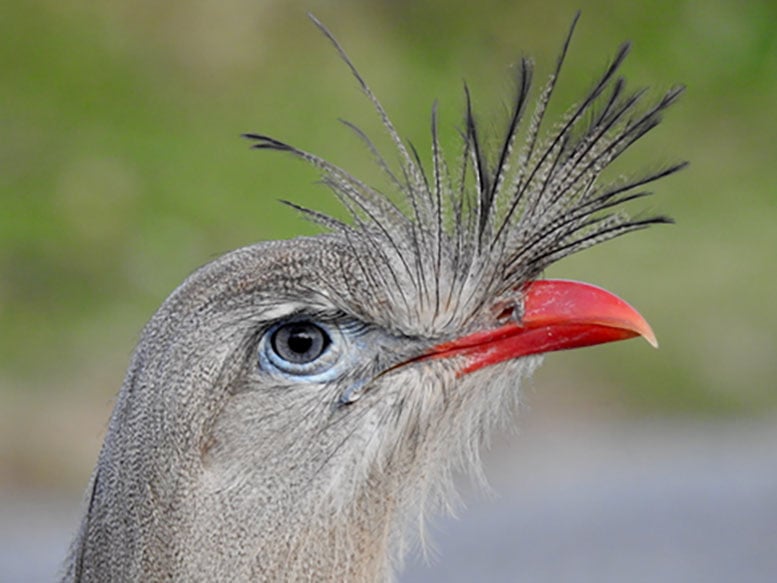
Every person you know has a name, and you've likely given one to your pets, too. But are names a uniquely human feature, or do other animals also call each other by name?Research suggests that some mammals and birds use vocal labels for other individuals, but not all scientists agree on how to interpret the evidence.In the 1960s, scientists discovered that young bottlenose dolphins (Tursiops) create individually distinctive whistles, called signature whistles. Researchers in the years since have
0
2
One Type of Diabetes Responds Better to a Weekly GLP-1 Drug Than to Insulin
GLP-1 wins again.ScienceAlert stories are written, fact-checked, and edited by humans, never generated by AI. Don't miss a story, subscribe here.
0
1
Genomic research published in 2026 revealed that koalas suffered a severe population collapse beginning about 100,000 years ago—before humans reached Australia—as glacial cooling and aridification destroyed and fragmented their forest habitat. Every living koala descends from the small eastern population that survived, then expanded and split into today’s major populations as forests recovered after the last ice age.
The koala population collapse was already underway long before the first people reached Australia, according to a new reading of the species’ genomes.
Researchers calibrated a genetic clock from koala families, then applied it to 457 wild koala genomes collected across the species’ range. Their reconstruction places the beginning of a large decline at roughly 100,000 years ago. That is tens of thousands of years earlier than the broad 65,000-to-47,000-year window commonly given for m
0
1
Curiosity Blog, Sols 4982–4987: Back to Our Regularly Scheduled Programming
Curiosity Navigation
Curiosity Home
Mission Overview
Where is Curiosity?
Mission Updates
Science
Overview
Instruments
Highlights
Exploration Goals
News and Features
Multimedia
Curiosity Raw Images
Images
Videos
Audio
Mosaics
More Resources
Mars Missions
Mars Perseverance Rover
Mars Curiosity Rover
Mars Reconnaissance Orbiter
Mars Odyssey
More Mars Missions
Mars Home
3 min read
Curiosity Blog, Sols 4982–4987: Back to Our Regularly Scheduled Programming
NASA’s Mars
0
2
A marine worm with no mouth and no gut makes its own enzyme for digesting the bioplastic its skin bacteria build up, and the same kind of enzyme turned up in 66 more animal species across nine phyla, from a sponge to an earthworm to a springtail
Researchers at the Max Planck Institute for Marine Microbiology report that gutless marine worms make an enzyme that breaks down the bioplastic their skin bacteria build up, a job that had only ever been demonstrated in bacteria and fungi, with two species of single-celled protist known to carry the sequence but never tested.
Sequences resembling that enzyme had already been annotated in animal genomes. Nobody had shown that any of them worked. The new result is the functional demonstration, plu
0
2
Black holes keep tearing these stars apart, but they survive
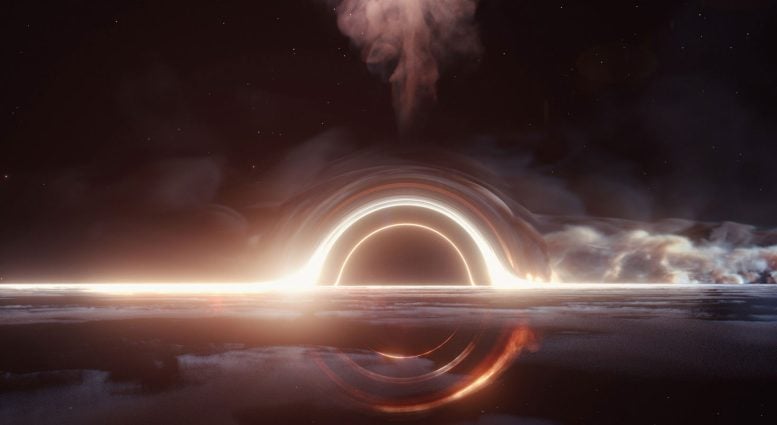
Astronomers have found stars that repeatedly skim past supermassive black holes, surviving each encounter while producing a new burst of light. In some systems, those flares mysteriously fade with every return. Researchers now think the key may be stars that were already spinning extremely fast before being captured. That rapid rotation could explain both the fading flares and how the stars ended up in such extraordinarily tight black hole orbits.
0
2
A 2026 NBER working paper found evidence that employment losses driven by weak local labour markets accelerate cognitive decline among older Americans, with the clearest effects among men aged 51–64—suggesting that being pushed out of work may be cognitively more damaging than retirement itself.
Leaving work and losing work can look identical in a survey checkbox. They may be very different experiences for the person living through them.
One can be a planned retirement, supported by savings and filled with chosen activity. The other can arrive at 57 because a factory contracts, construction slows or the local economy no longer has a realistic job for someone with the skills and roots built over decades.
A 2026 National Bureau of Economic Research working paper tries to use that differen
0
1
This shark can live 400 years. Its eyes barely seem to age
Greenland sharks may live for 400 years without suffering the kind of retinal decline normally associated with aging. Researchers found healthy eye tissue and active proteins specially adapted for seeing blue light in the dim Arctic depths. DNA repair mechanisms may help keep their eyes functioning across centuries. The discovery could eventually offer new clues for protecting human vision as we age.
0
0
Quitting alcohol may prime the brain for relapse
Mice that developed compulsive drinking after alcohol abstinence showed more than double the activity in a brain region associated with stress and addiction. Because the signal appeared before they drank again, researchers think it could eventually help predict who is most at risk of relapse.
0
0
Scientists Discover a Bizarre New Way Life Can Make DNA… Without DNA
This is mindblowingly weird.ScienceAlert stories are written, fact-checked, and edited by humans, never generated by AI. Don't miss a story, subscribe here.
0
1
Strange Quantum Oscillations Reveal New Physics in an Exotic Material
Experiments and theoretical analysis show that under extreme magnetic fields, electrons in zirconium pentatelluride behave in an unusual way that points to a topological origin rather than interactions among many particles. Under magnetic fields strong enough to push electrons toward their quantum limits, zirconium pentatelluride (ZrTe₅) did something conventional theory says should not happen. Its [...]
0
1
A nuclear plant south of Miami found its first crocodile nest in its cooling canals in 1978, when Florida had fewer than 300 of the animals left, and the crew that has worked those canals every summer since has tagged more than 10,000 hatchlings, roughly one in four of the species now alive in the United States
In 1978, a worker at the Turkey Point nuclear plant, on the edge of Biscayne Bay south of Miami, stumbled on something along one of the plant’s cooling canals: a clutch of eggs, buried in the raised dirt bank. They belonged to an American crocodile.
At that moment, the American crocodile was one of the most doomed animals in the country. Decades of coastal development had paved over its nesting beaches, and the entire United States population had collapsed to a few hundred animals, by s
0
1
Texas ranchers now run sheep across roughly 68,000 acres of solar farms, more than half the American solar-grazing map, because goats climb the panels and chew the wires and cattle are simply too tall for the rows
Drive through Milam County, Texas, past the endless glinting rows of one of the biggest solar projects in America, and look under the panels. Down in the shade, working steadily through the grass, are sheep. Thousands of them.
They are not decoration. They are the maintenance crew, and across Texas they have become a booming industry of their own, built on a simple piece of livestock arithmetic: of all the animals a rancher might turn loose on a solar farm, exactly one of them doesn’t w
0
1
The idea that we most regret the things we never did is genuinely backed by research, with two refinements the slogan misses: it is specifically a long-run pattern, and the deepest of these regrets are about the person we hoped to become and didn’t
Ask people near the end of their lives what they regret, and you tend to hear about roads not taken rather than mistakes made: the trip never booked, the words never said, the chance never chased. It is a staple of deathbed wisdom, and unusually for that kind of folk saying, it is genuinely backed by research. But the science adds two things the slogan leaves out, and both make it more precise and more useful. The first is that this is specifically a long-run phenomenon; in the short term, peopl
0
2
Quantum Experiment Breaks a Long-Standing X-Ray Energy Limit
An experiment by researchers at the University of California San Diego and TU Wien has revealed a new quantum regime that generates coherent X-rays at higher energies than conventional rules predict. When intense laser light strikes certain atoms, the atoms can respond by producing laser pulses at far higher frequencies, reaching into the X-ray range. [...]
0
2
Astronomers Detect a Record-Breaking “Cosmic Laser” From 8 Billion Light-Years Away
MeerKAT has detected a record-breaking hydroxyl megamaser from a merging galaxy more than 8 billion light-years away, opening a new way to study the early universe. Using South Africa’s MeerKAT radio telescope, astronomers have identified the farthest hydroxyl megamaser ever observed, marking a major step forward for radio astronomy. A hydroxyl megamaser is a naturally [...]
0
1
Fur seal’s death marks first Australian mainland mammal fatality from spreading H5 bird flu strain
Seal found dead at Beachport in South Australia presages ‘significant losses’, minister warnsFollow our Australia news live blog for latest updatesGet our breaking news email, free app or daily news podcastA long-nosed fur seal has died from H5 bird flu in South Australia, marking the first confirmed case in a mammal on the Australian mainland.
The seal was found dead at Beachport on Wednesday on the state’s Limestone Coast.
It marks a fresh escalation in the spread of the virus days after the
0
0
The brain keeps its power to learn and adapt for as long as you live, but that capacity is responsive: it grows with use and dwindles with neglect, and retirement removes one of the biggest sources of daily mental challenge most people ever had
The brain doesn’t retire when you stop formal work is one of those lines that is true in an obvious way and true in a far more interesting one. Obviously the brain keeps running; it does not clock off because you have. The stronger and more useful version of the claim is that the brain remains capable of learning and changing throughout life, and that it responds to whether or not you keep using it. That makes retirement a genuine fork in the road for the mind, not a neutral event. A brain
0
1
This Once-Daily Pill Helps The Skin Regain Its Color in People With Vitiligo
A promising treatment that could help millions of people.ScienceAlert stories are written, fact-checked, and edited by humans, never generated by AI. Don't miss a story, subscribe here.
0
1
Early retirement is sold as pure freedom, but many find boredom and loneliness instead, and the reason is precise: a job quietly does five jobs beyond paying you, and walking away means all five vanish on the same morning unless you rebuild them on purpose
Early retirement is sold as pure reward: freedom, no alarm clock, endless open days. Which is why the experience catches so many people off guard. A surprising number who reach the goal they worked toward for decades find, within a year or two, that they are bored and quietly lonely, and then feel guilty for not simply enjoying their good fortune. That reaction is neither a failure of character nor a lack of gratitude. It is predictable, and it has a clear cause: work quietly provides far more t
0
1
Do other animals call each other by name?
Every person you know has a name, and you've likely given one to your pets, too. But are names a uniquely human feature,
0
2
One Type of Diabetes Responds Better to a Weekly GLP-1 Drug Than to Insulin
GLP-1 wins again.ScienceAlert stories are written, fact-checked, and edited by humans, never generated by AI. Don't miss
0
1
Genomic research published in 2026 revealed that koalas suffered a severe population collapse beginning about 100,000 years ago—before humans reached Australia—as glacial cooling and aridification destroyed and fragmented their forest habitat. Every living koala descends from the small eastern population that survived, then expanded and split into today’s major populations as forests recovered after the last ice age.
The koala population collapse was already underway long before the first people reached Australia, according to a new re
0
1
Curiosity Blog, Sols 4982–4987: Back to Our Regularly Scheduled Programming
Curiosity Navigation
Curiosity Home
Mission Overview
Where is Curiosity?
Mission Updates
Science
Overview
Instru
0
2
A marine worm with no mouth and no gut makes its own enzyme for digesting the bioplastic its skin bacteria build up, and the same kind of enzyme turned up in 66 more animal species across nine phyla, from a sponge to an earthworm to a springtail
Researchers at the Max Planck Institute for Marine Microbiology report that gutless marine worms make an enzyme that bre
0
2
Black holes keep tearing these stars apart, but they survive
Astronomers have found stars that repeatedly skim past supermassive black holes, surviving each encounter while producin
0
2
A 2026 NBER working paper found evidence that employment losses driven by weak local labour markets accelerate cognitive decline among older Americans, with the clearest effects among men aged 51–64—suggesting that being pushed out of work may be cognitively more damaging than retirement itself.
Leaving work and losing work can look identical in a survey checkbox. They may be very different experiences for the per
0
1
This shark can live 400 years. Its eyes barely seem to age
Greenland sharks may live for 400 years without suffering the kind of retinal decline normally associated with aging. Re
0
0
Quitting alcohol may prime the brain for relapse
Mice that developed compulsive drinking after alcohol abstinence showed more than double the activity in a brain region
0
0
Scientists Discover a Bizarre New Way Life Can Make DNA… Without DNA
This is mindblowingly weird.ScienceAlert stories are written, fact-checked, and edited by humans, never generated by AI.
0
1
Strange Quantum Oscillations Reveal New Physics in an Exotic Material
Experiments and theoretical analysis show that under extreme magnetic fields, electrons in zirconium pentatelluride beha
0
1
A nuclear plant south of Miami found its first crocodile nest in its cooling canals in 1978, when Florida had fewer than 300 of the animals left, and the crew that has worked those canals every summer since has tagged more than 10,000 hatchlings, roughly one in four of the species now alive in the United States
In 1978, a worker at the Turkey Point nuclear plant, on the edge of Biscayne Bay south of Miami, stumbled on something a
0
1
Texas ranchers now run sheep across roughly 68,000 acres of solar farms, more than half the American solar-grazing map, because goats climb the panels and chew the wires and cattle are simply too tall for the rows
Drive through Milam County, Texas, past the endless glinting rows of one of the biggest solar projects in America, and l
0
1
The idea that we most regret the things we never did is genuinely backed by research, with two refinements the slogan misses: it is specifically a long-run pattern, and the deepest of these regrets are about the person we hoped to become and didn’t
Ask people near the end of their lives what they regret, and you tend to hear about roads not taken rather than mistakes
0
2
Quantum Experiment Breaks a Long-Standing X-Ray Energy Limit
An experiment by researchers at the University of California San Diego and TU Wien has revealed a new quantum regime tha
0
2
Astronomers Detect a Record-Breaking “Cosmic Laser” From 8 Billion Light-Years Away
MeerKAT has detected a record-breaking hydroxyl megamaser from a merging galaxy more than 8 billion light-years away, op
0
1
Fur seal’s death marks first Australian mainland mammal fatality from spreading H5 bird flu strain
Seal found dead at Beachport in South Australia presages ‘significant losses’, minister warnsFollow our Australia news l
0
0
The brain keeps its power to learn and adapt for as long as you live, but that capacity is responsive: it grows with use and dwindles with neglect, and retirement removes one of the biggest sources of daily mental challenge most people ever had
The brain doesn’t retire when you stop formal work is one of those lines that is true in an obvious way and true i
0
1
This Once-Daily Pill Helps The Skin Regain Its Color in People With Vitiligo
A promising treatment that could help millions of people.ScienceAlert stories are written, fact-checked, and edited by h
0
1
Early retirement is sold as pure freedom, but many find boredom and loneliness instead, and the reason is precise: a job quietly does five jobs beyond paying you, and walking away means all five vanish on the same morning unless you rebuild them on purpose
Early retirement is sold as pure reward: freedom, no alarm clock, endless open days. Which is why the experience catches
0
1
Do other animals call each other by name?
Every person you know has a name, and you've likely given one to your pets, too. But are names a uniquely human feature, or do oth…
💬 0
👁 2
One Type of Diabetes Responds Better to a Weekly GLP-1 Drug Than to Insulin
ScienceAlert · 1d ago
💬 0
👁 1
Genomic research published in 2026 revealed that koalas suffered a severe population collapse beginning about 100,000 years ago—before humans reached Australia—as glacial cooling and aridification destroyed and fragmented their forest habitat. Every living koala descends from the small eastern population that survived, then expanded and split into today’s major populations as forests recovered after the last ice age.
ScienceBlog.com · 1d ago
💬 0
👁 1
Curiosity Blog, Sols 4982–4987: Back to Our Regularly Scheduled Programming
NASA · 1d ago
💬 0
👁 2
A marine worm with no mouth and no gut makes its own enzyme for digesting the bioplastic its skin bacteria build up, and the same kind of enzyme turned up in 66 more animal species across nine phyla, from a sponge to an earthworm to a springtail
ScienceBlog.com · 1d ago
Black holes keep tearing these stars apart, but they survive
Latest Science News -- ScienceDaily · 1d ago
A 2026 NBER working paper found evidence that employment losses driven by weak local labour markets accelerate cognitive decline among older Americans, with the clearest effects among men aged 51–64—suggesting that being pushed out of work may be cognitively more damaging than retirement itself.
ScienceBlog.com · 1d ago
This shark can live 400 years. Its eyes barely seem to age
Latest Science News -- ScienceDaily · 1d ago
Quitting alcohol may prime the brain for relapse
Mice that developed compulsive drinking after alcohol abstinence showed more than double the activity in a brain region associated…
💬 0
👁 0
Scientists Discover a Bizarre New Way Life Can Make DNA… Without DNA
ScienceAlert · 1d ago
💬 0
👁 1
Strange Quantum Oscillations Reveal New Physics in an Exotic Material
SciTechDaily · 1d ago
💬 0
👁 1
A nuclear plant south of Miami found its first crocodile nest in its cooling canals in 1978, when Florida had fewer than 300 of the animals left, and the crew that has worked those canals every summer since has tagged more than 10,000 hatchlings, roughly one in four of the species now alive in the United States
ScienceBlog.com · 1d ago
💬 0
👁 1
Texas ranchers now run sheep across roughly 68,000 acres of solar farms, more than half the American solar-grazing map, because goats climb the panels and chew the wires and cattle are simply too tall for the rows
ScienceBlog.com · 1d ago
The idea that we most regret the things we never did is genuinely backed by research, with two refinements the slogan misses: it is specifically a long-run pattern, and the deepest of these regrets are about the person we hoped to become and didn’t
ScienceBlog.com · 1d ago

Quantum Experiment Breaks a Long-Standing X-Ray Energy Limit
SciTechDaily · 1d ago

Astronomers Detect a Record-Breaking “Cosmic Laser” From 8 Billion Light-Years Away
SciTechDaily · 1d ago
Fur seal’s death marks first Australian mainland mammal fatality from spreading H5 bird flu strain
Seal found dead at Beachport in South Australia presages ‘significant losses’, minister warnsFollow our Australia news live blog f…
💬 0
👁 0
The brain keeps its power to learn and adapt for as long as you live, but that capacity is responsive: it grows with use and dwindles with neglect, and retirement removes one of the biggest sources of daily mental challenge most people ever had
ScienceBlog.com · 1d ago
💬 0
👁 1
This Once-Daily Pill Helps The Skin Regain Its Color in People With Vitiligo
ScienceAlert · 1d ago
💬 0
👁 1
Early retirement is sold as pure freedom, but many find boredom and loneliness instead, and the reason is precise: a job quietly does five jobs beyond paying you, and walking away means all five vanish on the same morning unless you rebuild them on purpose
ScienceBlog.com · 1d ago
💬 0
👁 1
Do other animals call each other by name?
Every person you know has a name, and you've likely given one to your pets, too. But are names a uniquely human feature, or do other animals also call each other by name?Research suggests that some mammals and birds use vocal labels for other individuals, but not all scientists agree on how to interpret the evidence.In the 1960s, scientists discovered that young bottlenose dolphins (Tursiops) create individually distinctive whistles, called signature whistles. Researchers in the years since have
0
2 👁
One Type of Diabetes Responds Better to a Weekly GLP-1 Drug Than to Insulin
GLP-1 wins again.ScienceAlert stories are written, fact-checked, and edited by humans, never generated by AI. Don't miss a story, subscribe here.
0
1 👁
Genomic research published in 2026 revealed that koalas suffered a severe population collapse beginning about 100,000 years ago—before humans reached Australia—as glacial cooling and aridification destroyed and fragmented their forest habitat. Every living koala descends from the small eastern population that survived, then expanded and split into today’s major populations as forests recovered after the last ice age.
The koala population collapse was already underway long before the first people reached Australia, according to a new reading of the species’ genomes.
Researchers calibrated a genetic clock from koala families, then applied it to 457 wild koala genomes collected across the species’ range. Their reconstruction places the beginning of a large decline at roughly 100,000 years ago. That is tens of thousands of years earlier than the broad 65,000-to-47,000-year window commonly given for m
0
1 👁
Curiosity Blog, Sols 4982–4987: Back to Our Regularly Scheduled Programming
Curiosity Navigation
Curiosity Home
Mission Overview
Where is Curiosity?
Mission Updates
Science
Overview
Instruments
Highlights
Exploration Goals
News and Features
Multimedia
Curiosity Raw Images
Images
Videos
Audio
Mosaics
More Resources
Mars Missions
Mars Perseverance Rover
Mars Curiosity Rover
Mars Reconnaissance Orbiter
Mars Odyssey
More Mars Missions
Mars Home
3 min read
Curiosity Blog, Sols 4982–4987: Back to Our Regularly Scheduled Programming
NASA’s Mars
0
2 👁
A marine worm with no mouth and no gut makes its own enzyme for digesting the bioplastic its skin bacteria build up, and the same kind of enzyme turned up in 66 more animal species across nine phyla, from a sponge to an earthworm to a springtail
Researchers at the Max Planck Institute for Marine Microbiology report that gutless marine worms make an enzyme that breaks down the bioplastic their skin bacteria build up, a job that had only ever been demonstrated in bacteria and fungi, with two species of single-celled protist known to carry the sequence but never tested.
Sequences resembling that enzyme had already been annotated in animal genomes. Nobody had shown that any of them worked. The new result is the functional demonstration, plu
0
2 👁
Black holes keep tearing these stars apart, but they survive
Astronomers have found stars that repeatedly skim past supermassive black holes, surviving each encounter while producing a new burst of light. In some systems, those flares mysteriously fade with every return. Researchers now think the key may be stars that were already spinning extremely fast before being captured. That rapid rotation could explain both the fading flares and how the stars ended up in such extraordinarily tight black hole orbits.
0
2 👁
A 2026 NBER working paper found evidence that employment losses driven by weak local labour markets accelerate cognitive decline among older Americans, with the clearest effects among men aged 51–64—suggesting that being pushed out of work may be cognitively more damaging than retirement itself.
Leaving work and losing work can look identical in a survey checkbox. They may be very different experiences for the person living through them.
One can be a planned retirement, supported by savings and filled with chosen activity. The other can arrive at 57 because a factory contracts, construction slows or the local economy no longer has a realistic job for someone with the skills and roots built over decades.
A 2026 National Bureau of Economic Research working paper tries to use that differen
0
1 👁
This shark can live 400 years. Its eyes barely seem to age
Greenland sharks may live for 400 years without suffering the kind of retinal decline normally associated with aging. Researchers found healthy eye tissue and active proteins specially adapted for seeing blue light in the dim Arctic depths. DNA repair mechanisms may help keep their eyes functioning across centuries. The discovery could eventually offer new clues for protecting human vision as we age.
0
0 👁
Quitting alcohol may prime the brain for relapse
Mice that developed compulsive drinking after alcohol abstinence showed more than double the activity in a brain region associated with stress and addiction. Because the signal appeared before they drank again, researchers think it could eventually help predict who is most at risk of relapse.
0
0 👁
Scientists Discover a Bizarre New Way Life Can Make DNA… Without DNA
This is mindblowingly weird.ScienceAlert stories are written, fact-checked, and edited by humans, never generated by AI. Don't miss a story, subscribe here.
0
1 👁
Strange Quantum Oscillations Reveal New Physics in an Exotic Material
Experiments and theoretical analysis show that under extreme magnetic fields, electrons in zirconium pentatelluride behave in an unusual way that points to a topological origin rather than interactions among many particles. Under magnetic fields strong enough to push electrons toward their quantum limits, zirconium pentatelluride (ZrTe₅) did something conventional theory says should not happen. Its [...]
0
1 👁
A nuclear plant south of Miami found its first crocodile nest in its cooling canals in 1978, when Florida had fewer than 300 of the animals left, and the crew that has worked those canals every summer since has tagged more than 10,000 hatchlings, roughly one in four of the species now alive in the United States
In 1978, a worker at the Turkey Point nuclear plant, on the edge of Biscayne Bay south of Miami, stumbled on something along one of the plant’s cooling canals: a clutch of eggs, buried in the raised dirt bank. They belonged to an American crocodile.
At that moment, the American crocodile was one of the most doomed animals in the country. Decades of coastal development had paved over its nesting beaches, and the entire United States population had collapsed to a few hundred animals, by s
0
1 👁
Texas ranchers now run sheep across roughly 68,000 acres of solar farms, more than half the American solar-grazing map, because goats climb the panels and chew the wires and cattle are simply too tall for the rows
Drive through Milam County, Texas, past the endless glinting rows of one of the biggest solar projects in America, and look under the panels. Down in the shade, working steadily through the grass, are sheep. Thousands of them.
They are not decoration. They are the maintenance crew, and across Texas they have become a booming industry of their own, built on a simple piece of livestock arithmetic: of all the animals a rancher might turn loose on a solar farm, exactly one of them doesn’t w
0
1 👁
The idea that we most regret the things we never did is genuinely backed by research, with two refinements the slogan misses: it is specifically a long-run pattern, and the deepest of these regrets are about the person we hoped to become and didn’t
Ask people near the end of their lives what they regret, and you tend to hear about roads not taken rather than mistakes made: the trip never booked, the words never said, the chance never chased. It is a staple of deathbed wisdom, and unusually for that kind of folk saying, it is genuinely backed by research. But the science adds two things the slogan leaves out, and both make it more precise and more useful. The first is that this is specifically a long-run phenomenon; in the short term, peopl
0
2 👁
Quantum Experiment Breaks a Long-Standing X-Ray Energy Limit
An experiment by researchers at the University of California San Diego and TU Wien has revealed a new quantum regime that generates coherent X-rays at higher energies than conventional rules predict. When intense laser light strikes certain atoms, the atoms can respond by producing laser pulses at far higher frequencies, reaching into the X-ray range. [...]
0
2 👁
Astronomers Detect a Record-Breaking “Cosmic Laser” From 8 Billion Light-Years Away
MeerKAT has detected a record-breaking hydroxyl megamaser from a merging galaxy more than 8 billion light-years away, opening a new way to study the early universe. Using South Africa’s MeerKAT radio telescope, astronomers have identified the farthest hydroxyl megamaser ever observed, marking a major step forward for radio astronomy. A hydroxyl megamaser is a naturally [...]
0
1 👁
Fur seal’s death marks first Australian mainland mammal fatality from spreading H5 bird flu strain
Seal found dead at Beachport in South Australia presages ‘significant losses’, minister warnsFollow our Australia news live blog for latest updatesGet our breaking news email, free app or daily news podcastA long-nosed fur seal has died from H5 bird flu in South Australia, marking the first confirmed case in a mammal on the Australian mainland.
The seal was found dead at Beachport on Wednesday on the state’s Limestone Coast.
It marks a fresh escalation in the spread of the virus days after the
0
0 👁
The brain keeps its power to learn and adapt for as long as you live, but that capacity is responsive: it grows with use and dwindles with neglect, and retirement removes one of the biggest sources of daily mental challenge most people ever had
The brain doesn’t retire when you stop formal work is one of those lines that is true in an obvious way and true in a far more interesting one. Obviously the brain keeps running; it does not clock off because you have. The stronger and more useful version of the claim is that the brain remains capable of learning and changing throughout life, and that it responds to whether or not you keep using it. That makes retirement a genuine fork in the road for the mind, not a neutral event. A brain
0
1 👁
This Once-Daily Pill Helps The Skin Regain Its Color in People With Vitiligo
A promising treatment that could help millions of people.ScienceAlert stories are written, fact-checked, and edited by humans, never generated by AI. Don't miss a story, subscribe here.
0
1 👁
Early retirement is sold as pure freedom, but many find boredom and loneliness instead, and the reason is precise: a job quietly does five jobs beyond paying you, and walking away means all five vanish on the same morning unless you rebuild them on purpose
Early retirement is sold as pure reward: freedom, no alarm clock, endless open days. Which is why the experience catches so many people off guard. A surprising number who reach the goal they worked toward for decades find, within a year or two, that they are bored and quietly lonely, and then feel guilty for not simply enjoying their good fortune. That reaction is neither a failure of character nor a lack of gratitude. It is predictable, and it has a clear cause: work quietly provides far more t
0
1 👁