🔬 Science Aug 13, 2026 · Jacek Krywko

We've flown a radiation-blocking vest to the Moon and back, and it worked
Ars Technica Science
Ars Technica science
View Channel →
We've flown a radiation-blocking vest to the Moon and back, and it worked
Source ↗ 👁 4 💬 0
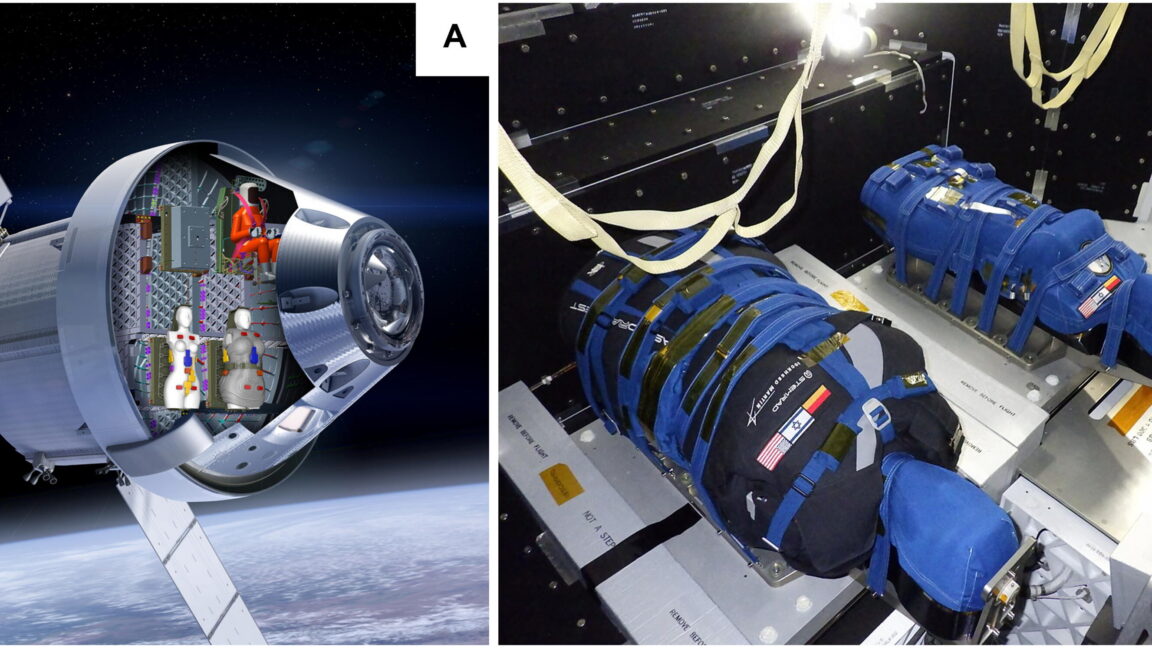
Solar storms, like the one in August 1972 that hit during the gap between the Apollo 16 and Apollo 17 missions, throw bursts of protons intense enough to raise an astronaut's cancer risk or even cause radiation sickness. Earth's atmosphere and magnetic field absorb this radiation, but crews heading to the Moon or Mars won't have that protection, and no spacecraft built so far has enough shielding to stop it.
A team led by Jordan Houri and Oren Milstein of StemRad, an Israeli-American startup dev

Comments (0)

Sign in to join the discussion

More Like This

Do other animals call each other by name?
Latest from Live Science · 22h ago
One Type of Diabetes Responds Better to a Weekly GLP-1 Drug Than to Insulin
ScienceAlert · 23h ago
📰
Genomic research published in 2026 revealed that koalas suffered a severe population collapse beginning about 100,000 years ago—before humans reached Australia—as glacial cooling and aridification destroyed and fragmented their forest habitat. Every living koala descends from the small eastern population that survived, then expanded and split into today’s major populations as forests recovered after the last ice age.
ScienceBlog.com · 23h ago
Curiosity Blog, Sols 4982–4987: Back to Our Regularly Scheduled Programming
NASA · 23h ago
📰
A marine worm with no mouth and no gut makes its own enzyme for digesting the bioplastic its skin bacteria build up, and the same kind of enzyme turned up in 66 more animal species across nine phyla, from a sponge to an earthworm to a springtail
ScienceBlog.com · 1d ago
📰
Black holes keep tearing these stars apart, but they survive
Latest Science News -- ScienceDaily · 1d ago